
Used Peterbilt Flatbed Dump Trucks For Sale in New York
Browse used Peterbilt flatbed dump trucks for sale, including common specs, dump body setups, PTO hydraulics, GVWR, and hauling applications.
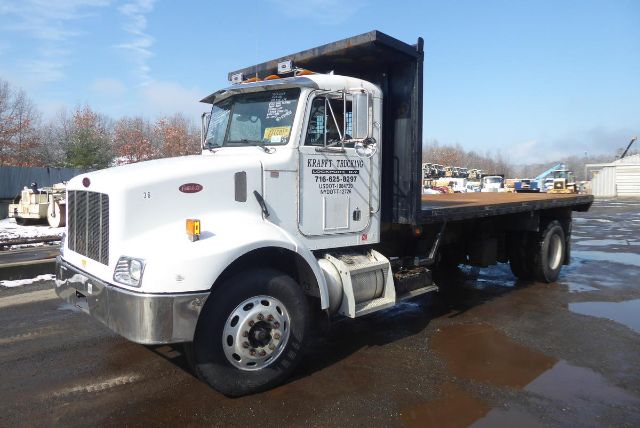
Selling a used peterbilt flatbed dump truck? List your used peterbilt flatbed dump truck for sale and reach thousands of commercial buyers.
Used Peterbilt Flatbed Dump Trucks in New York
The key buying decision is the body and hydraulic system, not just the cab and engine badge. Buyers should confirm whether the truck uses a scissor hoist or underbody cylinder, and whether the PTO and pump setup is sized correctly for the body length and expected payload. A steel floor is common on harder-use trucks that see aggregate, scrap, demo material, or skid steer loading, while lighter-duty bodies may prioritize payload and corrosion resistance. Deck length, side height, headache rack design, tie-down points, and deck height all matter because they affect loading method, legal securement, and center of gravity. If the truck has a wet line or dedicated hydraulic package, inspect hose routing, pump engagement, control valve operation, and hoist pin wear.
On used Peterbilt flatbed dump trucks, chassis specs usually fall into medium-duty and lighter heavy-duty ranges, with common GVWRs around Class 7 or Class 8 depending on axle ratings and local bridge formula considerations. Many are spec'd with air brakes, vocational rear axles, short to mid wheelbases, and manual transmissions or automated manuals suited for stop-and-go work. Rear ratios tend to favor launch and low-speed jobsite performance over highway speed, especially on trucks hauling dense material. Suspension choice matters too. Air suspension can improve ride quality and cargo protection, while heavier vocational spring setups may offer better stability under repeated loading cycles. Tire size, frame reinforcement, cab-to-axle length, and double-frame construction should all match the body size and the type of work the truck will actually do.
Condition on this category should be judged by hoist performance and frame integrity as much as engine hours and mileage. Look closely for body floor patches, crossmember rust, cracked welds around the hoist mount, uneven dump action, hydraulic seepage, and signs of overloading such as frame sag or stress around the rear suspension hangers. Buyers in New York often pay extra attention to corrosion, brake line condition, and underbody rust because road salt can accelerate wear on dump gear, wiring, and steel bodies. A good used Peterbilt flatbed dump truck should raise smoothly, hold pressure, track straight under load, and show a body spec that matches the intended material, route distance, and loading equipment.
Frequently Asked Questions about Used Peterbilt Flatbed Dump Trucks in New York
What is a Peterbilt flatbed dump truck used for?
A Peterbilt flatbed dump truck is used when the operator needs both a flat cargo deck and hydraulic dumping capability. Common applications include hauling mulch, stone, demolition debris, pallets of block, pipe, lumber, equipment attachments, and mixed jobsite materials. This body style is especially useful for contractors and municipalities that want one truck to handle both bulk material and strapped freight.
What should I inspect first on a used flatbed dump truck?
Start with the dump body, hoist, and hydraulic system. Check whether the bed lifts smoothly, whether the PTO engages cleanly, and whether there are leaks at the pump, hoses, control valve, and cylinder seals. After that, inspect the frame rails, hoist mounts, crossmembers, rear suspension hangers, and body floor for cracks, rust, patches, or signs of chronic overloading. On this category, body condition can be just as important as engine condition.
Is a scissor hoist better than an underbody hoist on a flatbed dump truck?
A scissor hoist usually offers strong lifting stability and is common on shorter to medium-length dump bodies. It can be a good fit for operators who regularly haul dense or uneven loads. An underbody hoist can provide cleaner deck access and may suit certain body layouts, but the right choice depends on body length, lift capacity, maintenance access, and how the truck is loaded. The best setup is the one properly matched to the body and payload range.
What specs matter most when comparing used Peterbilt flatbed dump trucks?
Focus on GVWR, axle ratings, wheelbase, cab-to-axle, body length, hoist type, PTO and hydraulic pump setup, suspension, rear axle ratio, and brake type. Those specs determine payload, turning radius, low-speed performance, and whether the truck can safely handle the materials you plan to haul. Buyers should also verify deck height, tie-down provisions, and frame construction because those details affect loading equipment compatibility and long-term durability.
Are used Peterbilt flatbed dump trucks a good fit for New York operations?
They can be a strong fit for New York contractors, landscape suppliers, utility crews, and municipal users because they work well in mixed urban and regional hauling. Buyers should pay close attention to rust, wiring condition, brake components, and the underside of the dump body due to corrosion exposure from road salt. Tight jobsite access, bridge limits, and stop-and-go operation also make wheelbase, axle spread, and rear ratio especially important in this market.