
Used Peterbilt Flatbed Dump Trucks For Sale
Browse used Peterbilt flatbed dump trucks with specs that matter, including GVWR, dump hoist type, body size, axle setup, and PTO hydraulics.
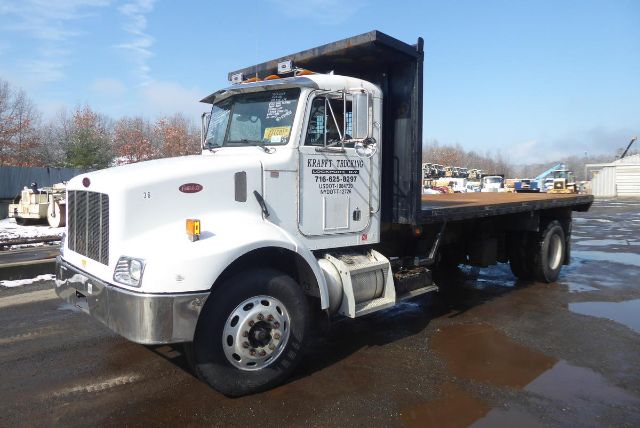
Selling a used peterbilt flatbed dump truck? List your used peterbilt flatbed dump truck for sale and reach thousands of commercial buyers.
Used Peterbilt Flatbed Dump Trucks
A buyer should start with the body and hoist setup before looking at cosmetics. Steel floors and stake-style sides are common on work-focused units, while deck length, cab-to-axle, and deck height determine how useful the truck will be for your freight mix. On used Peterbilt models, pay close attention to scissor hoists versus underbody cylinder designs, PTO engagement, hydraulic pump condition, and wetline plumbing. Headache racks, tie-down ratchets, rub rails, and strap storage matter if the truck will spend as much time hauling secured cargo as it does dumping gravel, debris, millings, mulch, or demolition material. If the truck has a double frame, that is a plus for severe-duty use and body support.
Chassis specs are just as important. Many used Peterbilt flatbed dump trucks in this class are medium-duty or bridge-law-conscious setups with single rear axles, but axle rating, suspension type, rear ratio, and wheelbase will tell you more than the badge on the door. A 33,000 lb GVWR truck with a 23,000 lb rear, 10,000 lb front, and air brakes can be a strong local hauler, especially when matched with the right transmission and low rear gearing for stop-and-go work. Buyers comparing units should look closely at engine horsepower and torque, transmission model, PTO configuration, frame condition, brake wear, and tire size. Peterbilt air ride and air ride cab options can improve driver comfort, but suspension choice also affects stability when the body is raised and when the truck is loaded unevenly.
Peterbilt flatbed dumps are often chosen because the brand holds value and is familiar to fleets that want a serviceable vocational truck with straightforward component access. On a used truck, body condition and hydraulic function can matter as much as engine hours. Inspect floor crossmembers, hinge points, hoist mounts, tailboard operation, cylinder seals, and any signs of frame cracking or hard overloading. If the truck will tow equipment or feed another hydraulic function, verify the wet kit, PTO controls, and available hydraulic flow. The best unit for the job is usually the one whose body dimensions, axle capacity, and dump system match the material you actually move every day, not just the heaviest load it might carry once a month.
Frequently Asked Questions about Used Peterbilt Flatbed Dump Trucks
What is a Peterbilt flatbed dump truck used for?
A Peterbilt flatbed dump truck is used for jobs that require both open-deck hauling and dump capability. It can carry palletized materials, lumber, pipe, equipment attachments, and jobsite supplies like a flatbed, while also unloading bulk materials such as gravel, mulch, debris, millings, or demolition waste by raising the body. That makes it a strong fit for contractors, landscape operations, municipal work, and mixed-use local hauling.
What should I inspect first on a used flatbed dump truck?
Start with the dump body, hoist, and hydraulics. Check the floor, crossmembers, hinges, hoist mounts, cylinder condition, PTO engagement, hydraulic pump, hoses, and wetline plumbing. Then inspect the frame for cracks, repairs, rust scale, or signs of repeated overloading. After that, review axle ratings, brake condition, suspension, tire wear, and drivetrain specs to make sure the truck is properly matched to the loads and routes you plan to run.
Is a single-axle Peterbilt flatbed dump enough for commercial hauling?
A single-axle Peterbilt flatbed dump can be enough for many local and regional vocational jobs, especially when the truck is spec'd around a 33,000 lb GVWR with the right rear axle rating, gearing, and body size. It is often easier to maneuver on tight jobsites and can reduce operating cost compared with a tandem. The tradeoff is lower payload and less margin for dense material, so buyers hauling stone, wet sand, or consistently heavy bulk product may need to compare payload needs against bridge laws and axle capacities carefully.
What hoist type is common on flatbed dump trucks?
Scissor hoists are common on flatbed dump trucks because they provide solid lifting force and relatively simple packaging under the deck. Some trucks use underbody telescopic cylinders instead. The right choice depends on body length, expected load distribution, and service preference. On a used truck, the key issue is not just hoist style but how smoothly it lifts, whether it holds pressure, and whether the pivot points, mounts, and hydraulic components show wear or leakage.
Why do body dimensions and cab-to-axle matter on a flatbed dump?
Body dimensions and cab-to-axle measurement determine how much usable deck space you have, how the load is balanced over the axles, and whether the truck can legally and safely carry the material you intend to haul. A longer body may improve versatility for palletized freight, but it can also change weight distribution and affect turning radius. Cab-to-axle is especially important when replacing a body, comparing similar chassis, or trying to match the truck to specific material types and securement needs.