
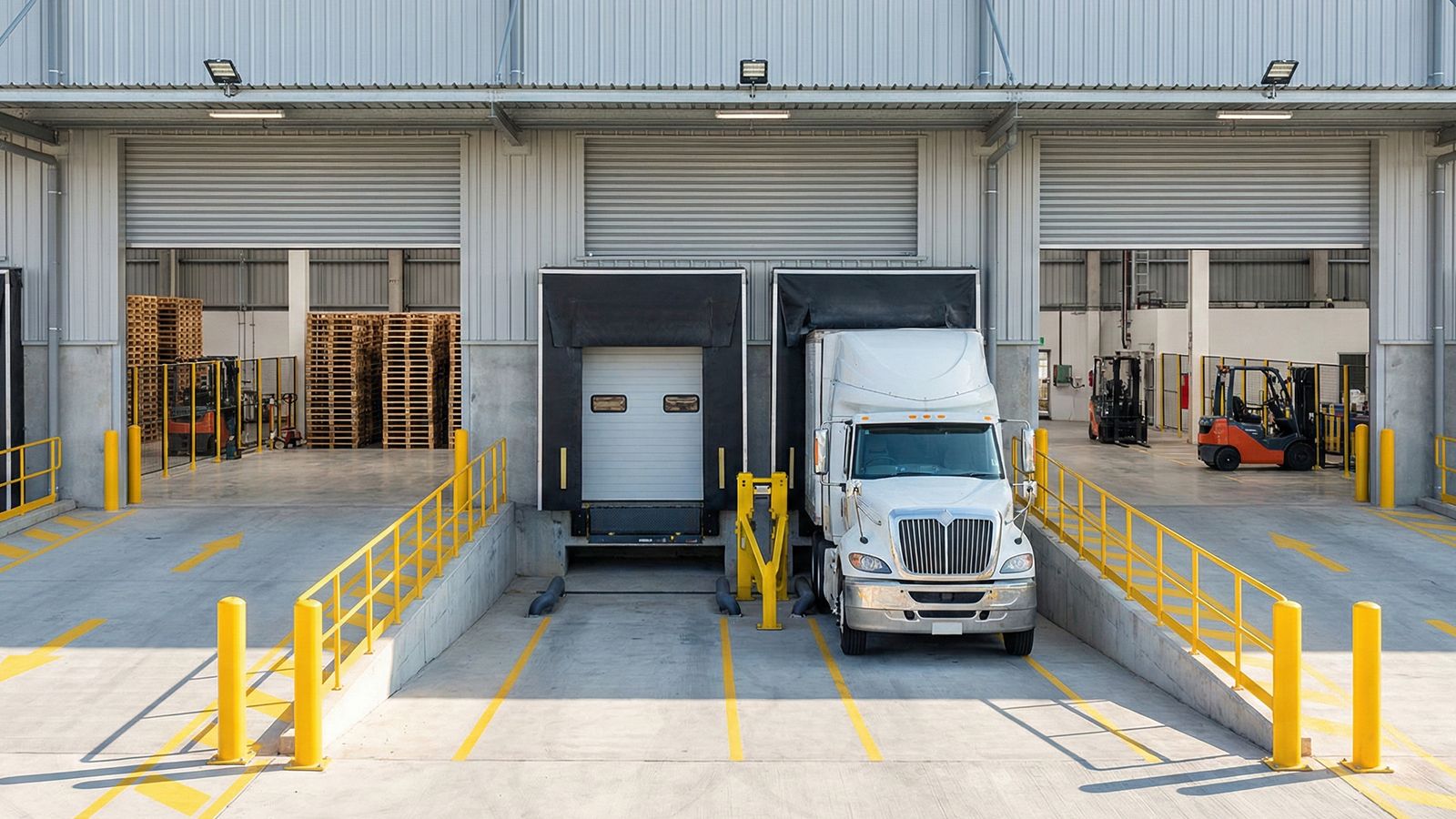
You backed in on time, checked in at the window, and now you're sitting at the dock waiting to get unloaded. Hours go by. You ask where the restroom is and get the answer every driver has heard: "Employees only."
A bipartisan bill in the U.S. Senate is aimed squarely at that moment. On Nov. 12, Sens. Lisa Blunt Rochester (D-Del.) and Deb Fischer (R-Neb.) introduced the Trucker Bathroom Access Act (S. 5718). It would require shippers, receivers and other businesses to let truck drivers use their existing restrooms while picking up or delivering freight. The Senate Commerce, Science and Transportation Committee is scheduled to mark up the bill on Wednesday, Nov. 18.
What the Bill Would Require
The bill text adds a new section to federal transportation law (49 U.S.C. § 14105). Here's what it covers:
- Where it applies: Businesses open to the public, plus shippers, receivers, manufacturers, warehouses, distribution centers and any other business that ships or receives goods by commercial truck.
- When you get access: While you're delivering goods or waiting for your truck to be loaded.
- Which restrooms: Existing restrooms meant for customers or employees, as long as letting you in doesn't create an obvious health or safety risk to you or an obvious security risk to the business.
- No construction required: Businesses don't have to build new restrooms or make physical changes to comply.
- Small-site exception: Locations of 800 square feet or less with an employee-only restroom, such as a small filling station or restaurant, are excluded.
- Ports and terminals: Marine terminal operators would have to give drayage drivers enough restrooms or portable toilets, add facilities where the need is greatest, and give drivers a place to park while they use them.
What It Doesn't Do
The bill doesn't make any shipper or receiver build anything new. You'd get the same access their customers or employees already have, nothing more. Facilities can still keep drivers out of areas where there's an obvious safety or security risk. The bill as introduced also doesn't spell out penalties or an enforcement process, so how it would be enforced is still an open question if it moves forward.
Who's Behind It
Blunt Rochester pointed to the growing number of women behind the wheel. She said they "should feel confident their basic needs will be met." Fischer called the bill "another way we can help our truckers who put in long hours" and said she'd keep working on driver issues.
Todd Spencer, President, Owner-Operator Independent Drivers Association (OOIDA)
Over 70% of America's freight is exclusively carried by trucks.
Spencer said drivers are forced to "hold it" every day because facilities won't let them in during pickups and deliveries, according to Land Line. OOIDA started the push for the bill. The American Trucking Associations is also on board: ATA's Henry Hanscom said restroom access is "about ensuring the dignity of the men and women who do the heavy lifting" for the country.
Women In Trucking, She Trucking and Trinity Logistics back the bill too. ATA's Women In Motion Council made it a priority during its annual Call on Washington, Truck News reports. It's rare for OOIDA and ATA to agree this completely on anything.
Where It Stands in Congress
The House version, H.R. 2514, was introduced March 31, 2025, by Reps. Troy Nehls (R-Texas) and Chrissy Houlahan (D-Pa.). In May, the House Transportation and Infrastructure Committee approved it as part of the BUILD America 250 Act highway bill. If the Senate Commerce Committee approves S. 5718 on Nov. 18, it moves to the full Senate.
Don't celebrate just yet. Congress is in its lame-duck session, with government funding and the defense bill fighting for floor time, and even popular bipartisan bills can stall this late in the year. Some version of the Trucker Bathroom Access Act has been introduced in the House in every Congress since late 2022. This is the furthest it has gotten.
Washington State Already Did It
If you run in Washington, you already have this right. The state's law took effect July 23, 2023. It requires shippers and receivers to let drivers use existing restrooms meant for their employees or customers. The business can have an employee walk you to the restroom. The state Department of Health can send a warning letter for a first violation and fine repeat offenders up to $300. Washington was the first state to pass a law like this, building on a 2022 law that covered ports, and the federal bill uses a lot of the same approach.
Why This Matters
Drivers have complained for years about being turned away at docks, often after waiting hours to load or unload. The problem got worse during COVID-19, when many facilities closed their restrooms to non-employees, and advocates say plenty of them never reopened. Supporters also point to the health risks of putting off bathroom breaks over long shifts. It's a recruiting problem, too: American Transportation Research Institute research lists truck parking shortages and restroom access among the top challenges facing women drivers.
What You Can Do Right Now
- Contact your senators. Look up their phone numbers at senate.gov and mention the bill by number: S. 5718. Calls from voters back home matter most while a bill is in committee.
- Keep a record. When a facility turns you away, write down the date, location and who said no. Real examples help groups like OOIDA and ATA make the case in Washington.
- Know your rights in Washington State. Shippers and receivers there already have to give you access, and complaints go to the state Department of Health.
- Stay professional at the window. Ask politely, offer to be escorted, and plan a stop before you reach facilities you know will say no.
Looking for your next commercial truck or trailer?
Thousands of listings from sellers nationwide, no commissions.
Comments
Join the conversation
You need to login to your account to comment.
No comments yet
Be the first to share your take on this trucker tip.