
New Refrigerated Trucks For Sale in Georgia
Explore new refrigerated trucks for sale in Georgia with insulated bodies, diesel reefer units, and specs built for cold-chain delivery.
Selling a new refrigerated truck? List your new refrigerated truck for sale and reach thousands of commercial buyers.
New Refrigerated Trucks in Georgia
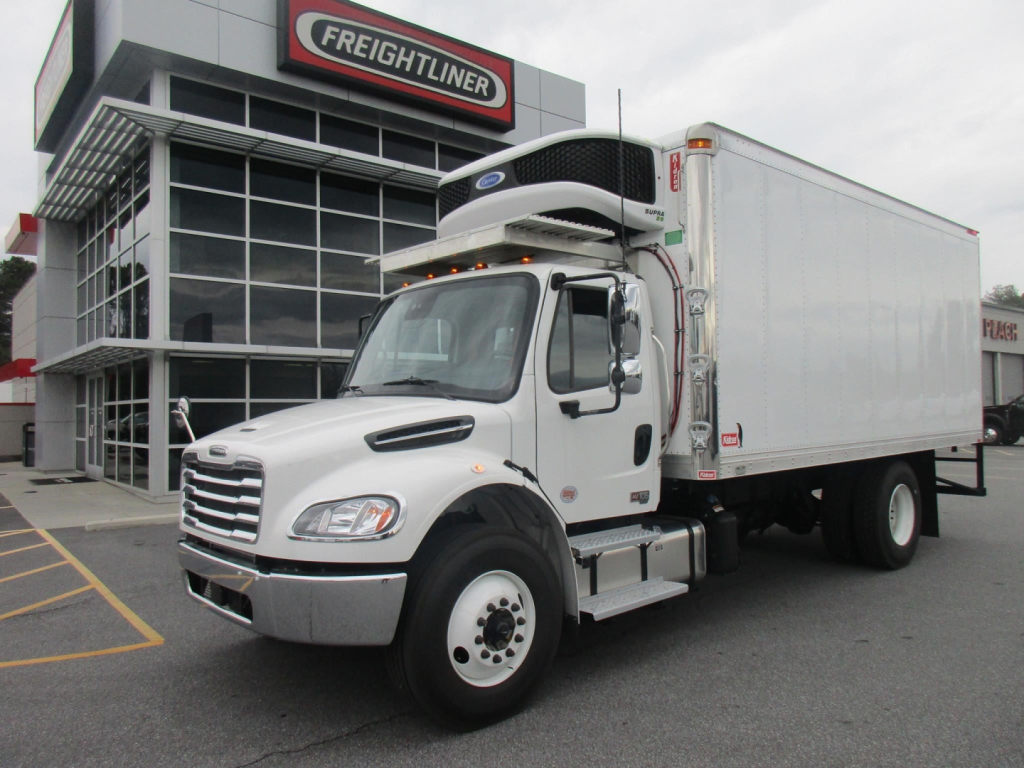
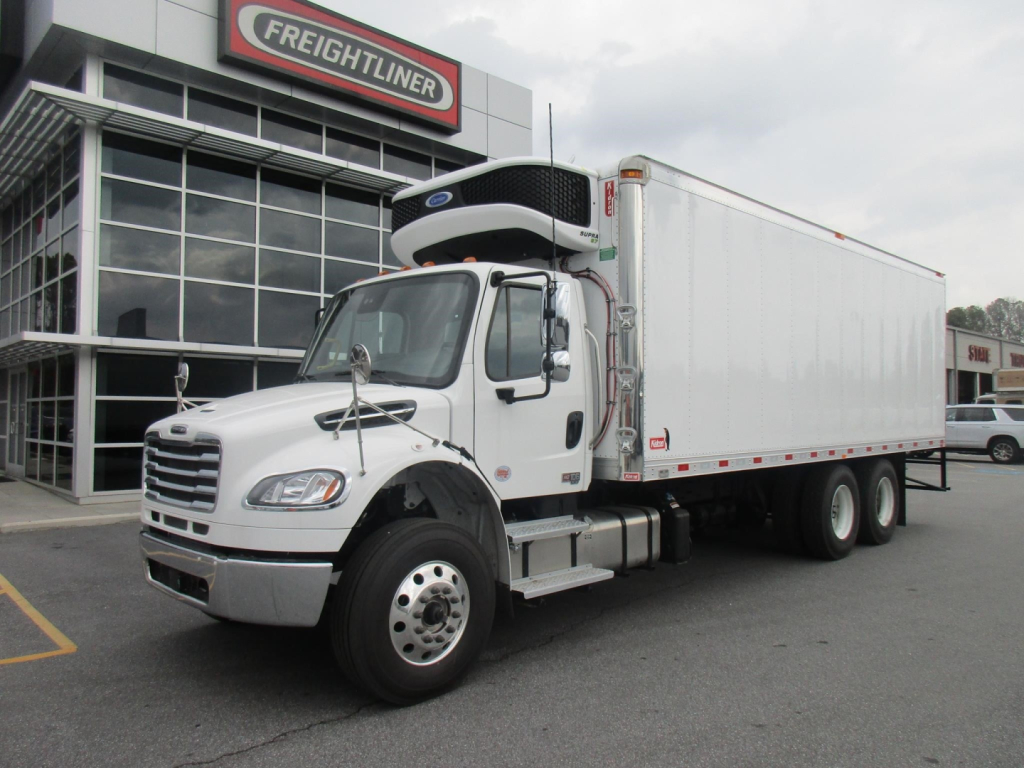
The refrigeration package is the heart of the truck. Many new refrigerated trucks use proven diesel-powered units from Carrier Supra or similar systems designed for multi-stop delivery and consistent pull-down performance. Body construction matters just as much. Kidron and other insulated bodies commonly use thick wall and roof insulation, tight door seals, and durable interiors that can handle frequent washdowns and forklift loading. Buyers should pay close attention to floor type, rear door style, and interior cargo control. Features such as E-track, scuff liners, wood or composite floors, walk ramps, and forklift packages directly affect daily usability and long-term body life.
Chassis spec becomes more important as body length and payload increase. An 18-foot reefer truck used for urban delivery may be well served by a lighter engine and automatic transmission, while a 24-foot tandem-axle refrigerated truck usually needs higher horsepower, stronger rear suspension, and more axle capacity to stay productive at legal weights. GVWR, wheelbase, cab-to-axle dimension, and axle ratio should all line up with the body builder's design. In Georgia traffic and heat, buyers also tend to value driver-assist systems, air-ride suspension, air-ride seating, backup cameras, and collision mitigation technologies that reduce fatigue and improve safety on dense regional routes.
For a new refrigerated truck, operating cost is not just fuel economy. It includes reefer service intervals, door and seal maintenance, insulation integrity, and how quickly the body recovers temperature after repeated stops. A well-spec'd truck should match the product, route density, dock conditions, and loading method. If the operation handles palletized freight, a roll-up rear door, ramp system, and forklift-rated floor may be essential. If tight urban access is the priority, a shorter wheelbase and smaller body may deliver better efficiency. The best new refrigerated trucks balance refrigeration performance, payload, body durability, and serviceability so the truck can stay on route and protect cargo in every season.
Frequently Asked Questions about New Refrigerated Trucks in Georgia
What is the most important spec to compare on a new refrigerated truck?
The most important spec is the match between the insulated body, the refrigeration unit, and the route. Box length, insulation quality, reefer capacity, and chassis payload rating need to work together. A truck that looks strong on engine power alone can still underperform if the body is too small for the freight, the reefer is undersized for multi-stop delivery, or the axle and GVWR ratings do not support the intended payload.
What body size is most common for refrigerated box trucks?
Many refrigerated box trucks are built with 18-foot to 24-foot insulated bodies. An 18-foot body is common for tighter city routes, lighter payloads, and frequent stop-and-go delivery. A 24-foot body is more common when the operation needs additional pallet capacity, higher cube, or tandem-axle capacity for heavier loads. The right choice depends on product density, route access, and dock conditions.
Are diesel reefer units better for medium-duty refrigerated trucks?
Diesel reefer units remain a common choice because they offer strong cooling performance, reliable pull-down, and good durability in demanding delivery cycles. They are widely used for foodservice and multi-stop distribution where temperature consistency matters. Buyers should still compare service network access, maintenance requirements, fuel use, and noise restrictions in the areas where the truck will run.
What features help a refrigerated truck hold up in daily delivery work?
Durability usually comes from the body and cargo area details as much as the chassis. Buyers should look for strong insulated body construction, tight door seals, scuff protection, cargo restraint systems like E-track, a floor rated for pallet jack or forklift use, and rear access equipment suited to the delivery process. These details reduce body damage, improve loading efficiency, and help maintain temperature control over time.
Why does Georgia climate matter when buying a refrigerated truck?
Georgia heat and humidity put more demand on both the refrigeration unit and the insulated body. Trucks running in warm climates need strong pull-down performance, dependable door seals, and body insulation that resists temperature gain during repeated stops. Regional traffic, urban congestion, and long delivery days also make driver comfort, automatic transmissions, and safety technology more valuable in day-to-day operation.