
New 2026 Refrigerated Trucks For Sale in Georgia
Shop new 2026 refrigerated trucks in Georgia with insulated bodies, diesel reefer units, medium-duty chassis, and delivery-ready specs.
Selling a new 2026 refrigerated truck? List your new 2026 refrigerated truck for sale and reach thousands of commercial buyers.
New 2026 Refrigerated Trucks in Georgia
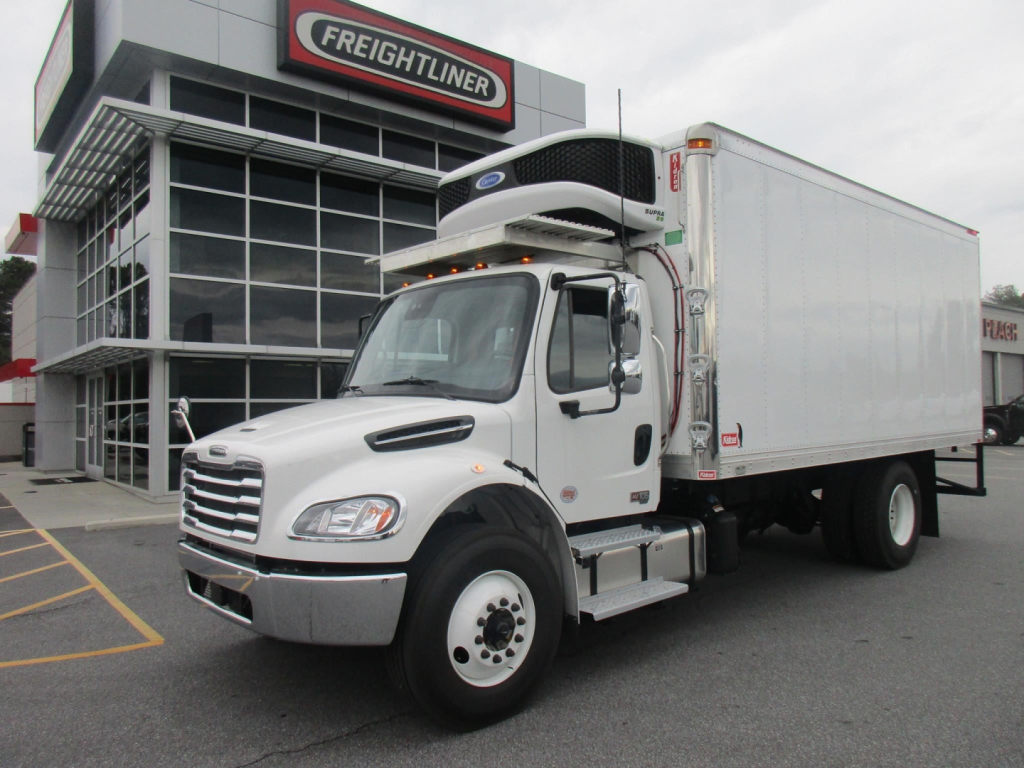
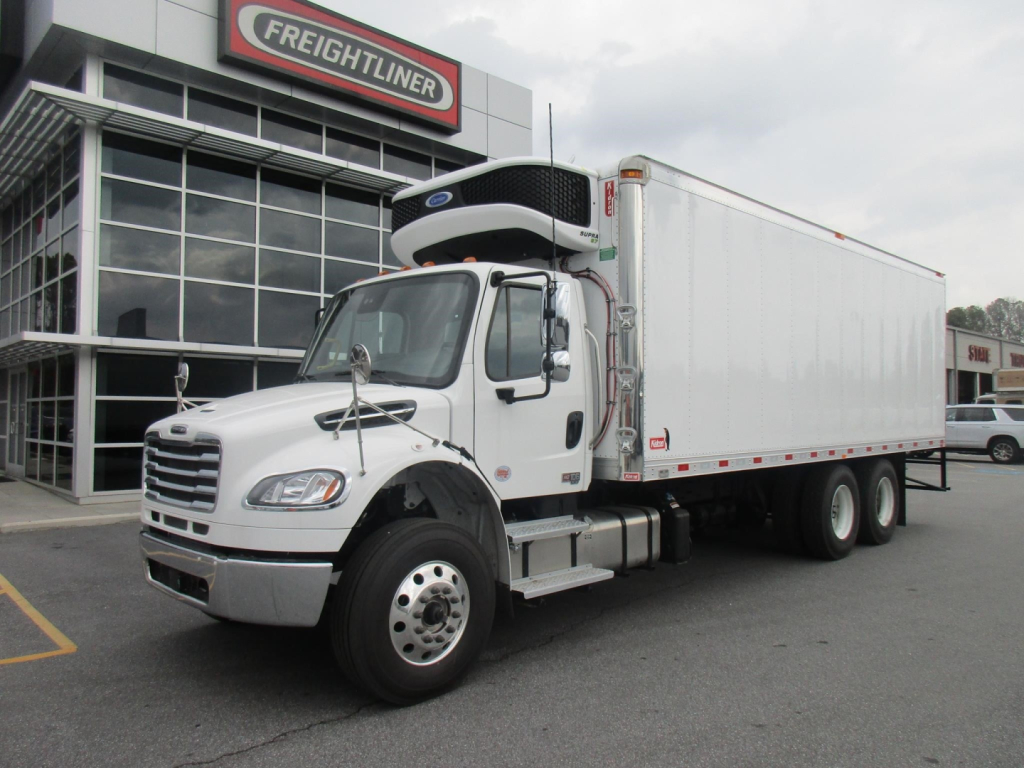
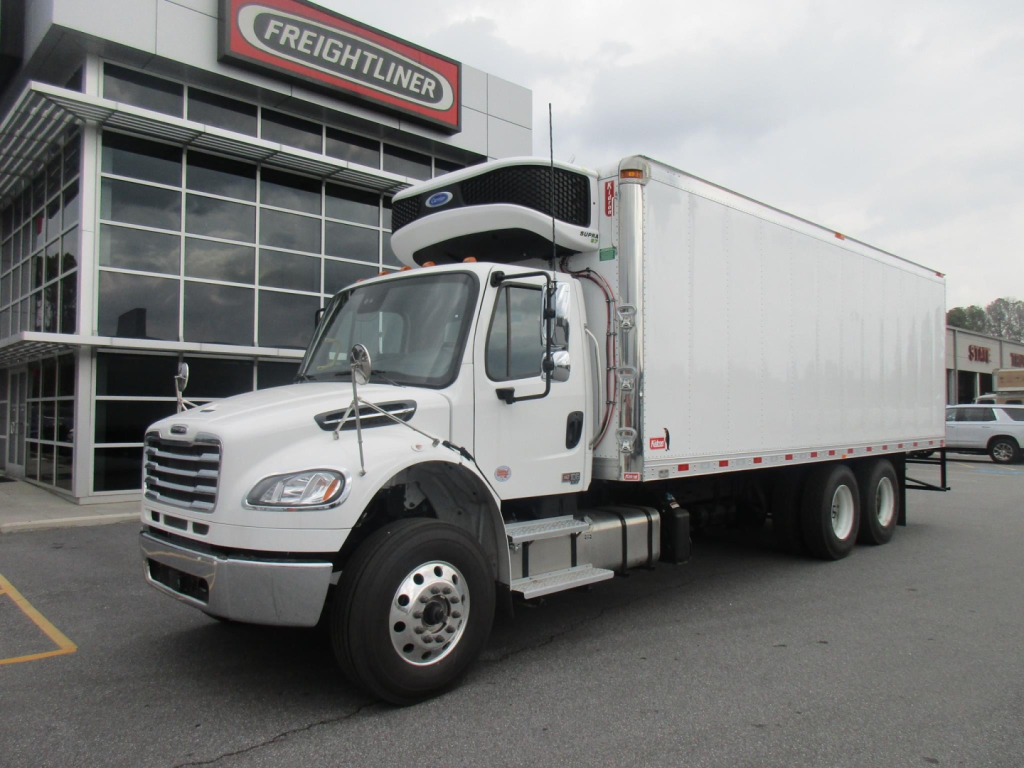
Chassis and powertrain choices should match payload, route density, and body length. Current 2026 medium-duty reefer trucks often use platforms like the Freightliner M2 106 Plus with Cummins B6.7 or L9 diesel engines paired to Allison automatic transmissions such as the 2500HS or 3000HS. An 18-foot body on a lighter engine can be a strong fit for urban and regional delivery where maneuverability and fuel economy matter. A 24-foot tandem axle configuration with higher GVWR, heavier front and rear axle ratings, and air-ride suspension is better suited for larger payloads, palletized freight, and routes that need more cargo cube without moving into a trailer operation. Buyers should confirm wheelbase, cab-to-axle, axle ratio, and suspension spec because those numbers directly affect turning radius, payload balance, and how the truck carries a fully loaded insulated body.
The reefer body itself deserves close attention. Kidron and similar insulated bodies are commonly spec'd with features like wood floors with forklift packages, scuff protection, logistics track, and locking roll-up doors. Refrigeration units from Carrier Supra and similar product lines are selected based on box size, desired pull-down speed, ambient conditions, and whether the application needs fresh, frozen, or multi-temp capability. In Georgia heat and humidity, refrigeration reserve matters. A unit that can hold setpoint after repeated door openings on a multi-stop route is often more important than headline horsepower. Buyers should also look at evaporator placement, insulation thickness, bulkhead options, standby electric availability, and service access, since uptime depends on both the truck chassis and the refrigeration package.
For 2026 models, safety and driver-assist content is a bigger part of the buying equation than it was a few years ago. Collision mitigation, adaptive cruise control, lane departure warning, side object detection, and backup cameras are now common on medium-duty reefer trucks, especially in metro delivery work. Those features can reduce accident exposure in tight loading areas and heavy traffic around Atlanta and other Georgia corridors. A good spec balances refrigeration performance, payload, body durability, and driver usability. For buyers comparing listings, the most important questions are simple: what temperature range the unit is designed to hold, how much legal payload remains after the body and reefer are installed, and whether the body length and door setup fit the actual delivery pattern.
Frequently Asked Questions about New 2026 Refrigerated Trucks in Georgia
What is the difference between a refrigerated truck and a refrigerated straight truck?
A refrigerated truck is a broad term for any truck equipped with an insulated cargo body and a mechanical refrigeration unit. In this market, most listings are refrigerated straight trucks, meaning the cab and cargo body sit on one chassis rather than using a separate trailer. They are commonly used for local and regional delivery because they combine cold-chain capability with easier maneuverability, faster unloading, and simpler route planning than a tractor-trailer reefer setup.
What body size is most common for a new 2026 refrigerated truck?
In medium-duty refrigerated trucks, 18-foot and 24-foot insulated bodies are common sizes. An 18-foot body usually fits city delivery, restaurant supply, floral work, and tight urban routes where turning radius and dock access are important. A 24-foot body gives more pallet capacity and cargo cube for grocery, wholesale food, and higher-volume regional delivery. The right size depends on stop frequency, pallet count, axle ratings, and how much payload is left after the reefer body and refrigeration unit are installed.
Which engine and transmission setup is typical in this category?
Many new refrigerated trucks in this class use Cummins diesel engines such as the B6.7 or L9 paired with Allison automatic transmissions like the 2500HS or 3000HS. The B6.7 is often chosen for lighter bodies and more urban routes, while the L9 is better suited to heavier payloads, larger bodies, and tandem axle applications. Allison automatics are common because they perform well in stop-and-go delivery work, reduce driver fatigue, and handle repeated starts, backing, and dock approaches efficiently.
What should buyers check on the refrigeration unit besides brand name?
The critical factors are cooling capacity, box compatibility, pull-down performance, operating temperature range, and how the unit handles repeated door openings. Buyers should also confirm whether the truck is set up for fresh or frozen service, or if a multi-temp configuration is possible. Standby electric capability, maintenance access, evaporator placement, and local service support matter too. A well-known reefer brand is important, but unit sizing and application match are what determine real-world performance.
Are new 2026 refrigerated trucks a good fit for Georgia delivery routes?
Yes, provided the truck is spec'd for high ambient temperatures, humidity, and frequent stop-and-start delivery. Georgia operations often demand strong pull-down performance and good temperature recovery because reefer doors may open repeatedly throughout the day. Buyers should prioritize adequate refrigeration reserve, durable insulated body construction, and a chassis spec that matches payload and route length. Safety systems and backup visibility are also valuable in metro delivery environments with dense traffic and tight loading zones.