
New Freightliner Refrigerated Trucks For Sale in Georgia
New Freightliner refrigerated trucks for sale in Georgia, including M2 106 reefer trucks with insulated bodies, diesel power, and delivery-ready specs.
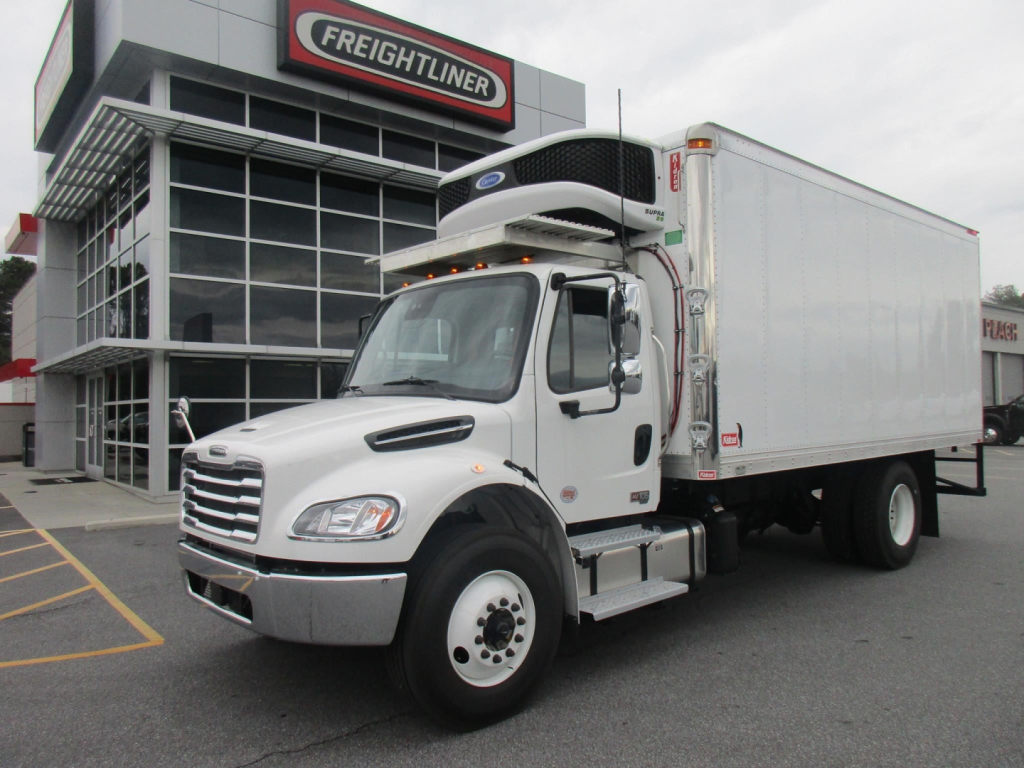
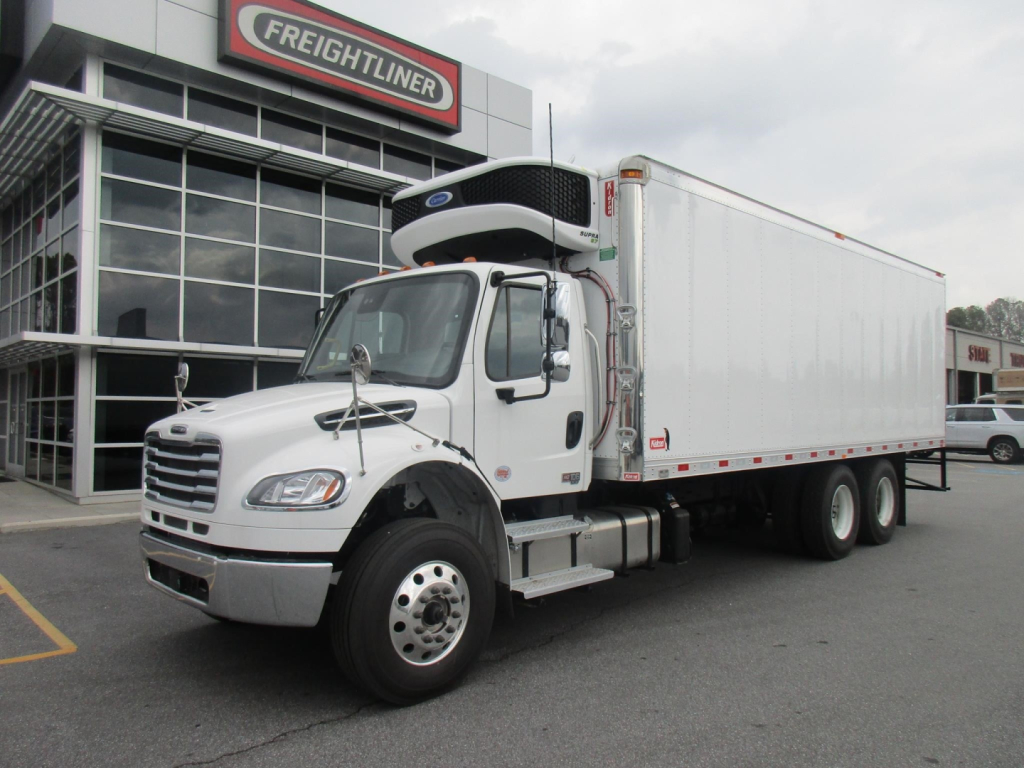
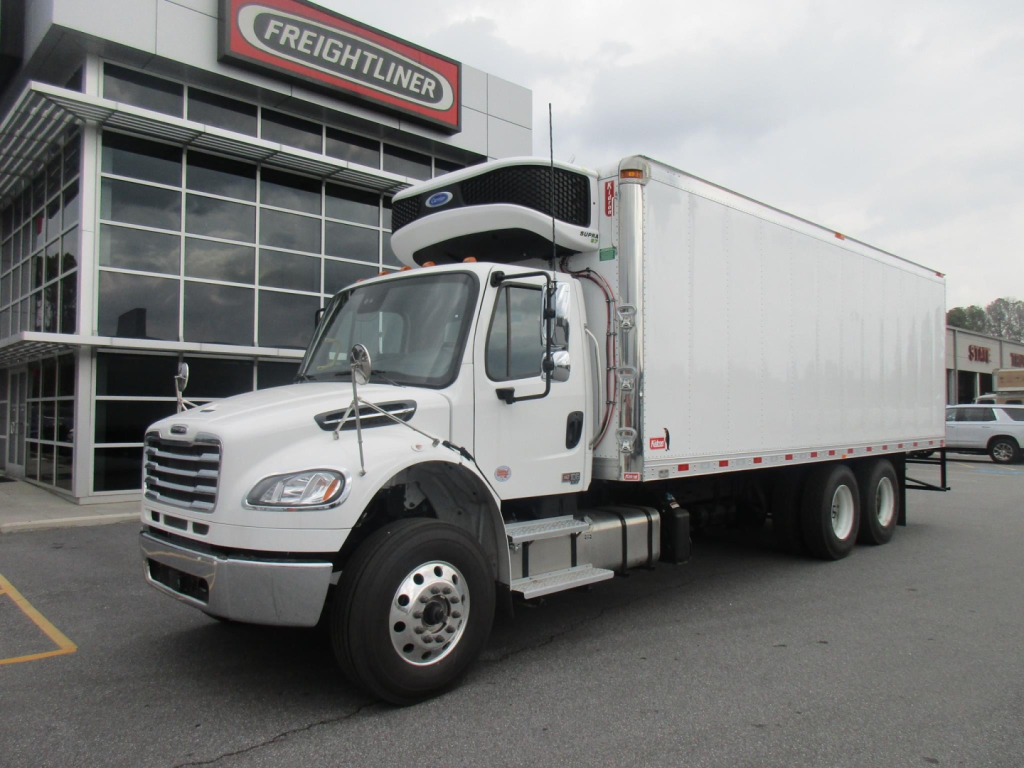
Selling a new freightliner refrigerated truck? List your new freightliner refrigerated truck for sale and reach thousands of commercial buyers.
New Freightliner Refrigerated Trucks in Georgia
A lot of the buying decision comes down to body and refrigeration package. Common setups in this category include 18 ft to 24 ft insulated bodies from builders such as Kidron, paired with Carrier Supra units. Shorter 18 ft bodies tend to fit tighter urban routes and frequent dock work, while 24 ft bodies make more sense when cube and pallet count drive revenue. Buyers should look closely at insulation rating, door configuration, floor construction, and interior cargo control. Features like E-track, wood floors with forklift packages, walk ramps, and locking roll-up doors make a real difference depending on whether the truck is handling hand unloads, mixed freight, or repeated palletized loading.
On the chassis side, new Freightliner reefer trucks commonly use Cummins B6.7 or L9 diesel engines with Allison automatic transmissions such as the 2500HS or 3000HS. The B6.7 is a solid fit for lighter local delivery work, while the L9 is better matched to heavier payloads, larger 24 ft bodies, tandem axle configurations, and higher GVWR applications. Specs like axle ratio, front axle capacity, rear axle rating, suspension type, and cab-to-axle measurement all affect how well the truck matches the body and refrigeration load. Tandem axle trucks with air-ride suspension are often selected for higher-capacity regional work, while single-axle configurations can be the better tool for tighter city operations and lower operating cost.
Newer Freightliner refrigerated trucks also tend to be strong on driver-assistance and safety equipment, which matters for fleets running dense traffic and multi-stop schedules. Systems such as collision mitigation, adaptive cruise control, lane departure warning, side object detection, and backup cameras are now common on new builds. For buyers comparing listings, the important questions are simple: can the reefer unit hold the temperature range your freight requires, is the body sized correctly for your route density, and is the chassis spec heavy enough for your real-world payload without overspending on capacity you will not use. A properly spec'd Freightliner reefer truck can serve food distribution, cold chain delivery, beverage support, and specialty cargo work with a good balance of serviceability, maneuverability, and driver comfort.
Frequently Asked Questions about New Freightliner Refrigerated Trucks in Georgia
What is the most common Freightliner refrigerated truck for local and regional delivery?
The Freightliner M2 106 is one of the most common reefer truck platforms in this class. It is widely used because it supports a broad range of insulated body lengths, refrigeration unit combinations, and GVWR ratings. That flexibility makes it a practical choice for foodservice, grocery, produce, dairy, and pharmaceutical delivery where buyers need a truck that can be matched closely to route length, pallet count, and payload.
What body length is best for a refrigerated straight truck?
The right body length depends on route density, dock access, and the type of freight being moved. An 18 ft reefer body is often better for urban delivery, tighter turns, and frequent stops where maneuverability matters. A 24 ft body is usually the better fit when pallet capacity and cube are more important, especially for regional work or larger stop counts. Buyers should also factor in cab-to-axle dimensions and axle ratings so the body is properly matched to the chassis.
Should I choose a Cummins B6.7 or Cummins L9 in a Freightliner reefer truck?
The Cummins B6.7 generally fits lighter medium-duty reefer applications where the truck is running shorter bodies, lower gross weights, and urban or suburban delivery routes. The Cummins L9 is better suited for heavier builds, larger insulated bodies, tandem axle configurations, and routes where added horsepower and torque help with payload, gradeability, and sustained regional use. The engine choice should match the truck’s GVWR, body size, refrigeration system weight, and average operating cycle.
What features matter most on a refrigerated truck body?
The most important body features are insulation quality, refrigeration unit capacity, floor strength, cargo securement, and door design. Buyers commonly look for insulated bodies with durable interior construction, E-track for load control, wood or reinforced floors for pallet and forklift use, and roll-up rear doors for efficient dock access. If the truck handles mixed delivery conditions, details like walk ramps, side access, and body height can affect both loading speed and cargo protection.
Are tandem axle refrigerated trucks worth it?
Tandem axle reefer trucks are worth considering when the application demands higher GVWR, larger body lengths, or heavier payloads on a regular basis. They are common on 24 ft refrigerated bodies and regional delivery work where more carrying capacity offsets the added purchase cost and operating expense. For lighter local delivery, a single-axle truck is often the more efficient choice because it is simpler, easier to maneuver, and may carry lower maintenance and tire costs.