
New Freightliner Refrigerated Trucks For Sale
Shop new Freightliner refrigerated trucks with insulated bodies, diesel power, and reefer units built for cold-chain delivery routes.
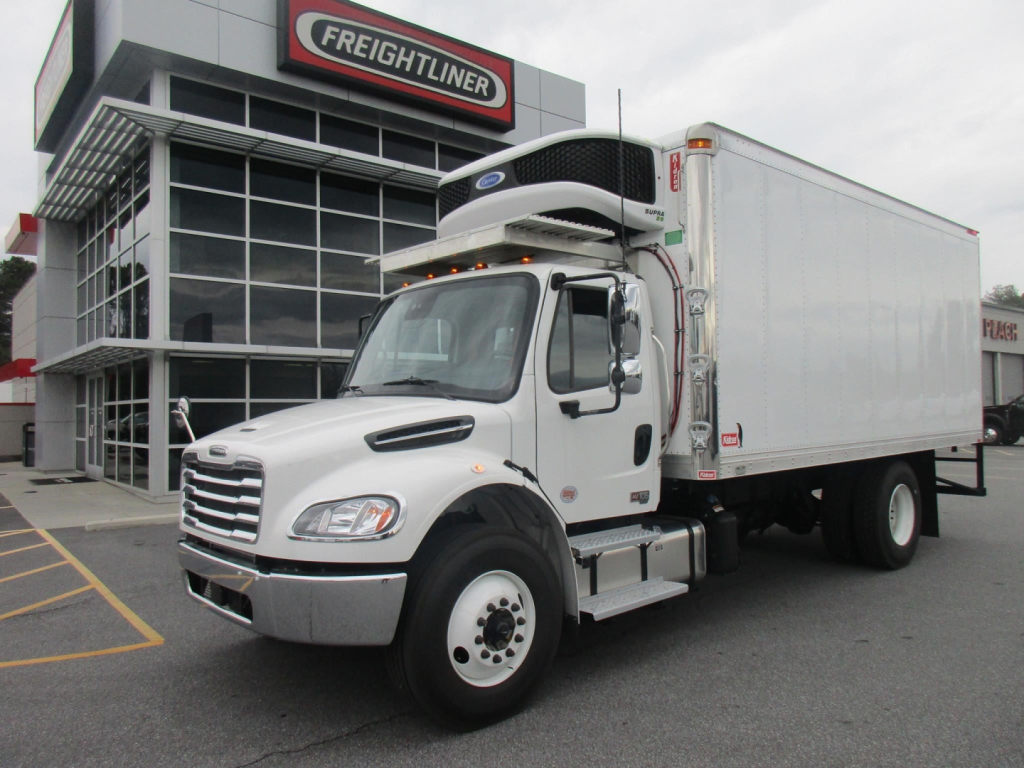
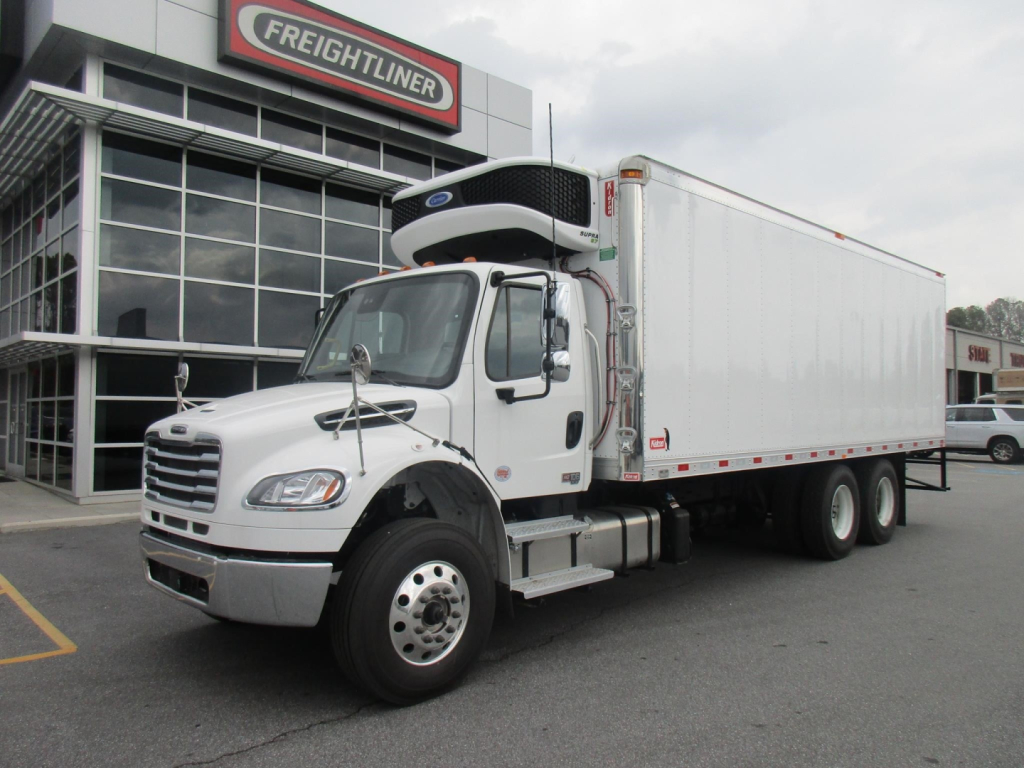
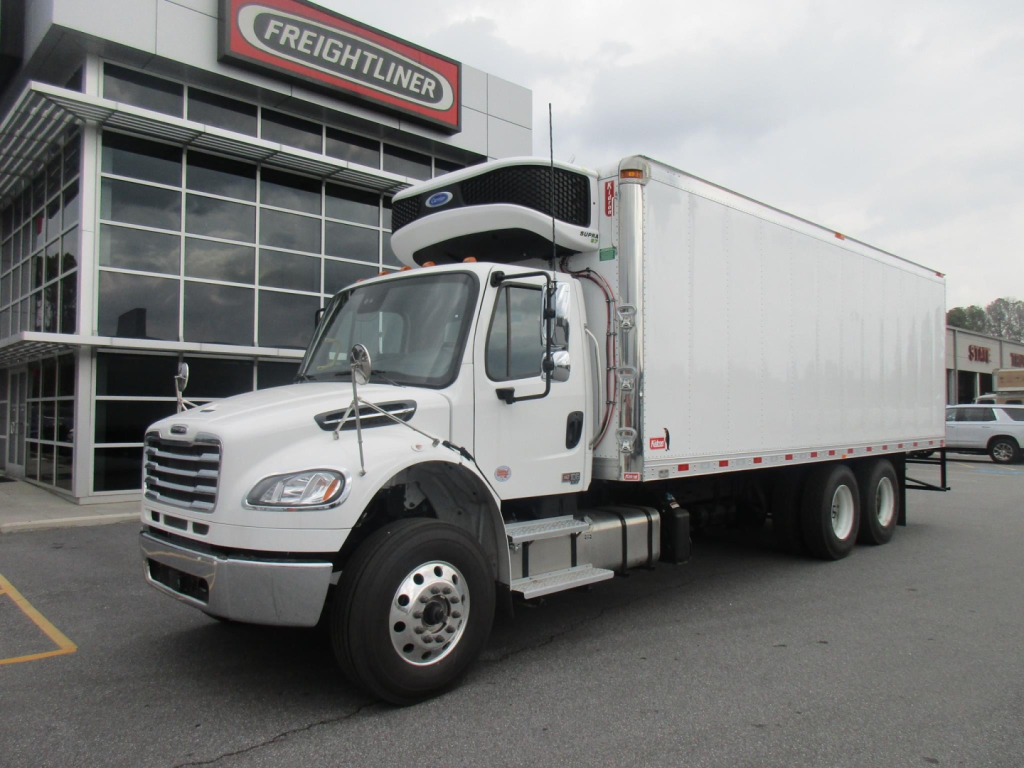
Selling a new freightliner refrigerated truck? List your new freightliner refrigerated truck for sale and reach thousands of commercial buyers.
New Freightliner Refrigerated Trucks
A key buying decision is matching body length, GVWR, and axle setup to your payload and route profile. Common configurations include Class 7 single-axle trucks with 18-foot insulated bodies and Class 8 tandem-axle trucks with 24-foot bodies for heavier freight and denser routes. Powertrains often center on Cummins B6.7 or L9 diesel engines paired with Allison automatic transmissions, a combination many fleets prefer for urban delivery, driver training, and stop-and-go service. Rear axle ratios, front and rear axle ratings, wheelbase, and suspension type all affect launch, maneuverability, dock approach, and legal payload capacity, so those numbers deserve as much attention as the reefer brand.
On the body side, look closely at insulation package, floor construction, door style, and delivery equipment. Kidron insulated bodies are common in this segment, and practical options often include roll-up rear doors, walk ramps, wood floors with forklift packages, and E-track for cargo securement. Reefer units such as Carrier Supra systems are widely used for straight truck applications because they are well known in service networks and capable of holding setpoint through frequent door openings. If your freight includes mixed products or sensitive temperature bands, pay attention to insulation integrity, air chute design, evaporator layout, and how the body is spec'd for recovery time during multi-stop operation.
New Freightliner reefer trucks also tend to be spec'd with modern driver-assist and safety systems that matter in tight delivery environments. Features such as collision mitigation, adaptive cruise control, lane departure warning, side object detection, and backup cameras can reduce fatigue and help manage urban risk exposure. For many buyers, the value of a new unit is not just warranty coverage but also emissions-system life, cleaner maintenance history, and the ability to spec the truck around the actual route. The best choice usually comes down to cube, payload, reefer performance, and serviceability across the chassis, body, and refrigeration system.
Frequently Asked Questions about New Freightliner Refrigerated Trucks
What is the difference between a single-axle and tandem-axle Freightliner refrigerated truck?
A single-axle refrigerated truck is usually the right choice for lighter payloads, tighter city routes, and easier maneuverability around docks and residential delivery zones. A tandem-axle truck is better suited for heavier cargo, longer bodies, and higher GVWR requirements. Buyers should compare axle ratings, bridge law considerations, turning radius, and how often the truck will be loaded close to capacity. In reefer applications, the tandem setup often makes more sense when body length moves into the 24-foot range and freight density is consistently high.
Which engine is better in a new Freightliner reefer truck, the Cummins B6.7 or L9?
The Cummins B6.7 is commonly chosen for medium-duty refrigerated delivery where payload is moderate and routes are shorter or more urban. The Cummins L9 is the stronger option when the truck carries heavier loads, runs a larger body, or needs better performance in hilly terrain and higher-GVWR applications. Both are commonly paired with Allison automatic transmissions, but the L9 generally gives more headroom for Class 8 straight truck specs. The right choice depends on body length, average load weight, start-stop frequency, and how long the truck is expected to stay in fleet service.
What should I look for in the refrigerated body and reefer unit?
Start with body length, insulation quality, and door configuration, then evaluate the refrigeration unit's capacity and service support. A good reefer truck spec should include an insulated body matched to the commodity, a durable floor for the way freight is loaded, and securement features such as E-track if cargo shifts are a concern. Roll-up doors and walk ramps help on multi-stop routes, while forklift packages matter for dock and ground loading. On the refrigeration side, buyers should look at temperature pull-down, recovery time after door openings, fuel consumption, noise limits if operating in urban areas, and how easy the unit is to service in their region.
Are new Freightliner refrigerated trucks good for food and pharmaceutical delivery?
Yes, provided the body and reefer system are spec'd for the temperature range, sanitation needs, and route demands of the cargo. Food distribution typically requires durable insulation, dependable setpoint control, and fast recovery during frequent stops. Pharmaceutical and other high-sensitivity freight may require tighter temperature management, cleaner interior finishes, and stronger validation practices. The truck chassis matters too, because route reliability depends on enough engine power, proper GVWR, and a transmission suited for repeated stop-and-go operation.
Why do many new Freightliner refrigerated trucks use Allison automatic transmissions?
Allison automatics are popular in refrigerated straight trucks because they perform well in urban delivery cycles with constant starts, stops, backing, and dock maneuvers. They are familiar to a wide driver pool, reduce clutch-related wear compared with manual transmissions, and help keep the truck easy to operate on multi-stop routes. For fleet buyers, that can translate into more consistent driver performance and simpler training. In a reefer application, the transmission choice is part of the overall uptime equation, especially when the truck is making time-sensitive deliveries all day.