
New 2026 Freightliner Refrigerated Trucks For Sale
Shop new 2026 Freightliner refrigerated trucks with insulated bodies, reefer units, and medium-duty specs for cold chain delivery work.
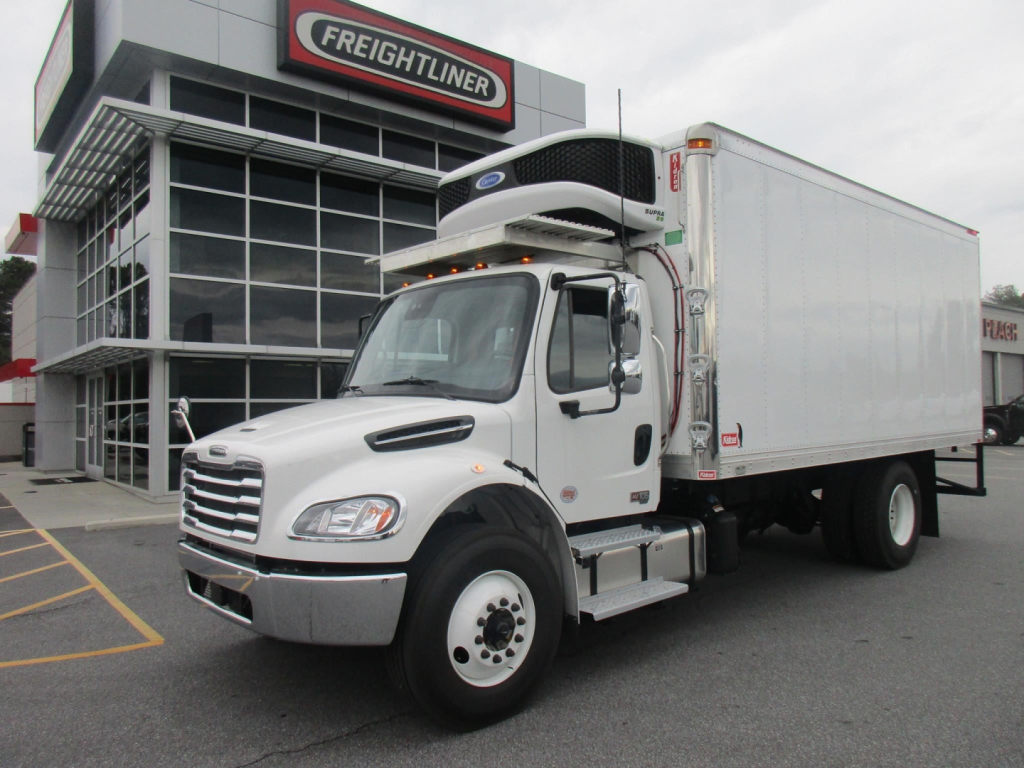
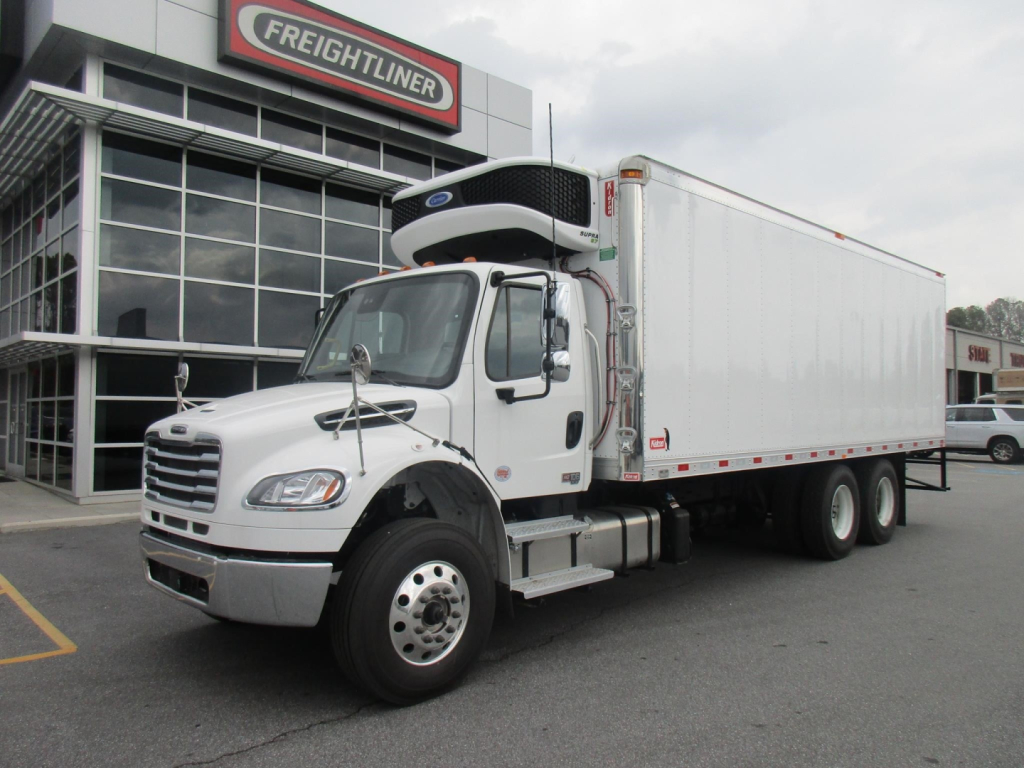
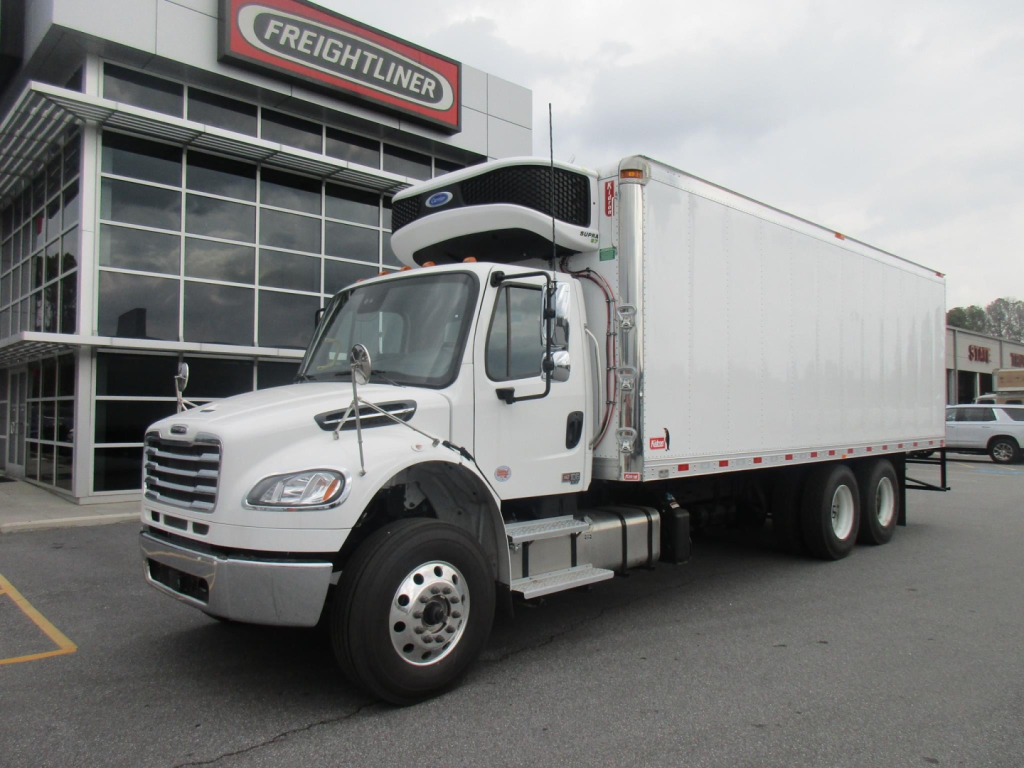
Selling a new 2026 freightliner refrigerated truck? List your new 2026 freightliner refrigerated truck for sale and reach thousands of commercial buyers.
New 2026 Freightliner Refrigerated Trucks
The first buying decision is usually body size and refrigeration capacity. An 18-foot insulated body is a strong fit for city and regional delivery with tighter dock access and lower overall operating weight, while a 24-foot body gives more cube for higher-volume routes and palletized freight. Common body details on this class include Kidron-style insulated bodies, scuff-resistant interior walls, E-track for load securement, wood or composite flooring, forklift packages, walk ramps, and locking roll-up rear doors. Reefer units such as Carrier Supra systems are common on Freightliner builds and should be matched to the product mix, door-open frequency, ambient climate, and pull-down expectations. Buyers moving frozen product should pay close attention to insulation package, unit capacity, and air circulation design, not just box length.
Powertrain spec affects both payload and route suitability. Many new 2026 Freightliner reefer trucks in this class use the Cummins B6.7 or Cummins L9 paired with Allison automatic transmissions such as the 2500HS or 3000HS. The B6.7 is often selected for lighter local work and fuel-conscious delivery cycles, while the L9 is better suited for heavier payloads, larger 24-foot bodies, tandem axle setups, and more demanding grade or stop-and-go conditions. Axle ratings, suspension choice, wheelbase, and cab-to-axle dimensions all matter because they determine how well the truck supports the body, reefer unit, and intended payload. Buyers comparing single-axle versus tandem configurations should look closely at GVWR, turning radius, dock approach, and state bridge or registration considerations.
Driver-assist and cab spec have become a larger part of the value equation on new Freightliner refrigerated trucks. Features such as collision mitigation, active brake assist, adaptive cruise control, lane departure warning, side object detection, backup cameras, air-ride cab, and air-ride seating can reduce driver fatigue and improve route safety. For buyers focused on long-term operating cost, it also makes sense to review warranty coverage on the chassis, engine, aftertreatment system, towing, and the reefer unit separately, since those support paths are often different. A well-matched Freightliner refrigerated truck should be evaluated as a complete cold chain package: chassis, body, reefer, payload rating, and delivery environment all need to work together.
Frequently Asked Questions about New 2026 Freightliner Refrigerated Trucks
What is the most common Freightliner platform for a new refrigerated truck?
The Freightliner M2 106 Plus is one of the most common platforms for refrigerated truck applications because it supports a wide range of insulated body lengths, medium-duty GVWR targets, and urban or regional delivery routes. It is frequently spec'd with Cummins diesel engines and Allison automatic transmissions, which makes it a familiar and serviceable package for food and beverage fleets, produce distributors, and other temperature-controlled operators.
How do I choose between an 18-foot and 24-foot reefer body?
An 18-foot reefer body is usually the better choice for tighter city routes, frequent dock turns, and operations that prioritize maneuverability and lower empty weight. A 24-foot body is better for higher cube demand, palletized freight, and routes where carrying more product per stop improves efficiency. The right choice depends on product density, stop count, dock access, and whether your freight mix is more constrained by weight or by cubic capacity.
Which engine is better in a Freightliner refrigerated truck, the Cummins B6.7 or L9?
The Cummins B6.7 is generally a solid fit for lighter local delivery work, especially in shorter body applications where fuel economy and lower acquisition cost are priorities. The Cummins L9 is a stronger choice for heavier reefer bodies, larger payloads, tandem axle configurations, and routes with more grade, more starts and stops, or more demanding duty cycles. Engine selection should be based on body length, gross vehicle weight, route terrain, and how often the truck runs near capacity.
What should I look for in the reefer body and refrigeration unit?
Focus on insulation quality, reefer unit capacity, interior airflow, and how the body is set up for your freight. Important details include scuff liners, E-track placement, floor construction, forklift reinforcement, rear door style, and ramp or side-access needs. The refrigeration unit should be sized for the cargo temperature target, product loading temperature, ambient climate, and the amount of time doors stay open during the route. Buyers hauling frozen product should be especially careful to confirm that the body and unit are configured for low-temperature performance, not just fresh product delivery.
Are safety and driver-assist systems worth prioritizing on a new reefer truck?
Yes. Refrigerated trucks often operate on dense local routes with frequent stops, backing, pedestrian exposure, and tight delivery windows. Systems such as active brake assist, adaptive cruise control, lane departure warning, side object detection, and backup cameras can reduce risk and support driver retention. On a new truck, these features can be just as important as horsepower or body length because they affect daily usability, insurance exposure, and total operating cost over the life of the unit.