
New Fontaine Trailers For Sale

Showing 73 to 79 of 79 results
Have new fontaine trailer to sell? List it here to reach thousands of buyers.
New Fontaine Trailers
On the flatbed side, Fontaine combo trailers are a common choice for operators who want lower tare weight without giving up the toughness needed for daily securement and loading cycles. Typical specs include aluminum flooring with wood nailers, stake pockets on regular centers, sliding winches, air ride suspension, tandem axles, and 295/75R22.5 rubber. Some models are purpose-built for truck-mounted forklift or piggyback forklift use, with counterweight packages, reinforced bulkhead arrangements, and axle lift systems that help tire life and maneuverability when running empty. Buyers comparing new Fontaine flatbeds should pay close attention to deck length, kingpin setting, floor construction, forklift compatibility, winch track layout, and whether the trailer is optimized for building products, steel, machinery, or general commodity freight.
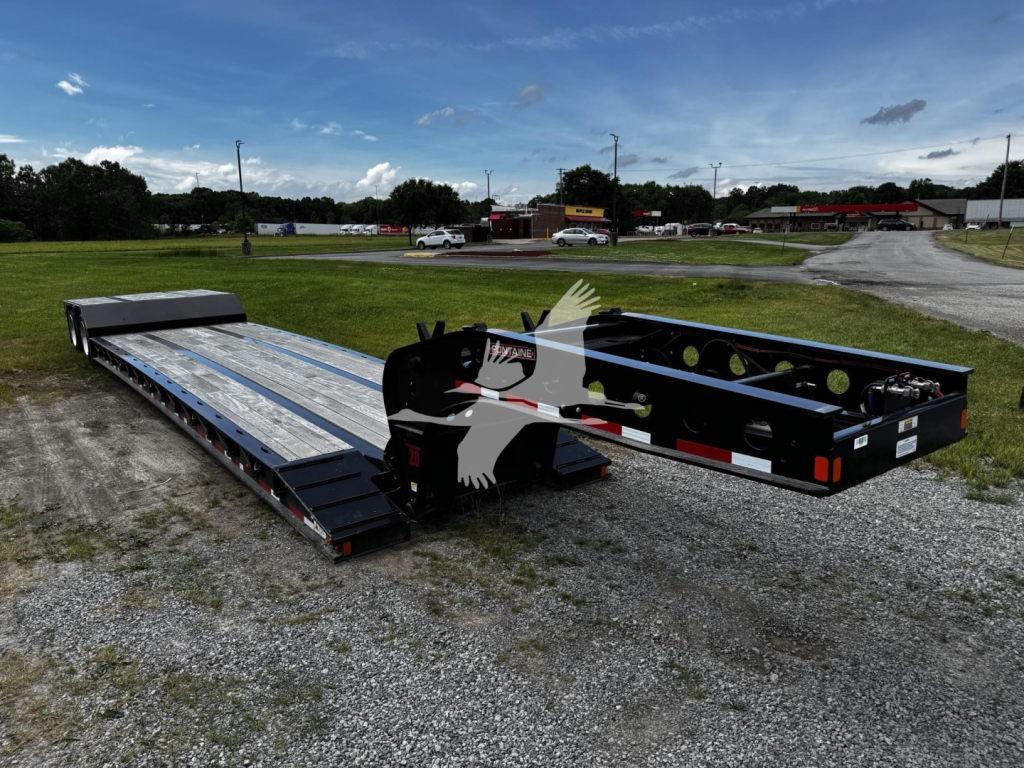
In Fontaine lowboy and double drop equipment, the buying decision gets more technical fast. Key numbers include loaded deck height, ground clearance, axle spread, swing clearance, deck length in the well, and capacity over a defined length such as 55 ton or 60 ton in 13 feet. Many new Fontaine specialized trailers are set up with hydraulic detachable goosenecks, air ride suspensions, rear axle air lift, multiple ride height positions, boom wells, and modular connections for flip axles, flip boxes, or spreader bars. Outrigger count and type also matter, especially for operators hauling wider machines, cranes, paving equipment, or construction components. A buyer should verify not just stated capacity, but how the trailer is configured for legal payload in the states it will actually run.
The best way to shop this category is to match the trailer to the freight first, then to the permit environment and tractor setup. For heavy haul, confirm wet-line requirements, neck style, non-ground-bearing versus ground-bearing detach design, tie-down count, ramp style, and compatibility with future axle additions. For flatbeds, focus on payload, securement efficiency, forklift handling, and long-term maintenance items such as drum versus disc brakes, wheel material, and suspension design. New Fontaine trailers tend to appeal to fleets and owner-operators that want a trailer built around real operating conditions instead of a generic spec sheet.
Frequently Asked Questions about New Fontaine Trailers
What types of new Fontaine trailers are most common?
The most common new Fontaine trailer types include combo and all-steel flatbeds, hydraulic detachable lowboys, flat level deck lowboys, and double drop or specialized heavy haul models. Flatbeds are typically used for general freight, building materials, steel, and forklift-delivered loads. Lowboys and double drops are more specialized for construction equipment, machinery, and over-dimensional freight where deck height, axle group configuration, and detachable neck design are critical.
What should I look for in a new Fontaine flatbed trailer?
Focus on tare weight, deck construction, securement layout, and any loading method the operation depends on. Combo construction can help maximize payload while still holding up under daily use. Buyers should also review stake pocket spacing, number and style of winches, aluminum versus steel wheel choices, kingpin setting, suspension type, and whether the trailer is equipped for a truck-mounted forklift. If forklift use is part of the business, the trailer needs the correct counterweight package and related structural components, not just a rear mounting kit.
How do I choose between a Fontaine lowboy and a double drop?
The choice comes down to the freight profile and loading method. A lowboy, especially a hydraulic detachable gooseneck model, is typically the better fit for heavy equipment that can be driven or loaded onto a very low deck with strong concentrated load capacity. A double drop is better suited to taller freight that benefits from a lower well section but does not always require the same machine-loading setup as a true equipment lowboy. Deck height, well length, axle count, and detachable neck style should all be matched to the freight dimensions and route restrictions.
Why do axle spread, ride height, and lift axles matter on Fontaine specialized trailers?
These details directly affect legal payload, maneuverability, tire wear, and loading geometry. Axle spread influences bridge compliance and permit planning. Adjustable ride height can help with loading angles, fifth wheel height matching, and clearance management. Lift axles reduce scrub and operating costs when the trailer is empty or lightly loaded. On specialized trailers, these are not minor options. They are part of how the trailer performs in real permit and jobsite conditions.
Are new Fontaine specialized trailers set up for future expansion like flip axles or neck extensions?
Many are, but the configuration has to be verified on the individual trailer spec. Heavy haul buyers often want modular compatibility for flip axles, spreader bars, or neck extension components because freight demands can change over time. A trailer may be rated for a certain capacity in one axle setup and a higher capacity with additional components installed. It is important to confirm connection points, hydraulic setup, axle compatibility, and the legal implications of each configuration before purchase.