
New 2025 Behnke Trailers For Sale
Shop new 2025 Behnke trailers, including heavy-duty flatbed and tilt models built for equipment hauling, construction, and farm use.
Selling a new 2025 behnke trailer? List your new 2025 behnke trailer for sale and reach thousands of commercial buyers.
New 2025 Behnke Trailers
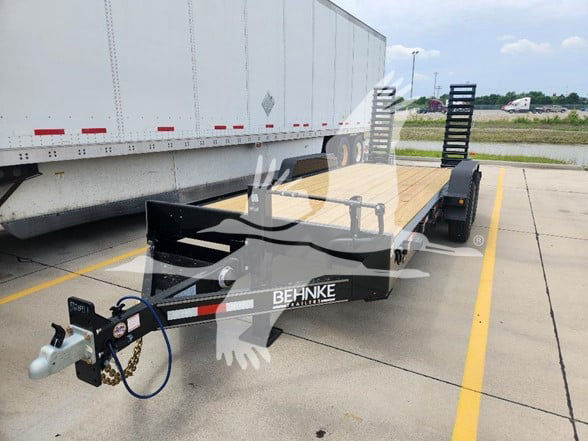
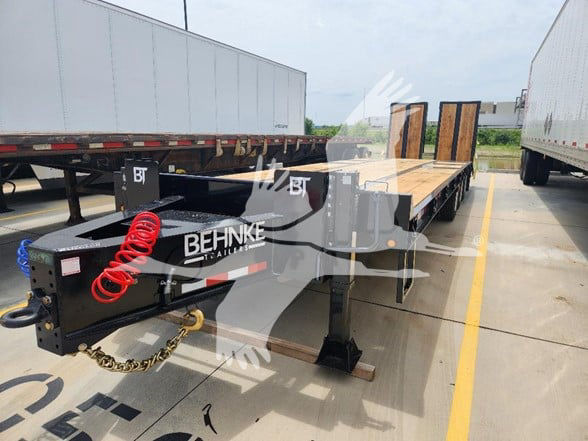
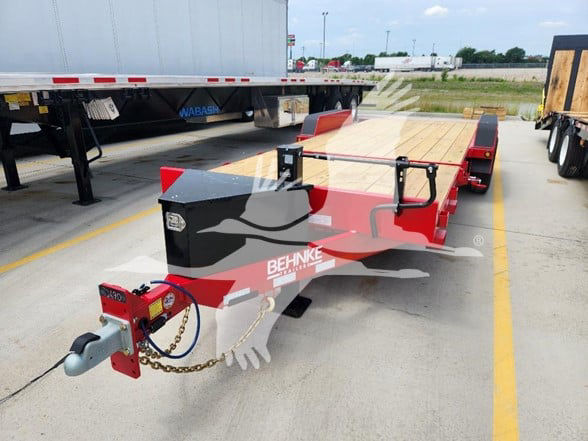
The first decision is usually deck style. A fixed-deck flatbed with a beavertail and spring-assisted or hydraulic ramps is a strong fit for mixed fleets that load different machines through the week and want a familiar loading angle. A tilt trailer reduces ramp handling and speeds up loading for wheeled and tracked equipment, especially when moving skid steers, small rollers, scissor lifts, or attachments that benefit from quick turnaround. Buyers should compare usable deck length, beavertail length, width between fenders, and ramp design because those details affect how easily a machine loads, where weight sits over the axles, and how much room remains for buckets, forks, or extra attachments.
Running gear and hitch components matter as much as deck layout. Many Behnke trailers in this class use tandem or triple axle setups with Dexter axles, with common configurations including 8,000 lb., 10,000 lb., and heavier spring-ride axle groups. Oil-bath hubs, electric brakes, E-Z Lube setups, breakaway kits, dropleg jacks, adjustable pintle hitches, landing gear, and Grade 70 safety chains are all features worth checking closely. Tire size also tells you a lot about the trailer's intended duty cycle. Commercial rubber such as 17.5-inch or 22.5-inch tires generally points to a trailer meant for regular hauling at higher weights, with better durability than lighter trailer tire packages.
Tie-down layout and daily usability separate a good equipment trailer from one that slows down the crew. Stake pockets, D-rings, pallet fork holders, tongue-mounted toolboxes, fender protection, and self-cleaning or flip-up ramp designs all affect how efficiently the trailer works on a jobsite. For buyers comparing new 2025 Behnke trailers, the key is matching GVWR, deck configuration, axle rating, and loading method to the actual machines being moved. A trailer that looks similar on paper can perform very differently once deck height, approach angle, hitch style, and securement points are factored into real-world hauling.
Frequently Asked Questions about New 2025 Behnke Trailers
What are new 2025 Behnke trailers commonly used for?
New 2025 Behnke trailers are commonly used for hauling skid steers, compact track loaders, tractors, mini excavators, scissor lifts, attachments, and other jobsite equipment. Most are built as equipment trailers or heavy-duty flatbed trailers with features that support repeated loading, unloading, and securement in construction, agriculture, landscaping, and municipal service.
What is the difference between a Behnke tilt trailer and a Behnke flatbed equipment trailer?
A Behnke tilt trailer uses a tilting deck section for loading, which reduces the need to handle ramps and can speed up loading cycles. A Behnke flatbed equipment trailer typically uses a fixed deck with a beavertail and ramps, which can be better for operators who haul a wider mix of machines and want a more traditional deck layout. The better choice depends on the load type, wheelbase of the equipment, ground clearance, and how often the trailer is loaded each day.
What GVWR range should buyers expect on Behnke equipment trailers?
Behnke equipment trailers commonly appear in medium-duty and heavy-duty GVWR ranges, with many units around 20,000 lb. and some much heavier depending on axle count and trailer design. A buyer should choose GVWR based on the actual operating weight of the machine, plus attachments, fuel, chains, binders, and any added cargo. Staying too close to the trailer's maximum rating leaves little margin for day-to-day use.
What features matter most when comparing new Behnke trailers?
The most important comparison points are deck length, usable width, axle rating, suspension type, brake setup, tire size, hitch type, and securement points. Buyers should also pay close attention to loading angle, beavertail design, ramp construction, jack capacity, and whether the trailer uses oil-bath hubs or E-Z Lube axles. These details affect load placement, maintenance needs, and how practical the trailer is in daily commercial use.
Are Behnke trailers a good fit for heavy equipment hauling?
Behnke trailers are a strong fit for many heavy equipment and compact equipment applications when the trailer is matched correctly to the machine and duty cycle. Models with higher GVWRs, heavier axle packages, commercial-grade tires, and robust loading systems are suited for repeated hauling of construction and agricultural equipment. The main requirement is confirming that payload, deck dimensions, and hitch setup align with the actual equipment being transported.