
New Refuse Side Loader Trucks For Sale in Arkansas
New refuse side loader trucks for sale in Arkansas: compare arm reach, legal payload, hydraulic cooling, and chassis-body warranty coverage for your routes.

Selling a new refuse side loader truck? List your new refuse side loader truck for sale and reach thousands of commercial buyers.
New Refuse Side Loader Trucks in Arkansas
Body volume is not payload: a large packer can reach an axle limit before its compartment is full. Specify capacity around waste density, compaction settings, stops per shift, and disposal distance, then request an axle-by-axle weight projection including the body, arm, fuel, crew, and expected load. A 20,000-pound steer axle and 46,000-pound tandem rating describe component capacity, not automatic permission to carry 66,000 pounds on Arkansas roads. Confirm legal axle, bridge, and gross weights for the actual route, including posted county bridges and landfill access roads.
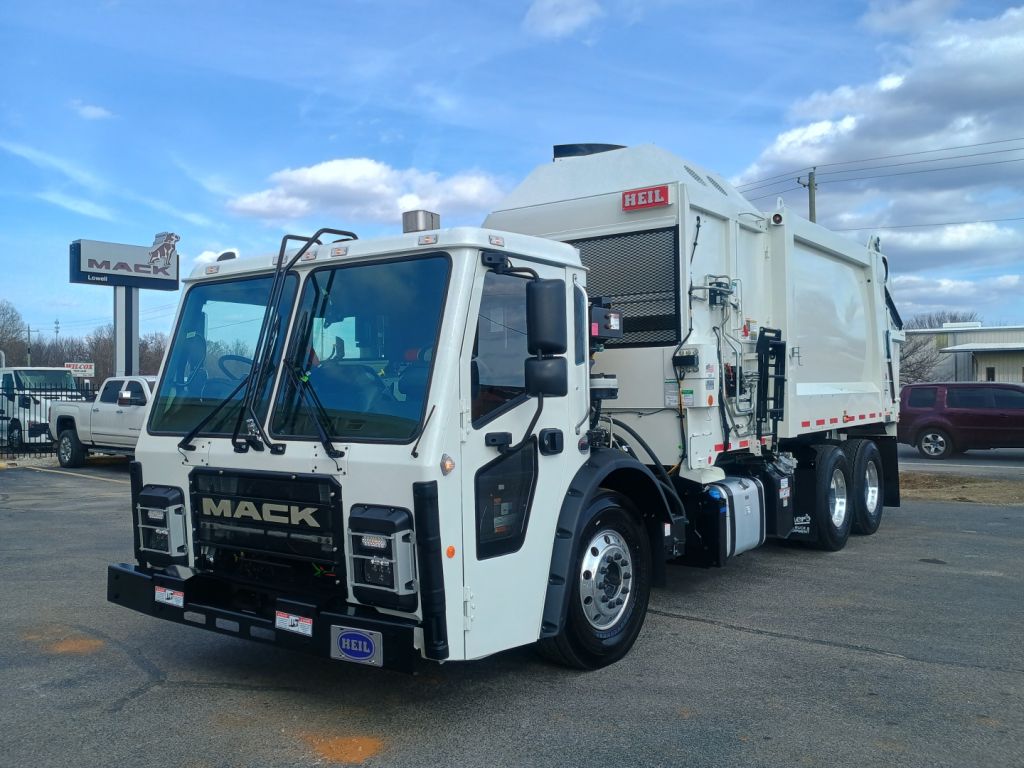
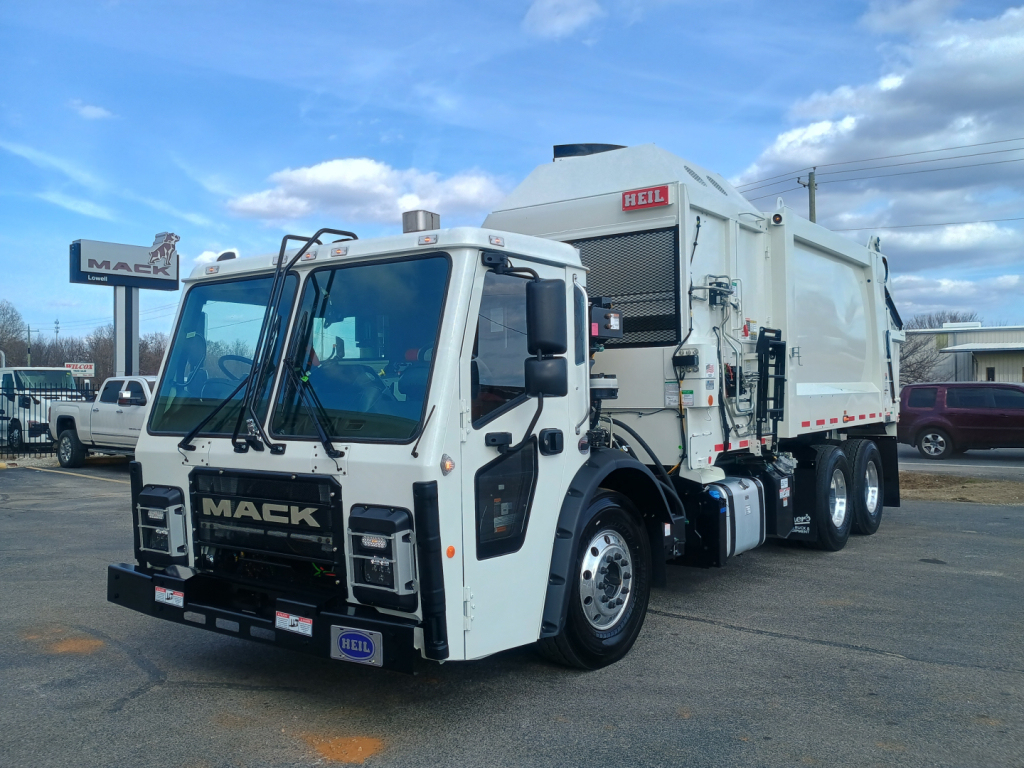
Low-entry chassis such as the Mack LR, Peterbilt 520, and Autocar ACX prioritize visibility and repeated collection cycles. Diesel configurations commonly pair vocational engines with Allison automatic transmissions; match PTO provisions, rear gearing, cooling capacity, and chassis electronics to the body builder's requirements. Dual driving positions can improve curbside control, but confirm seat layout, camera coverage, steering visibility, and operator training rather than treating dual controls as a substitute for a safe collection procedure.
Arkansas summer heat makes hydraulic cooling, radiator access, and debris management practical buying issues, especially during repeated packing cycles at low road speed. Ozark grades favor appropriate gearing, effective service brakes, and an auxiliary braking system where offered; long rural transfers also put more emphasis on ride quality and fuel capacity. Request a route demonstration that checks turning clearance, overhead obstructions, safe arm deployment, and loaded handling rather than judging the truck only on an empty yard drive.
New-truck purchasing should include written responsibility for chassis, packer body, arm, and hydraulic warranty work, plus confirmation of delivery inspection and operator training. Ask whether coverage is limited by months, mileage, engine hours, or operating conditions, and identify who handles integration faults between the chassis and body. Account for the 12% federal excise tax on qualifying new heavy trucks unless a documented exemption applies. Compare maintenance access, automatic lubrication coverage, filter locations, and local chassis and body service support before finalizing the build.
Frequently Asked Questions about New Refuse Side Loader Trucks in Arkansas
What CDL do I need to drive a side loader garbage truck in Arkansas?
A straight refuse side loader with a GVWR or actual gross weight of at least 26,001 pounds generally requires a Class B CDL in Arkansas. A qualifying combination towing more than 10,000 pounds can require Class A instead. Most heavy side loaders use air brakes, so the driver's license must not carry an air-brake restriction. Verify any applicable medical certification and employer training requirements before assigning a collection route.
Should I order a diesel or CNG side loader for an Arkansas route?
Choose diesel when dependable CNG fueling and maintenance support are not available for the collection operation. CNG side loaders can suit return-to-base fleets with adequate overnight fueling capacity, but station throughput, backup fueling, tank weight, and technician training belong in the specification review. Confirm that the maintenance building meets applicable ventilation, gas detection, and fire-code requirements before committing to natural gas equipment.
What should I check on an unused prior-model-year side loader?
Verify the warranty start date and storage condition before treating an unused prior-model-year refuse side loader as equivalent to a fresh build. Check tire date codes, batteries, fluid condition, hydraulic hoses, seals, and corrosion at electrical connections. Request ECM mileage and engine hours, chassis and body build dates, emissions labels, and outstanding recall information. The advertised model year alone does not establish emissions certification or remaining warranty coverage.
Can an automated side loader collect furniture and loose bulky trash?
A cart-gripping automated side loader is not a substitute for a bulky-waste collection truck. Furniture, appliances, and loose debris usually require separate collection equipment or a body specifically equipped and approved for that loading method. Confirm the arm manufacturer's accepted cart designs and load limits, and plan service for damaged carts or blocked access. Requiring the operator to improvise manual loading undermines the safety and productivity benefits of automation.
Do Arkansas municipalities pay federal excise tax on new refuse trucks?
Qualifying purchases for the exclusive use of a state or local government can be exempt from federal truck excise tax when the required documentation is completed. Municipal buyers should establish the exemption with the seller before invoicing a new refuse side loader. A private hauler does not automatically qualify merely because the truck serves a municipal contract. Leasing and other ownership arrangements require separate review of the applicable tax treatment.