
New 2025 Hino Trucks For Sale in Alabama
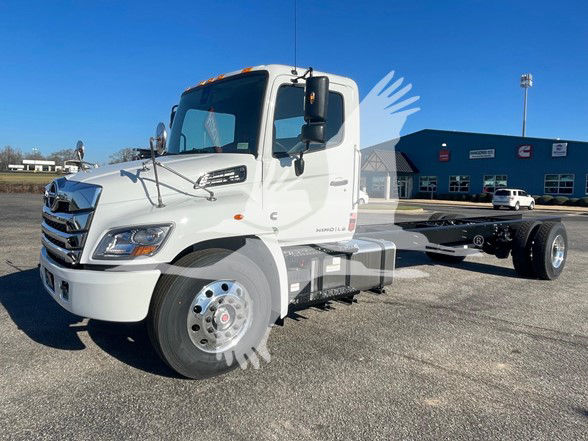
Shop new 2025 Hino trucks for sale in Alabama, including Hino L6 cab and chassis models built for medium-duty bodies and vocational use.
Selling a new 2025 hino truck? List your new 2025 hino truck for sale and reach thousands of commercial buyers.
New 2025 Hino Trucks in Alabama
For most buyers, the L6 sits in the sweet spot between Class 6 capability and urban drivability. Typical considerations include GVWR, front and rear axle capacities, suspension type, frame strength, and brake configuration. Buyers also compare cab layout, visibility, turning radius, and ease of body integration. A new Hino cab and chassis is often selected for pickup and delivery fleets, municipal work, contractor service, and route-based operations where uptime and driver accessibility matter as much as raw capacity. If the truck will spend most of its time in Birmingham traffic, on job sites around Huntsville, or making regional stops across Alabama, wheelbase and body length matching are just as important as engine output.
Powertrain and serviceability remain central to the purchase decision. Hino medium-duty trucks are known for diesel efficiency, straightforward maintenance access, and a driver-friendly cab environment. Buyers should verify transmission pairing, fuel tank capacity, PTO compatibility, and any electronic features that affect fleet management or body operation. On a cab and chassis truck, the upfit often determines long-term value, so it is worth confirming frame rail spacing, exhaust routing, back-of-cab clearance, and electrical provisions before the body is installed. That is especially important for refrigerated bodies, hydraulic equipment, or rollback applications.
Alabama buyers also tend to focus on application fit rather than just model year. A 2025 Hino truck may be ideal for beverage delivery, equipment transport, landscaping, utility service, or box truck conversion, but only if the chassis is ordered around real operating weight and route conditions. A truck spec that works well on flat city delivery routes may be wrong for stop-and-go mixed terrain, heavy tool loads, or frequent PTO use. The best comparison points are payload target, body type, wheelbase, axle ratio, and expected duty cycle, because those details determine how well a new Hino truck will perform once it is put to work.
Frequently Asked Questions about New 2025 Hino Trucks in Alabama
What is a 2025 Hino L6 cab and chassis used for?
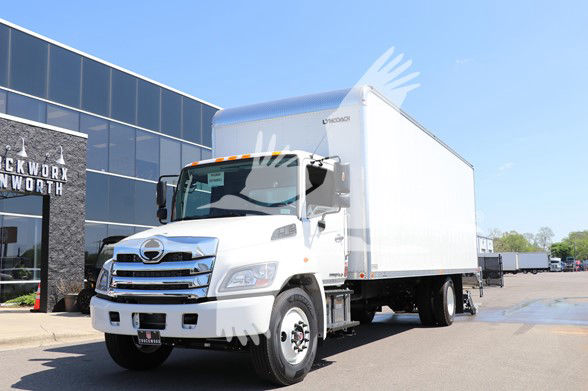
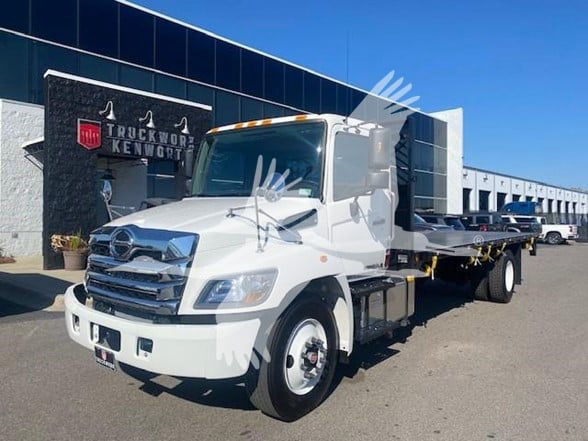
A 2025 Hino L6 cab and chassis is commonly used as a base for vocational and delivery upfits. Typical applications include box trucks, reefer trucks, flatbeds, stake beds, dump bodies, rollback wreckers, and service bodies. The bare chassis lets the buyer match the truck to the exact body length, payload requirement, and operating environment instead of buying a fixed-body truck that may not fit the job.
What should I check before buying a new Hino cab and chassis?
The most important items are GVWR, wheelbase, cab-to-axle measurement, front and rear axle ratings, and frame specifications. Those measurements determine what body can be installed and how the finished truck will balance weight. Buyers should also confirm transmission setup, PTO readiness, fuel capacity, suspension, brake system, and any electrical provisions needed for the body builder. A good chassis spec starts with the final application, not just the model badge.
Is the Hino L6 a good choice for Alabama delivery and vocational work?
The Hino L6 is well suited for many Alabama operations because it combines medium-duty capacity with manageable size for city streets, industrial areas, and regional routes. It fits applications such as local delivery, contractor work, municipal service, and route-based operations. The right spec depends on terrain, total payload, stop frequency, and body type, so buyers should match axle ratio, suspension, and wheelbase to the actual duty cycle.
How do I choose the right wheelbase on a new Hino truck?
Wheelbase should be selected around the body length, required load distribution, and turning needs. A longer wheelbase can support longer bodies and improve stability, but it also increases turning radius and may reduce maneuverability in tight urban areas. A shorter wheelbase is easier to handle in city work but may limit body options or payload placement. The correct choice comes from the body builder’s layout and the truck’s expected operating conditions.
Why does upfit compatibility matter on a new Hino truck?
Upfit compatibility matters because the chassis has to support the body, equipment, and work system from day one. Items such as frame rail dimensions, exhaust layout, PTO access, battery box placement, and back-of-cab clearance can affect how easily a body is installed and how well it functions later. On trucks running refrigeration units, hydraulics, liftgates, or specialized service equipment, small chassis-spec details can make a major difference in installation cost and long-term uptime.