
New Freightliner Grapple Trucks For Sale in Florida
Shop new Freightliner grapple trucks for debris, waste, and storm cleanup work in Florida, with heavy-duty chassis and high-capacity grapple setups.
Selling a new freightliner grapple truck? List your new freightliner grapple truck for sale and reach thousands of commercial buyers.
New Freightliner Grapple Trucks in Florida
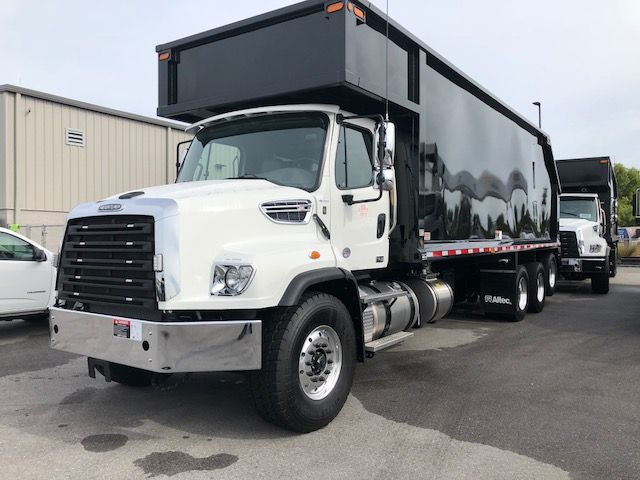
The chassis spec drives long-term performance. Freightliner severe-duty platforms are popular because they can be ordered with strong frame rails, set-forward front axles, vocational suspensions, and engine ratings suited for PTO and hydraulic demand. Many new units in this class use Detroit power with automatic transmissions, engine brakes, and tri-axle configurations for higher legal capacity and better load distribution. Buyers should pay close attention to axle ratings, wheelbase, bridge law considerations, turning radius, and how the body and crane placement affect front-to-rear balance. In Florida, that matters on tight municipal routes, landfill approaches, and storm-response work where trucks may cycle between residential streets and transfer stations all day.
The upfit is where grapple trucks separate themselves. Common specs include Serco or similar knuckleboom loaders, extended booms for added reach, waste or debris grapples, and high-volume bodies in the 40 to 65 yard range. Body material is a major decision point. Hardox or other abrasion-resistant steel is common for buyers handling mixed C&D debris, storm vegetative waste, and demolition material because it stands up better to impact and sliding wear. Rear hitches, tarp systems, toolbox layouts, outrigger design, and hydraulic oil capacity all affect field productivity. Buyers should also look at loader mount location, control style, cycle times, scuff protection, and service access around the valve bank, turret, and hydraulic plumbing.
For a new Freightliner grapple truck, the real comparison is not just crane brand or body size. It is how well the truck is matched to the material stream and route profile. A tree and storm cleanup operation may prioritize boom reach, grapple geometry, and body cube, while a municipal waste fleet may focus more on uptime, parts support, cab layout, and repeatable loading cycles. In Florida, corrosion exposure, heat, and year-round utilization make cooling capacity, hydraulic reliability, and vocational dealer support especially important. A well-spec'd new Freightliner grapple truck should deliver stable crane performance, durable body life, and a chassis that can handle constant stop-and-load duty without becoming maintenance-heavy too early.
Frequently Asked Questions about New Freightliner Grapple Trucks in Florida
What is a Freightliner grapple truck used for?
A Freightliner grapple truck is used to pick up and haul bulky, irregular material that cannot be loaded efficiently by hand. Common applications include storm debris, tree limbs, brush, construction and demolition debris, waste collection, and municipal cleanup. The truck combines a heavy-duty chassis, a hydraulic knuckleboom or stiff-boom loader, and a large debris body so one operator can load and transport material in the same unit.
What chassis specs matter most on a new grapple truck?
The most important chassis specs are axle ratings, frame strength, wheelbase, engine horsepower and torque, transmission type, suspension, and PTO compatibility for the hydraulic system. Buyers should also evaluate front axle capacity because crane weight and boom placement put significant load on the front end. On tri-axle units, bridge compliance, turning radius, and legal payload capacity are key factors, especially for fleets running public roads between collection points and disposal sites.
Why do many grapple trucks use Hardox or abrasion-resistant bodies?
Hardox and similar abrasion-resistant steels are used because grapple trucks handle abrasive, impact-heavy loads that wear out standard body material faster. Demolition debris, mixed waste, stumps, and storm cleanup material can dent, gouge, and thin body walls over time. An abrasion-resistant body generally offers better durability, longer service life, and lower long-term repair frequency, particularly in high-cycle commercial or municipal service.
Is a tri-axle Freightliner grapple truck better than a tandem?
A tri-axle Freightliner grapple truck is often the better choice when the job requires more legal carrying capacity, improved weight distribution, or a larger body and crane package. A tandem can still be a strong fit for lighter debris streams or tighter route work where maneuverability matters more than maximum payload. The right choice depends on the crane size, body volume, local weight laws, and the type of material being hauled.
What should buyers in Florida pay attention to on a new grapple truck?
Florida buyers should pay close attention to cooling performance, corrosion resistance, hydraulic system durability, and service support. Grapple trucks in Florida often see year-round use in high heat, heavy rain, municipal work, and storm-response conditions. That makes radiator capacity, hydraulic oil cooling, sealed electrical components, body coating quality, and access to parts and vocational service especially important for uptime.