
Used 2018 Refrigerated Trailers For Sale
Compare used 2018 refrigerated trailers for sale by insulation condition, reefer engine hours, cooling performance, and U.S. or Canadian route requirements.
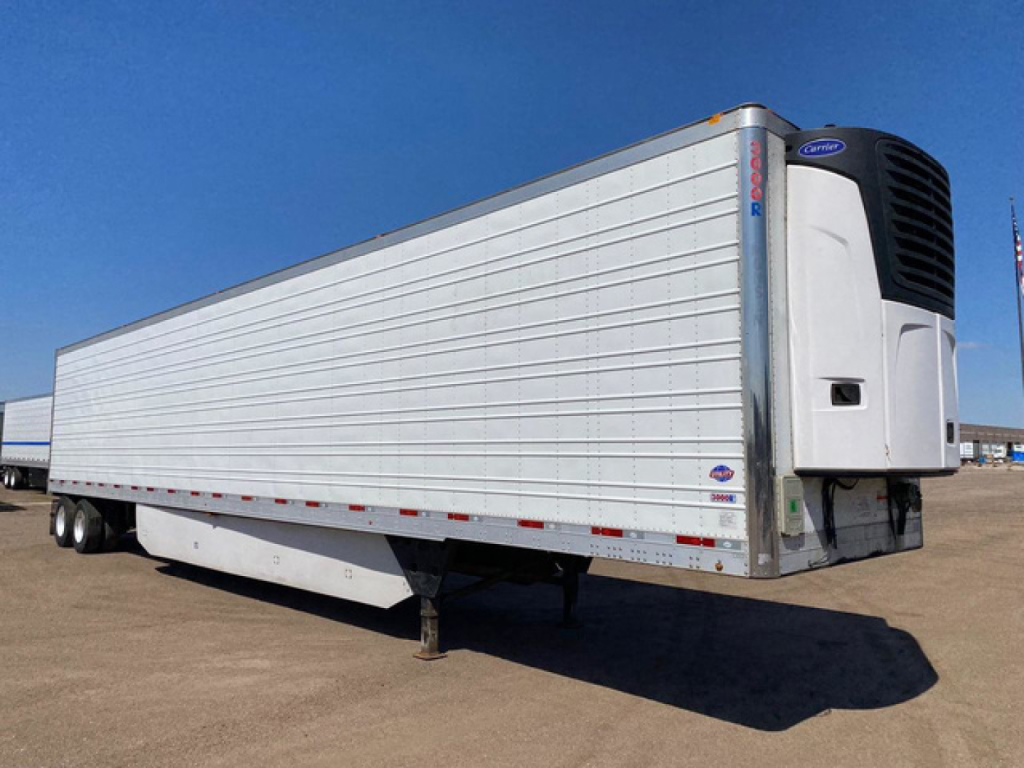
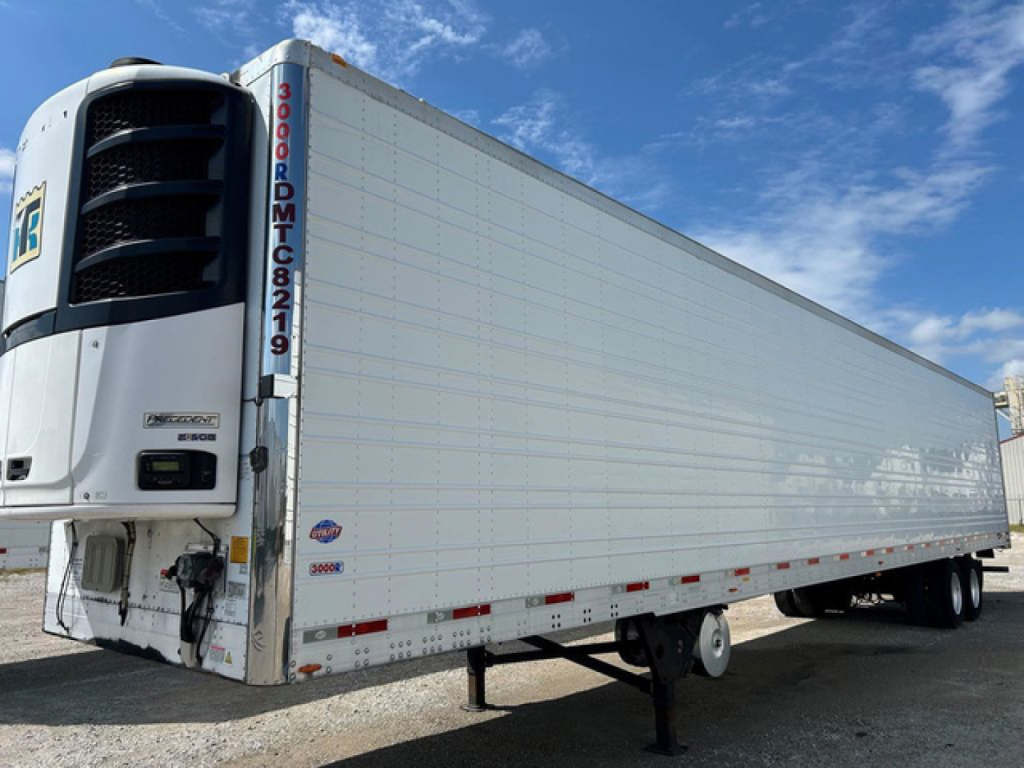

Selling a used 2018 refrigerated trailer? List your used 2018 refrigerated trailer for sale and reach thousands of commercial buyers.
Used 2018 Refrigerated Trailers
Insulation condition can separate a serviceable refrigerated trailer from one that consumes excessive fuel while struggling to maintain temperature. Inspect liner seams, roof joints, door seals, and previous repairs for moisture entry or separation. Wet insulation reduces thermal performance and can add weight. Check aluminum floor sections for forklift damage, crushed air channels, and separation near the rear threshold. An intact ceiling air chute and unobstructed return-air path matter because a cold discharge temperature alone does not prove even cooling throughout the load.
Refrigeration equipment on trailers from this period commonly includes Thermo King Precedent and Carrier X4 units, but the installed unit may have been replaced. Record its serial number, engine model year, refrigerant specification, engine hours, and service history separately from the trailer information. Compare engine hours with controller records and documented repairs rather than treating one hour reading as proof of remaining life. Have a refrigeration technician test pull-down, temperature holding, defrost, alarms, and heating where required. Record ambient conditions during testing; an empty trailer cooling quickly in mild weather does not demonstrate loaded summer performance.
Underneath, inspect crossmembers, floor supports, landing gear attachments, suspension hangers, and the upper coupler around the kingpin. Salt exposure in northern U.S. states and Canadian provinces can leave substantial corrosion behind apparently sound exterior panels. Check sliding tandem operation, axle alignment, wheel seals, air springs, and air lines. Disc brakes and drum brakes require different wear checks, so identify the system before estimating repairs. Automatic tire inflation equipment also needs a leak and function test, not simply confirmation that it is installed.
A 2018 trailer model year does not establish the refrigeration engine's emissions status. California operation requires a separate check of CARB transport refrigeration unit requirements using the engine's identity and compliance records, not just the trailer VIN. Across Canada, verify provincial weights, axle spacing, and inspection requirements for the intended routes. Before purchase, reconcile the trailer inspection, refrigeration service records, title or ownership documents, and any replacement-unit paperwork so mechanical condition and legal suitability are evaluated separately.
Frequently Asked Questions about Used 2018 Refrigerated Trailers
How much payload can a 2018 refrigerated trailer carry?
Legal payload is the permitted combination weight minus the actual operating weight of the tractor and refrigerated trailer. On many U.S. Interstate routes, the standard combination limit is 80,000 pounds, subject to axle and bridge limits. Include fuel, reefer fuel, equipment, and driver weight in the calculation. Canadian limits vary by province, axle configuration, and route.
Can I use a single-temperature 2018 reefer for frozen and chilled freight together?
Separate frozen and chilled zones normally require a properly configured multi-temperature refrigerated trailer with suitable evaporators, controls, and insulated partitions. Adding a bulkhead to a single-temperature reefer does not create independently controlled compartments. Verify each compartment's temperature capability, airflow, usable pallet space, and loading access before assigning mixed-temperature freight.
Can a used 2018 refrigerated trailer run on electric power while parked?
A 2018 refrigerated trailer can run on shore power only if its refrigeration unit has compatible electric standby equipment. Confirm the standby option from the unit identification and equipment records, then verify voltage, phase, amperage, and connector requirements. Commercial standby systems commonly require three-phase power, not an ordinary household outlet. Test cooling operation on electricity before relying on the feature.
Does hauling food in a used reefer require continuous temperature recording?
The U.S. FDA sanitary transportation rule does not impose one universal continuous-recording requirement on every refrigerated food shipment. Covered operations must meet applicable sanitary transportation duties and the shipper's temperature-control requirements. A used refrigerated trailer may still need a calibrated independent recorder to satisfy customer specifications. Canadian food-safety requirements and customer contracts should be checked separately for cross-border work.