
Peterbilt Flatbed Dump Trucks For Sale in New York
Shop Peterbilt flatbed dump trucks for hauling bulk material and palletized loads with dump capability, strong frames, PTO hydraulics, and jobsite-ready specs.
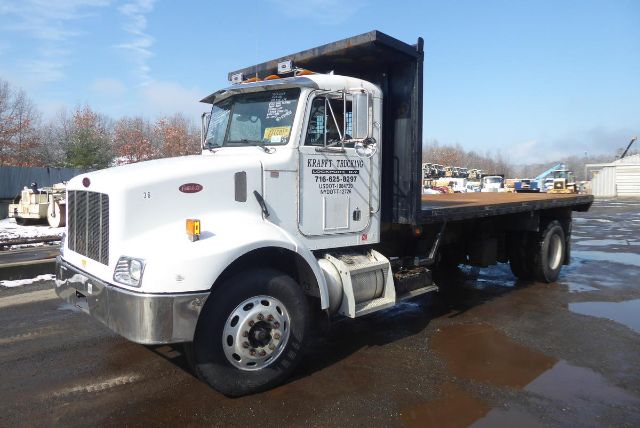
Selling a peterbilt flatbed dump truck? List your peterbilt flatbed dump truck for sale and reach thousands of commercial buyers.
Peterbilt Flatbed Dump Trucks in New York
A buyer should pay close attention to body design and hydraulic setup first. Flatbed dump bodies are commonly built with steel floors for durability, stake pockets or tie-down points for securing freight, and either a scissor hoist or telescopic cylinder for lifting. A PTO-driven hydraulic system and wetline arrangement are central to how the body performs under load. Deck length, cab-to-axle measurement, and overall wheelbase all affect payload distribution, turning radius, and how useful the truck is for both bulk material and strapped freight. Headache racks, ratchets, tarp systems, and side board compatibility can make a major difference if the truck will serve more than one application.
On the chassis side, Peterbilt models in this class are often spec'd as medium-duty or lighter vocational single-axle trucks, with GVWRs around the Class 7 range, air brakes, double frames, and vocational rear axle ratios that favor startability over highway speed. Engines are typically chosen for dependable low-end torque rather than maximum horsepower, and manual transmissions remain common because they pair well with PTO operation and jobsite durability. Suspension choice also matters. Air ride can improve loaded ride quality and protect certain cargo types, while spring suspensions may be preferred for harsher site conditions and simpler maintenance. Tire size, axle ratings, and brake condition should all be matched to the material being hauled, not just the legal GVWR on paper.
The best Peterbilt flatbed dump truck is the one whose body, hoist, and chassis spec match the work cycle. Buyers comparing listings should verify frame condition, hoist operation, cylinder leaks, PTO engagement, floor wear, crossmember condition, and signs of overloading around the hinges and rear apron. It is also worth checking deck height if forklifts will load from the side, and confirming the truck has the right securement equipment for building materials or equipment transport. A properly spec'd flatbed dump can replace two more specialized trucks in the right fleet, but only if the dimensions, hydraulic capacity, and vocational gearing fit the actual loads and routes.
Frequently Asked Questions about Peterbilt Flatbed Dump Trucks in New York
What is a Peterbilt flatbed dump truck used for?
A Peterbilt flatbed dump truck is used for mixed hauling applications where the operator needs both an open flat deck and the ability to unload by raising the body. Common uses include hauling mulch, stone, debris, pipe, palletized building materials, jobsite supplies, and small equipment. It is especially useful for contractors, municipal crews, landscapers, and utility operators who switch between bulk material hauling and strapped freight during the same workday.
What should I check on a used flatbed dump body?
Inspect the hoist type, cylinder condition, hinge area, rear apron, floor thickness, and crossmembers. Check for body twist, cracked welds, uneven lifting, hydraulic leaks, and damage from repeated overloading or off-center dumping. Securement hardware matters too. Ratchets, stake pockets, rub rails, and the headache rack should be in serviceable condition if the truck will carry palletized or bundled cargo. A body that lifts smoothly and sits square on the frame is a better sign than fresh paint alone.
Is a single-axle Peterbilt flatbed dump enough for construction work?
For many local and regional construction applications, a single-axle flatbed dump is a practical choice. It offers better maneuverability, lower empty weight, and easier access to tighter sites than a tandem truck. It can be a strong fit for masonry supply, landscape material, light demolition debris, utility work, and municipal maintenance. The limitation is payload and axle capacity. If the operation regularly hauls dense aggregate or larger equipment, a buyer needs to look closely at rear axle rating, frame strength, hoist capacity, and local bridge and weight rules.
Why do rear axle ratio and transmission matter on a flatbed dump truck?
Rear axle ratio and transmission choice directly affect startability, gradeability, PTO compatibility, and road speed. Many flatbed dump trucks are geared with deeper rear ratios because they spend time starting under load, working in stop-and-go traffic, or operating on soft or uneven surfaces. A manual transmission is still common in this class because it is durable and often well suited to PTO-driven hydraulic work. Buyers who need more highway miles between jobs should balance vocational gearing against cruise speed and fuel consumption.
Are Peterbilt flatbed dump trucks a good fit for New York routes?
They can be a very good fit for New York work because many routes involve dense traffic, urban deliveries, municipal contracts, and restricted jobsites where versatility matters more than maximum payload. A flatbed dump truck can handle both delivery and disposal tasks without requiring separate unloading equipment. Buyers in New York should still confirm axle ratings, body dimensions, bridge-law considerations, and turning radius, especially if the truck will run in city environments or on seasonal road restrictions.