
2004 Forklifts For Sale in New York
Compare 2004 forklifts for sale in New York by tire type, rated capacity, mast clearance, and corrosion to match warehouse or outdoor yard work.
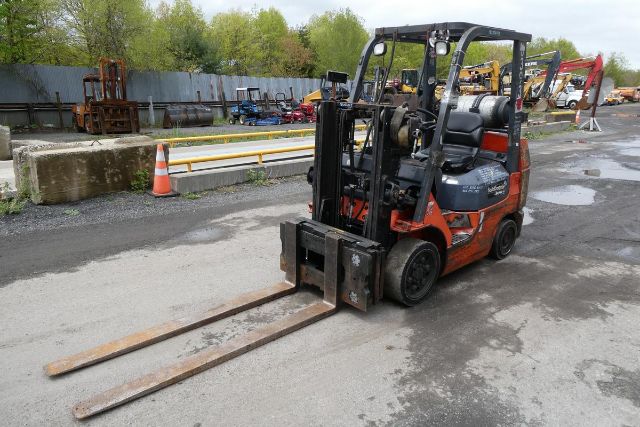
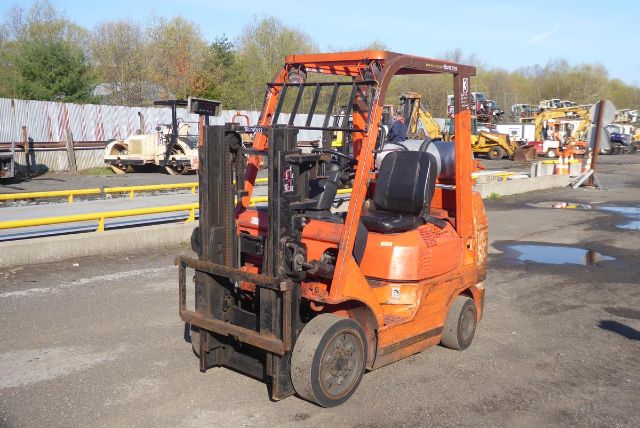
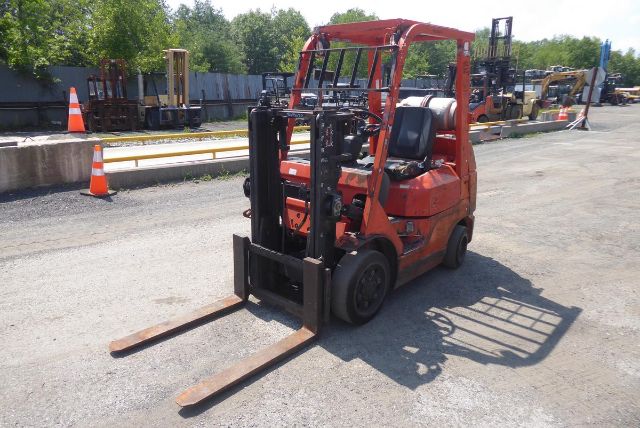
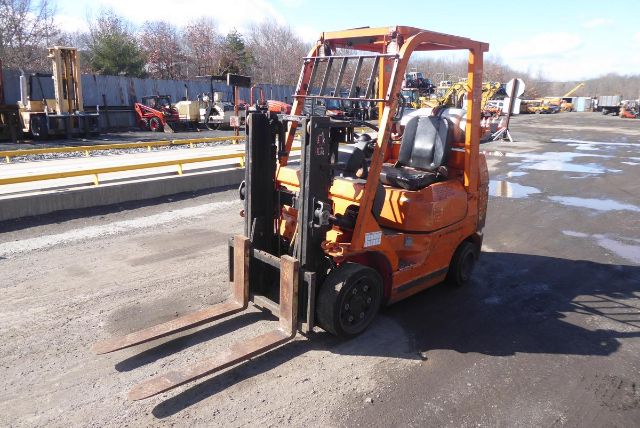
Selling a 2004 forklift? List your 2004 forklift for sale and reach thousands of commercial buyers.
2004 Forklifts in New York
Rated capacity must match the load center, maximum lift height, and installed attachment shown on the data plate, not simply the model's nominal capacity. A side-shifter or clamp can reduce usable capacity and change the clearance needed in an aisle. Measure lowered mast height for doorways, free lift for trailers, and turning clearance with the intended pallet. Inspect forks for heel wear, cracks, mismatched pairs, and unauthorized repairs; missing forks also require confirmation of carriage class and appropriate fork ratings.
A 2004 build calls for serial-number-specific parts research before purchase. Toyota 7-series LPG cushion trucks, Hyster and Yale counterbalanced models, and Crown or Raymond electric warehouse machines have different drivetrains, controls, and service needs. Highway-truck DPF and DEF model-year rules do not define forklift emissions requirements; identify the actual engine and emissions label. Compare hour readings with maintenance records and controller or ECM data where available. Run a used fork truck cold and fully warmed, then test lift, tilt, steering, brakes, and transmission engagement under a controlled load. Check mast chains, rollers, cylinder rods, axle pivots, and frame corrosion.
For any 2004 machine described as new or unused, verify storage history, commissioning work, and written warranty coverage instead of assuming current factory protection. Long storage can still leave hardened seals, deteriorated hoses, stale fuel, or an unusable traction battery. On electric units, confirm battery voltage, condition, and charger compatibility. New York freeze-thaw exposure also warrants close inspection of battery trays, connectors, LPG mounts, and underside wiring.
Frequently Asked Questions about 2004 Forklifts in New York
How much capacity do I need for long pallets on a 2004 forklift?
Use the forklift's rated capacity at the actual load center and lift height, including any attachment. An evenly loaded 48-inch-deep pallet has a 24-inch load center, while a 60-inch-deep pallet has a 30-inch load center. Longer loads can exceed the rating even when their weight seems acceptable. Obtain manufacturer-approved capacity information rather than estimating from the model number.
How much fork wear is too much on a used 2004 forklift?
A 10% loss of original fork blade thickness is a standard removal-from-service threshold for forklift forks. That wear can reduce fork capacity by roughly 20%. Have a qualified inspector measure the blade near the heel against its original thickness and check for cracks, distortion, and unequal tip heights. Do not accept welded repairs or substitute forks without verifying ratings and carriage compatibility.
Can I run a propane forklift indoors in New York?
A propane forklift can operate indoors only where ventilation and engine condition keep exhaust exposure within applicable workplace limits. LPG exhaust still contains carbon monoxide, and closed winter dock doors can sharply reduce fresh-air exchange. Evaluate ventilation and exposure under actual operating conditions. A smooth-running 2004 engine is not proof of safe emissions; fuel-system maintenance and exhaust testing remain necessary.
Does New York require a forklift operator license?
New York does not issue a general forklift operator license for workplace operation; employers must provide required operator training and evaluation. Federal OSHA covers most private workplaces, while New York PESH covers state and local government workplaces. Operator performance must be evaluated at least once every three years, with refresher training triggered by unsafe operation and other specified conditions. A course card alone does not establish qualification for every forklift or workplace.
How do I judge the battery on a 2004 electric forklift?
A documented battery capacity test is more useful than the forklift's hour meter when judging remaining electric runtime. Check cell condition, electrolyte maintenance where applicable, cable heating, connector damage, and performance under load. Verify the battery's voltage, dimensions, and weight against the truck's requirements because battery weight contributes to stability. A replacement battery or charger must match the installed electrical system and battery chemistry.