
2004 Forklifts For Sale
Compare 2004 forklifts for sale by load-center capacity, mast clearance, fuel type, and condition. Learn what to inspect on these older lift trucks.
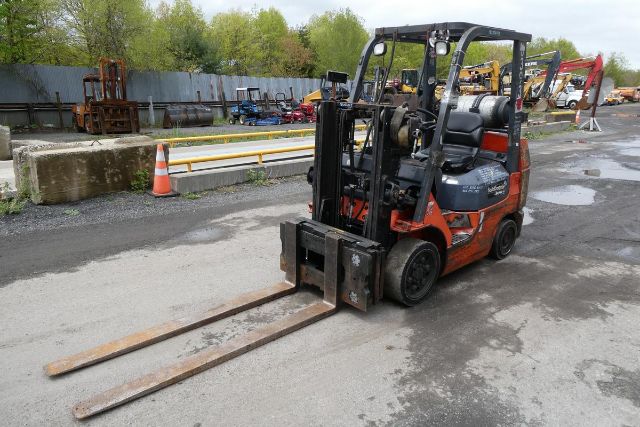
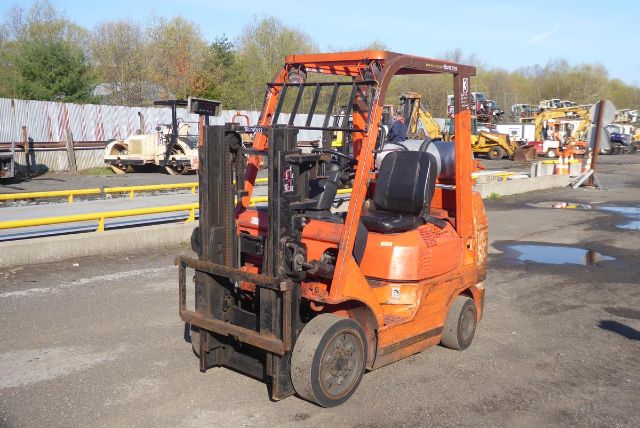
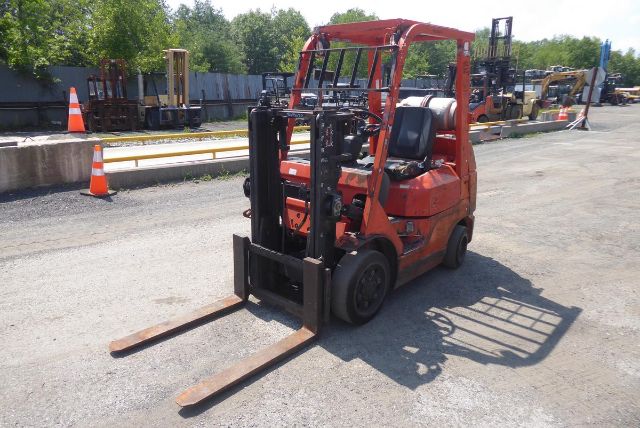
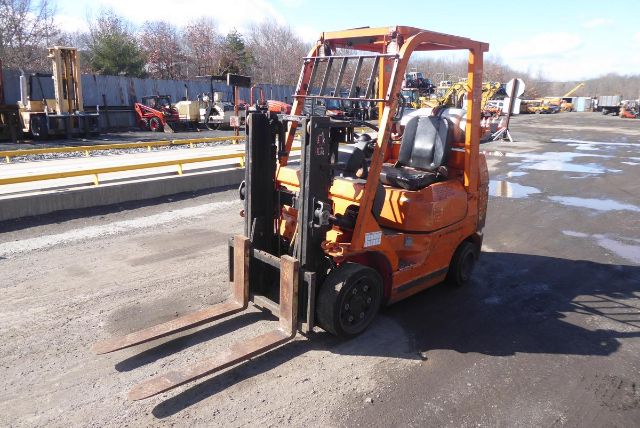
Selling a 2004 forklift? List your 2004 forklift for sale and reach thousands of commercial buyers.
2004 Forklifts
Capacity is specified at a particular load center and lift height, and a side-shifter or other attachment can reduce the allowable load. A common counterbalance rating uses a 24-inch load center, but the truck's plate must govern the actual application. Long forks do not increase capacity. Measure collapsed mast height, overhead guard clearance, maximum fork height, and free lift for trailers, doorways, and racking. Cushion-tire forklifts work best on smooth, hard surfaces; pneumatic-tire and purpose-built rough-terrain configurations are better suited to appropriate outdoor work.
Powertrain choices in the 2004 era include LPG engines with torque-converter transmissions, battery-electric drives, and diesel configurations. Toyota 7-series LPG trucks are a familiar example, but compare Hyster, Yale, Caterpillar, Mitsubishi, and other makes on their actual specifications. Older diesel engines commonly predate Tier 4 aftertreatment, but engine labels, not highway-truck emissions dates, establish the applicable certification. On an electric truck, obtain battery age, charger compatibility, and a capacity-test result. An hour meter may have been replaced, so reconcile displayed hours with service invoices and any available controller or ECM history.
A cold-start and fully warmed operating test should cover forward and reverse engagement, brakes, steering, and hydraulic lift and tilt. Check mast rollers, chain elongation, carriage play, cylinder rods, hoses, and fork heels for wear or cracking. Look for welded repairs to the mast or frame and verify that attachment changes are reflected on the capacity plate. A qualified technician should test lifting and holding performance with a suitable load, since unloaded operation can conceal weak hydraulics, brake problems, or transmission slip.
An unused or new-old-stock 2004 forklift still needs storage-related inspection; new condition does not establish a fresh factory warranty. Confirm warranty eligibility in writing and specify the correct forks, attachment rating, charger or LPG cylinder, and safety equipment before purchase. For US and Canadian buyers, road salt, fertilizer exposure, and outdoor storage warrant close checks for corrosion around mast channels, battery trays, and structural joints. Cold-region operation also calls for suitable lubricants, cooling-system freeze protection, and battery performance checks.
Frequently Asked Questions about 2004 Forklifts
Can a 2004 forklift rated for 5,000 pounds lift a 5,000-pound long load?
A 5,000-pound rating at a 24-inch load center does not authorize lifting 5,000 pounds with the load's center of gravity farther forward. Long crates, uneven loads, and attachments increase the overturning moment. For a 2004 forklift, obtain the manufacturer's approved capacity for the actual load center, attachment, and lift height rather than relying on a simple derating calculation.
How much fork wear is too much on a 2004 forklift?
A fork with 10% thickness loss from its original dimension should be removed from service under commonly used fork inspection criteria. That wear can reduce load capacity by roughly 20%. On a 2004 forklift, have a qualified inspector measure both forks, especially at the heels, and check for cracks, excessive tip-height differences, damaged hooks, and missing positioning locks.
Do operators need certification to use a 2004 forklift?
Yes. US employers must provide forklift operator training and evaluation under OSHA's powered industrial truck requirements, regardless of the forklift's model year. Operator performance must be evaluated at least once every three years, with refresher training triggered by specified unsafe practices or workplace changes. Canadian requirements vary by jurisdiction, so employers must verify the applicable provincial or territorial training and competency rules.
Can I convert a 2004 electric forklift to a lithium battery?
A lithium conversion requires an approved battery system, not just matching voltage. A 2004 electric forklift may rely on battery weight for stability, and a lighter replacement can compromise its rated capacity. Verify minimum battery weight, compartment dimensions, electrical compatibility, charger requirements, and manufacturer approval for changes affecting safe operation. Include battery management, temperature limits, and service support in the conversion assessment.
What weight should I use when arranging transport for a 2004 forklift?
Use the forklift's actual shipping weight, not its lifting capacity, when selecting a transport trailer. A counterbalance forklift can weigh substantially more than the load it is rated to lift. For a 2004 forklift, account for the installed battery or counterweight, mast, forks, and attachments, then verify trailer payload, concentrated deck loading, ramp capacity, clearance, and suitable securement points.