
2004 Toyota Forklifts For Sale in New York
Compare 2004 Toyota forklifts for sale in New York by tire type, mast clearance, rated capacity, propane system condition, and winter corrosion.
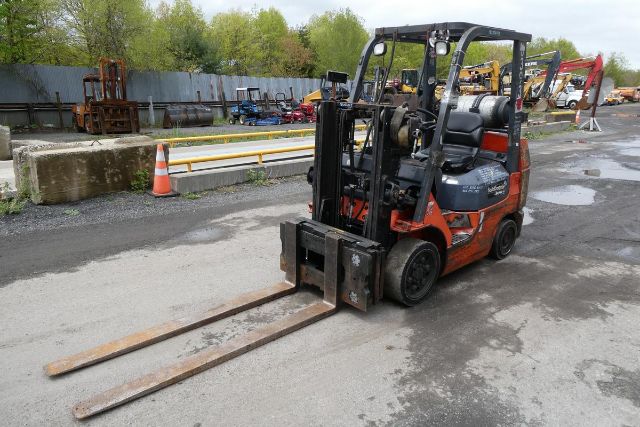
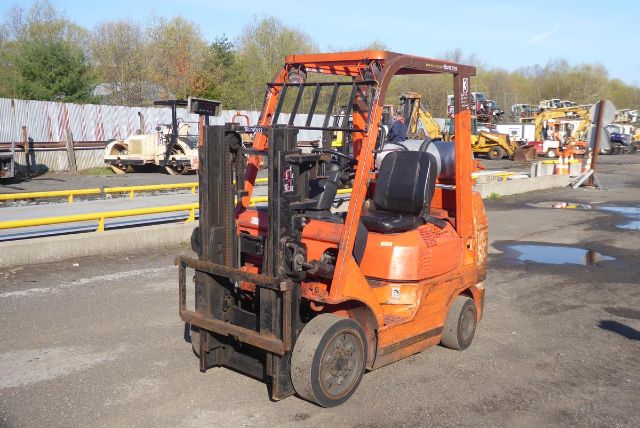
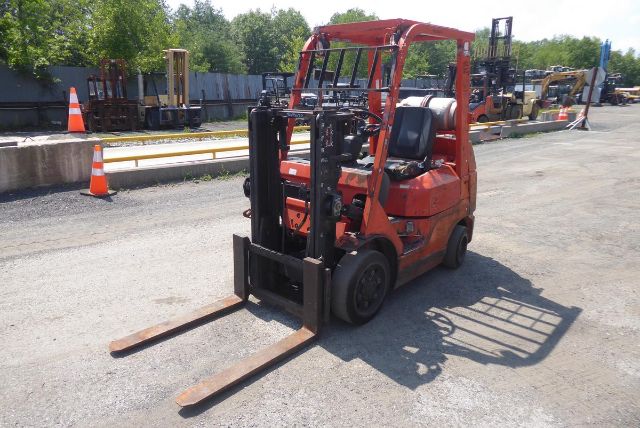
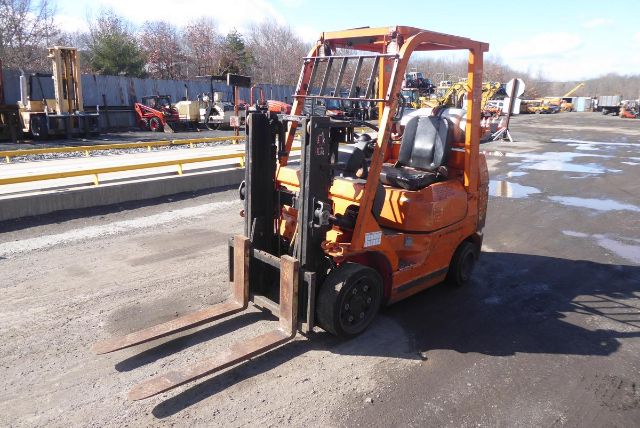
Selling a 2004 toyota forklift? List your 2004 toyota forklift for sale and reach thousands of commercial buyers.
2004 Toyota Forklifts in New York
Cushion-tire trucks suit the smooth concrete floors common in New York distribution warehouses and manufacturing plants; pneumatic-tire configurations are better suited to paved outdoor yards and uneven surfaces. Neither configuration should be treated as a rough-terrain forklift. For winter dock work, inspect chassis corrosion, brake components, steering linkage, and electrical connections exposed to road salt carried indoors. Check collapsed mast height against door openings and free lift against trailer interiors, not just maximum fork height.
On a used 2004 Toyota, a cold start and a fully warmed operating test reveal more than fresh paint. Check the LPG regulator, fuel hoses, cooling system, exhaust condition, and transmission engagement in both directions. Lift a known load within the data-plate rating, check hydraulic drift, and inspect mast channels, rollers, chains, carriage play, and cylinder rods. Reconcile the hour meter with service records and engine or controller data where available. Toyota's System of Active Stability, where fitted, deserves inspection for faults and damaged components; electronic stability features do not increase rated lifting capacity.
A 2004 truck represented as unused still needs age-related inspection of tires, seals, hoses, and fuel-system components. Obtain written confirmation of any warranty rather than assuming original factory coverage remains valid. For an electric model, document battery manufacture date, tested capacity, connector condition, and charger compatibility. On either new-condition or used equipment, verify that forks and attachments match the carriage and that the capacity plate reflects the installed configuration.
Frequently Asked Questions about 2004 Toyota Forklifts in New York
Do I need a forklift license to operate a Toyota forklift in New York?
New York employers must ensure forklift operators are trained and evaluated under OSHA's powered industrial truck rule; a driver's license does not replace that training. Operator performance must be evaluated at least once every three years, with refresher training triggered by unsafe operation, certain incidents, or relevant equipment and workplace changes. Training for a Toyota forklift must address the truck type and actual workplace hazards.
Is propane or electric better for an enclosed New York warehouse?
An electric Toyota forklift eliminates engine exhaust at the point of use and is the stronger starting point for enclosed warehouse work. Propane trucks require adequate ventilation and assessment of exhaust exposure, particularly when New York winter weather keeps dock doors closed. Electric equipment still requires a suitable charging area, electrical supply, and battery-handling procedures; lead-acid battery charging also creates ventilation requirements.
How much fork wear is acceptable on a 2004 Toyota forklift?
Forks with 10 percent thickness loss should be removed from service, even if the Toyota forklift still lifts normally. Compare the worn area, especially the heel, with the original fork thickness using appropriate measuring equipment. Cracks, excessive bending, damaged hooks, and defective positioning locks also require attention. Do not weld or straighten damaged forks as an informal repair.
How do I determine the trailer capacity needed to transport a 2004 Toyota forklift?
Use the Toyota forklift's actual service weight, not its lifting capacity, to size the transport trailer and loading equipment. Verify the weight from the identification plate or reliable manufacturer documentation, accounting for attachments and the installed battery on electric models. Confirm ramp ratings, deck clearance, axle loading, and suitable securement points. Coordinate propane-cylinder handling with the carrier before loading an LPG-powered truck.