
Used Ford Digger - Derrick Trucks For Sale in New York
Shop used Ford digger derrick trucks in New York, compare boom specs, payload, hydraulics, and corrosion protection to choose the right pole setter.
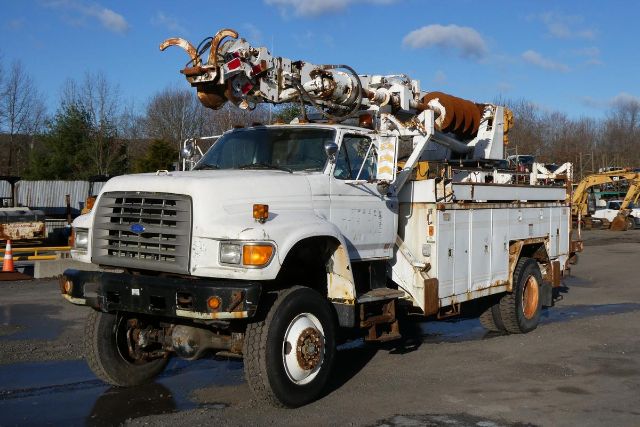
Selling a used ford digger - derrick truck? List your used ford digger - derrick truck for sale and reach thousands of commercial buyers.
Used Ford Digger - Derrick Trucks in New York
Floor strength depends on the upfit design. Look for 3/16 or 1/4 inch tread plate decks over crossmembers on tight centers, a reinforced torque box under the pedestal, and full length subframe rails that spread outrigger forces. A stiff deck resists point loading from auger flights, cribbing, and jacks, and it prevents bed oil canning that accelerates rust. Outrigger style matters, A frame outriggers are compact and fast to set, radial outriggers can provide a wider stance on narrow streets. Inspect welds at outrigger boxes and pedestal gussets, confirm the chassis RBM and section modulus meet the body builder guidance for the installed boom, and verify pole racks and tiedown structure keep weight over the axles.
Thermal integrity is about consistent hydraulics in heat and cold, not just engine cooling. Confirm pump sizing and PTO ratio deliver required GPM at working idle, then match oil grade to climate, AW 32 for winter starts, AW 46 for summer, or a multigrade synthetic to span seasons. Cold weather kits with tank heaters, return line warmers, and engine block heaters keep cycle times predictable, summer coolers and adequate reservoir volume prevent heat soak that shortens seal life. Fiberglass boom sections should have sound gelcoat with no soft spots or widespread crazing, sealed fasteners and boots protect dielectric performance in wet conditions. Harness routing, sealed connectors, and protected proportional valves reduce freeze thaw faults.
Corrosion resistance is critical in New York salt exposure. Ford cabs use aluminum panels, chassis receive e coat and wax, and quality bodies add zinc rich primer and powder coat. Favor stainless hardware, sealed tool compartments with drip rails, composite or aluminum boxes, and greasable pins with accessible zerks. Inspect outrigger cylinder rods for chrome pitting, bed crossmembers for flaking at weld toes, and frame flanges under the subframe for trapped brine. Automatic chassis lubrication, regular underbody rinsing, and a quality undercoating extend service life without adding much tare weight. Plan axle group weights around typical pole lengths, long rear overhang shifts load aft, use proper dollies or pole trailers when needed to stay legal on New York routes.
Frequently Asked Questions about Used Ford Digger - Derrick Trucks in New York
Which Ford chassis is best for a digger derrick in New York?
F-550 and F-600 fit lighter distribution work where tighter streets and weight limits matter, F-650 and F-750 handle larger booms and heavier tooling with better stability and payload. Choose 4x4 for right of way access or winter sites, 4x2 for lower tare weight and better turning on urban routes. Match GVWR and wheelbase to the boom’s rated load chart and your pole lengths, then confirm axle ratings and suspension spec keep you under New York bridge formula limits with full fuel, crew, and tools.
How do I evaluate floor strength on a used digger derrick body?
Check deck thickness and flatness, look for 3/16 or 1/4 inch tread plate with minimal oil canning. Inspect crossmember spacing and attachment, the torque box under the pedestal, and outrigger box welds for cracks or rust bleed. Verify subframe rails are straight and tight to the chassis with proper isolators, loose or crushed spacers point to overloads. Confirm pole rack structure, headache rack integrity, and tiedown anchoring, then operate outriggers to watch for deck deflection that hints at weakened crossmembers.
What drives tare weight on these trucks, and why does it matter?
Boom size, outrigger style, 4x4 front drive, tool storage, and auxiliary equipment add weight quickly, as do diesel engines compared to gas. Higher tare weight reduces legal payload and can push axle weights near limits once you add poles, augers, rigging, and crew. Lighter spec improves payload and road compliance, but do not give up the subframe, deck thickness, or outrigger capacity needed for stability. Compare curb weights on like chassis, then calculate payload required for your heaviest routine task and route restrictions in New York.
What thermal packages should I look for to handle New York winters and summers?
Look for hydraulic tank heaters or immersion elements, return line warmers, engine block heaters, and cold rated batteries for winter starts. Confirm a properly sized oil cooler, adequate reservoir volume, and a fan shroud that maintains airflow for summer work. Select the right oil viscosity, AW 32 for cold, AW 46 for heat, or a premium multigrade, and verify the PTO ratio achieves target GPM at a modest working idle to limit heat generation. Shielded valves, sealed connectors, and clean grounds reduce thermal and moisture related faults.
Are digger derricks insulated for energized work?
Many digger derricks are not fully insulated, some include fiberglass upper stages and dielectric components that provide limited insulation for specific tasks. Always check the ANSI rating, test dates, and the manufacturer’s manual to understand category and restrictions. If energized work is required, verify the unit’s dielectric integrity with current test documentation, confirm condition of boom inserts, hoses, and boots, and follow your utility safety policy for minimum approach distance and grounding.