
Used Mitsubishi Service/Utility Trucks For Sale in New York
Browse used Mitsubishi service and utility trucks with diesel power, compact cab-over design, and body options for contractors and fleet use.
Learn more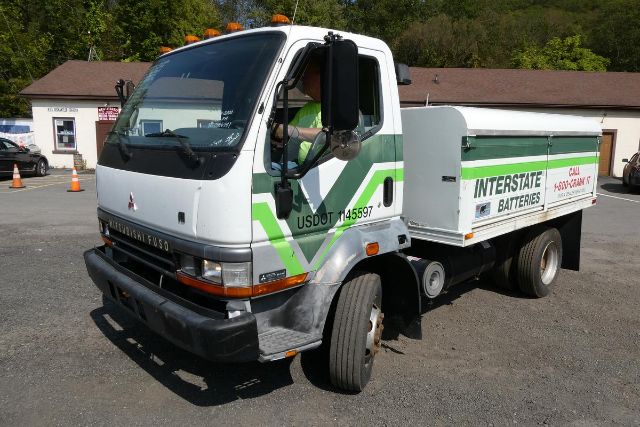
Have used mitsubishi service/utility truck to sell? List it here to reach thousands of buyers.
About Used Mitsubishi Service/Utility Trucks in New York
A key buying point is the chassis layout. Many Mitsubishi service trucks use diesel engines such as the 6-cylinder 6D34, paired with automatic transmissions and spring suspension. Common specs include single rear axle configurations, 17.5-inch wheels, hydraulic brakes, and wheelbases sized for compact utility bodies rather than long platform bodies. Buyers should pay close attention to cab-to-axle and cab-to-end dimensions because those numbers determine body fit, compartment depth, and how much usable workspace you actually get. On a service body, details like roll-up rear doors, compartment count, shelving, aluminum floors, ladder racks, compressor mounts, and inverter or PTO provisions can matter more than raw horsepower.
Condition matters differently on a used service truck than on a van body or straight truck. The chassis may have acceptable miles for its age, but the body configuration has to match the work. Check compartment doors for sagging hinges, water intrusion, and latch wear. Inspect the frame for corrosion, especially in Northeast service history, and look closely at brake lines, spring hangers, crossmembers, and body mounting points. If the truck has hydraulic disc brakes, confirm parts availability and service history. Cab-over access is excellent for visibility and urban operation, but buyers should also inspect cab tilt function, cooling system condition, and front-end wear because service work often means frequent stops, idle time, and city driving.
Mitsubishi service and utility trucks are also known for efficient packaging. A relatively short overall length can still support a functional utility body with side packs and rear storage, which helps crews carry tools, fittings, parts, and job-specific equipment without stepping up to a much larger truck. For buyers comparing used options, the best unit is usually the one with the right body layout, realistic payload capacity, and a chassis spec that fits your route density and service area. A lighter Class 4 or Class 5 cab-over utility truck can be a smart fit when access, visibility, and organized storage matter more than maximum towing or oversized body length.
Frequently Asked Questions
What are the main advantages of a used Mitsubishi service or utility truck?
The main advantages are maneuverability, visibility, and efficient body packaging. Mitsubishi cab-over trucks are easier to position in tight urban areas than many conventional medium-duty trucks, which makes them useful for service fleets operating in dense commercial and residential areas. The cab-over design also allows more body length on a shorter wheelbase, so you can get organized storage compartments and rear access without driving an unnecessarily long truck.
What should I inspect first on a used Mitsubishi utility truck?
Start with the service body and the frame. Check compartment doors, hinges, seals, locks, and shelving because body repairs can be expensive and downtime matters. Then inspect the frame rails, crossmembers, brake system, suspension, and mounting points for corrosion or fatigue, especially on trucks that spent time in snow and road salt conditions. After that, verify engine condition, transmission operation, cooling system health, and that the cab tilt mechanism works properly for service access.
Are Mitsubishi service trucks good for city and municipal work?
Yes. Mitsubishi service trucks are well suited for city, campus, contractor, and municipal applications because the cab-over layout improves turning radius and forward visibility. That makes them easier to run in congested streets, tight service lanes, and parking-lot environments. They are commonly used for maintenance departments, utility crews, HVAC and electrical service, and mobile repair work where organized storage and frequent stop-and-go operation are more important than long-haul comfort.
How important are cab-to-axle and wheelbase measurements on a utility truck?
They are critical because they determine what body fits the chassis and how the truck balances under load. Cab-to-axle measurement affects compartment length, rear overhang, and body compatibility. Wheelbase affects maneuverability, ride, and turning radius. A buyer should match these dimensions to the intended body layout, payload, and jobsite access requirements instead of focusing only on engine output or model name.
What payload and GVWR range is common for a Mitsubishi service truck?
Many used Mitsubishi service and utility trucks fall into medium-duty GVWR classes that support contractor and municipal workloads without moving into a much larger chassis. Exact ratings vary by model, axle, suspension, and body weight, but buyers often see configurations intended for tools, parts inventory, generators, compressors, and technician equipment rather than extreme payloads. The usable payload should always be calculated after accounting for the service body, mounted equipment, fuel, passengers, and any permanently stored materials.