
Used Mitsubishi Service/Utility Trucks For Sale
Browse used Mitsubishi service and utility trucks with diesel power, compact cab-over design, utility bodies, and jobsite-ready storage.
Learn more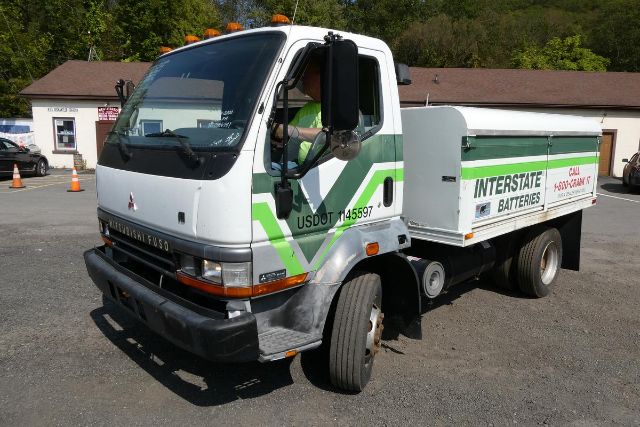
Have used mitsubishi service/utility truck to sell? List it here to reach thousands of buyers.
About Used Mitsubishi Service/Utility Trucks
A typical used Mitsubishi service truck in this class may carry a diesel engine in the roughly 175 to 200 horsepower range, paired with an automatic transmission, spring suspension, and single rear axle setup. GVWR commonly falls in the Class 4 to Class 5 range, often just under 18,000 pounds on non-CDL configurations, which is attractive for municipal departments, contractors, equipment repair crews, plumbers, electricians, and property maintenance fleets. Many units are equipped with utility bodies from established body builders and may include side-pack compartments, roll-up doors, ladder racks, internal shelving, and workbench space. Cab-to-axle length is one of the first specs to verify because it determines what body size fits correctly and how the truck balances once loaded with tools, compressors, reels, or parts inventory.
Condition matters more than age on a used Mitsubishi utility truck. Buyers should pay close attention to the service body as much as the chassis. Check compartment floors, door seals, latch condition, hinges, shelf mounting points, and signs of corrosion around lower body edges. On the chassis side, review brake type, axle ratings, tire size, frame condition, wheelbase, and maintenance history on the diesel engine and transmission. Older Mitsubishi medium-duty trucks are valued for straightforward mechanicals, but parts sourcing and dealer support should still be considered by region, especially for legacy models. If the truck has hydraulic equipment, generators, inverters, air compressors, or PTO-driven accessories, confirm that those systems operate correctly and that the electrical layout has been maintained cleanly.
The best Mitsubishi service truck for sale is usually the one whose body layout matches your work, not just the lowest-hour chassis. A telecom or municipal spec may prioritize secure compartments and lighting, while a field mechanic may need payload capacity, compressor mounting, and open cargo access. Pay attention to body width, compartment depth, rear access, roof storage, and the truck's loaded operating weight relative to GVWR. For buyers who want a used utility truck that is easy to maneuver, efficient in urban service work, and capable of carrying organized tools and equipment, Mitsubishi cab-over service trucks remain a practical option in the medium-duty market.
Frequently Asked Questions
What are the main advantages of a used Mitsubishi service or utility truck?
The main advantage is the cab-over design. Mitsubishi service trucks typically offer a shorter overall length for a given body size, which improves maneuverability in cities, alleys, parking lots, and jobsites. The cab-forward layout also improves forward visibility and can make tight turns easier compared with many conventional medium-duty chassis. For service fleets, that often means better access to customers and more efficient use of body space.
What should I inspect first on a used Mitsubishi utility truck?
Start with the body and the chassis together. On the body, inspect compartments, locks, roll-up or swing doors, floors, shelving, seals, and rust-prone lower sections. On the chassis, confirm GVWR, axle ratings, brake condition, suspension type, tire size, frame integrity, and drivetrain service history. If the truck includes compressors, inverters, cranes, PTO equipment, or other accessories, verify each system works properly because repairs on upfitted equipment can add up quickly.
Are Mitsubishi service trucks typically CDL or non-CDL trucks?
Many Mitsubishi service and utility trucks are spec'd under 26,001 pounds GVWR, and a large share fall under 18,000 pounds GVWR, making them non-CDL in many applications. That said, CDL requirements depend on the truck's GVWR, trailer combination weight, air brake rules in your state, and how the truck is used. Always confirm the door sticker and registration class rather than assuming a truck is non-CDL based only on appearance or body size.
What kinds of jobs are Mitsubishi utility trucks best suited for?
These trucks are well suited for mobile service work that requires organized storage and frequent stops. Common applications include electrical service, plumbing, HVAC repair, telecom work, municipal maintenance, general contracting, facilities support, and field mechanics carrying tools, fittings, small parts, and light equipment. Their compact dimensions make them especially useful in urban and suburban service routes where access and turning radius are important.
Is parts support a concern on older used Mitsubishi medium-duty trucks?
It can be, depending on the model year and your region. Older Mitsubishi medium-duty trucks are often durable and mechanically simple, but buyers should confirm access to engine, brake, steering, and cab parts before committing to a legacy unit. Body parts and service body hardware are usually easier to source if the body was built by a major upfitter. A local parts strategy matters more on an older service truck because downtime is often more expensive than the purchase price difference.