
Mack Service/Utility Trucks For Sale in Colorado
Explore Mack service and utility trucks with mechanic bodies, cranes, compressors, and non-CDL Class 6 options for field service work.
Selling a mack service/utility truck? List your mack service/utility truck for sale and reach thousands of commercial buyers.
Mack Service/Utility Trucks in Colorado
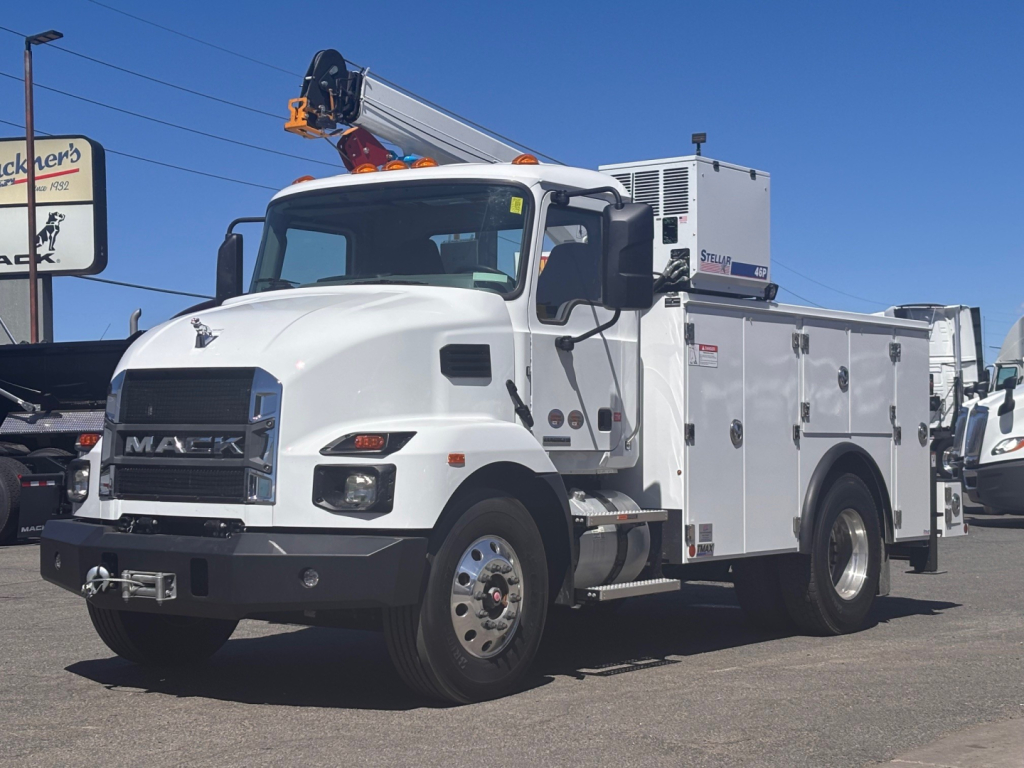
A big buying decision in this segment is CDL versus non-CDL configuration. Many Mack service truck builds are set up around a 26,000 to 27,000 lb GVWR to stay under CDL thresholds, while others move into 31,000 to 33,000 lb GVWR territory for more body capacity, crane stability, and onboard equipment. The tradeoff is straightforward: under-CDL trucks are easier to staff and well suited for lighter mechanic service, while Class 7 style builds on the MD7 chassis generally offer more axle capacity, stronger body and crane compatibility, and better margin for compressors, welders, lube systems, and fully loaded cabinets. Wheelbases around 150 to 151 inches are common for 11-foot service bodies, and single-axle layouts remain the standard for maneuverability on jobsites and in municipal yards.
Powertrain specs in this category often center on the Cummins ISB 6.7 with around 300 horsepower paired to an Allison automatic, typically a 2500 RDS or 3000 RDS 6-speed. That combination is popular because it is familiar to most fleet shops, well matched to stop-and-go service work, and easy for mixed-skill operators to drive. Buyers should pay close attention to front axle rating, rear axle rating, rear suspension type, and rear ratio because service body performance is heavily influenced by stationary load distribution. A crane truck carrying a 60,000 ft-lb body and a 12,000 lb crane has very different real-world needs than a lube truck with multiple fluid tanks, hose reels, and a used-oil recovery system. Air brakes, spring or air-ride rear suspensions, hydraulic air compressors, work lights, winch bumpers, and remote-control crane packages are all common equipment in this class.
For Colorado buyers, chassis spec and body upfit should also be evaluated with terrain and climate in mind. Gradeability, axle ratio, cooling performance, and cold-weather service access matter when the truck will spend time between the Front Range, mountain corridors, and rural energy or construction sites. The best Mack utility truck for one operation is not simply the one with the biggest crane or highest GVWR. It is the one with the right body layout, compartment design, compressor output, crane rating, payload reserve, and licensing profile for the work being done every day.
Frequently Asked Questions about Mack Service/Utility Trucks in Colorado
What is the difference between a Mack MD6 and MD7 service truck?
The main difference is chassis capacity. A Mack MD6 service truck is typically chosen for lighter mechanic body or under-CDL applications, while the MD7 usually provides higher GVWR potential, stronger axle ratings, and more flexibility for heavier crane bodies, lube systems, and fully equipped service builds. If the truck will carry a crane, compressor, welder, fuel or fluid systems, and a full tool load every day, the MD7 generally gives more operating margin.
Can a Mack service truck be spec'd as a non-CDL truck?
Yes. Many Mack service and utility trucks are de-rated or configured to operate at 26,000 lb GVWR or similar non-CDL thresholds, depending on the final body and equipment package. This is a common approach for fleets that want to widen the driver pool and simplify compliance. The buyer still needs to verify actual registered weight, body weight, payload, and local requirements because a non-CDL rating only works if the finished truck stays within its intended operating limits.
What should I look for in a mechanic or crane body on a Mack chassis?
Start with crane capacity, body length, compartment storage, and compressor setup, then work backward to axle ratings and stability. A 60,000 ft-lb service body with a 12,000 lb crane places different demands on the chassis than a lighter utility body. Buyers should check front axle loading, outriggers, PTO and hydraulic integration, air compressor output, lighting, and how much payload remains after the body is installed. Practical details like drawer layout, reel placement, and workbench access also affect day-to-day productivity.
Are Mack utility trucks a good fit for lube service applications?
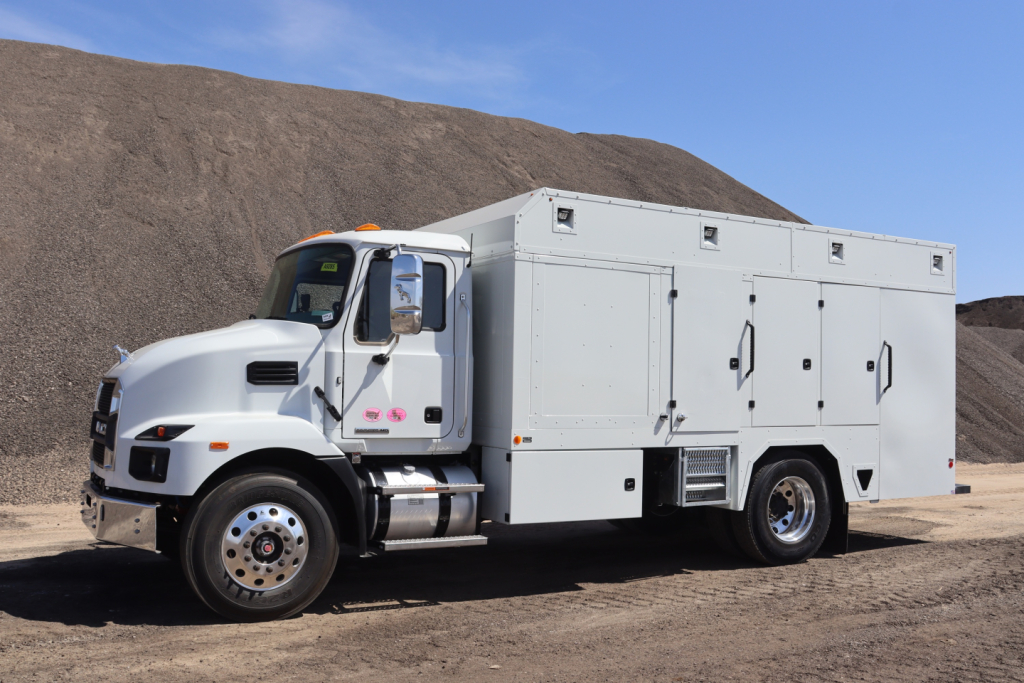
Yes. Mack medium-duty chassis are commonly used for mobile lube and preventive maintenance trucks because they can support fluid tanks, hose reels, used-oil recovery, grease systems, and storage cabinets in a compact service package. For lube applications, buyers should focus on total tank capacity, pump and reel layout, used-fluid recovery design, and how the body weight affects legal payload and axle balance. A well-matched lube body can turn the truck into a self-contained field maintenance unit.
Which powertrain is most common in Mack service trucks?
A common setup is the Cummins ISB 6.7 diesel rated around 300 horsepower paired with an Allison 6-speed automatic. This package is popular because it is durable, easy to operate in stop-and-go vocational service, and widely supported by fleet maintenance networks. Transmission model, rear ratio, and suspension spec still matter because they influence low-speed jobsite drivability, grade performance, and how the truck handles a heavy service body.