
Used Freightliner Refrigerated Trucks For Sale in Florida
Browse used Freightliner refrigerated trucks in Florida. Compare M2 reefer specs, body sizes, cooling units, liftgates, and GVWR options.
Selling a used freightliner refrigerated truck? List your used freightliner refrigerated truck for sale and reach thousands of commercial buyers.
Used Freightliner Refrigerated Trucks in Florida
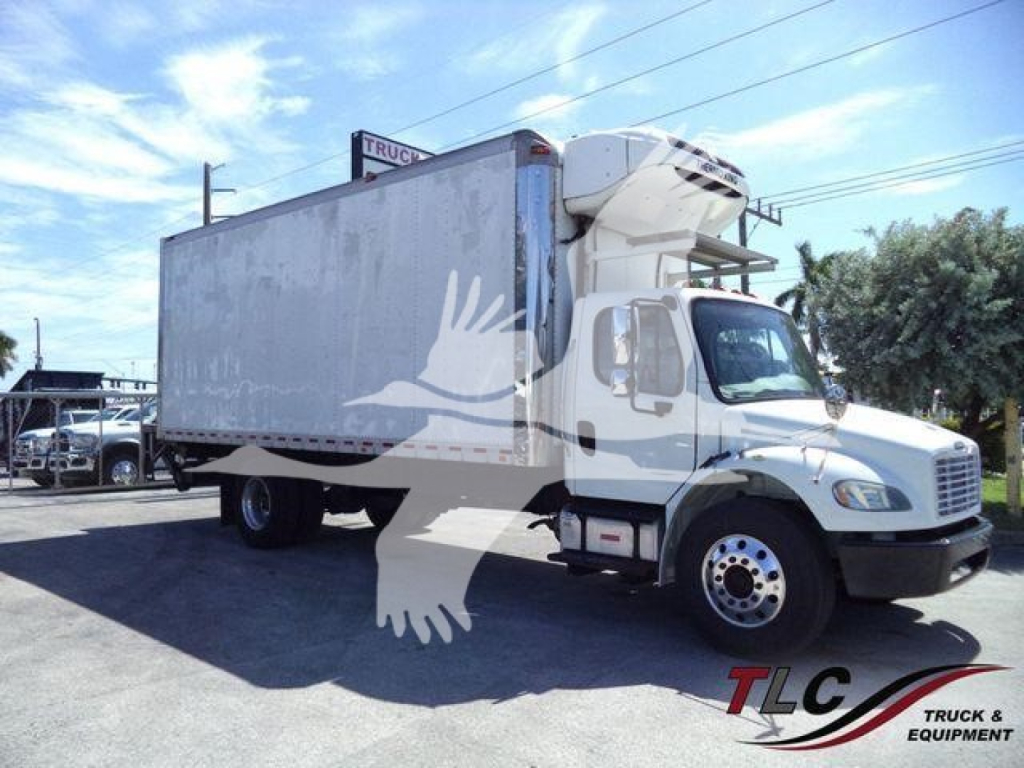
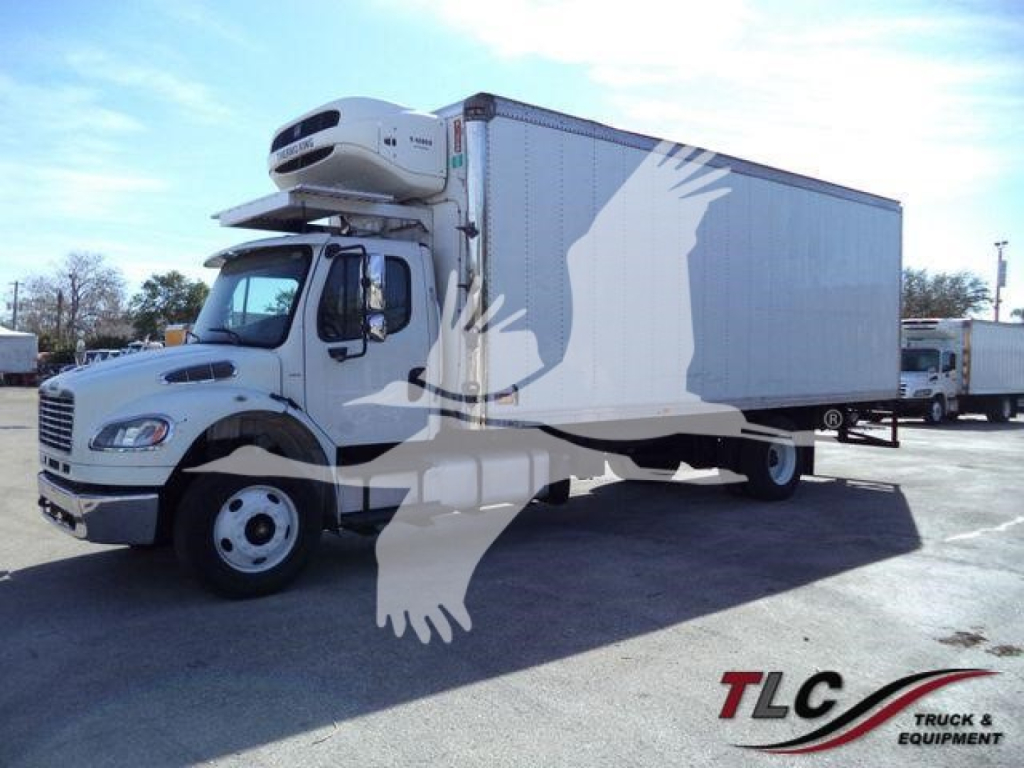
For many buyers, the first decision is GVWR and body length. In this category, 26,000 GVWR and 33,000 GVWR trucks are both common. A 26,000 GVWR truck can be attractive where CDL considerations affect hiring and route planning, while a 33,000 GVWR spec gives more payload margin for heavier product mixes and liftgate use. Body lengths around 22 to 24 feet are typical on Freightliner reefer trucks and suit palletized urban delivery well. Common chassis specs include Cummins diesel engines such as the 6.7L ISB or larger 8.9L platforms, paired with Allison automatic transmissions, air brakes, and often air suspension for cargo protection and ride quality.
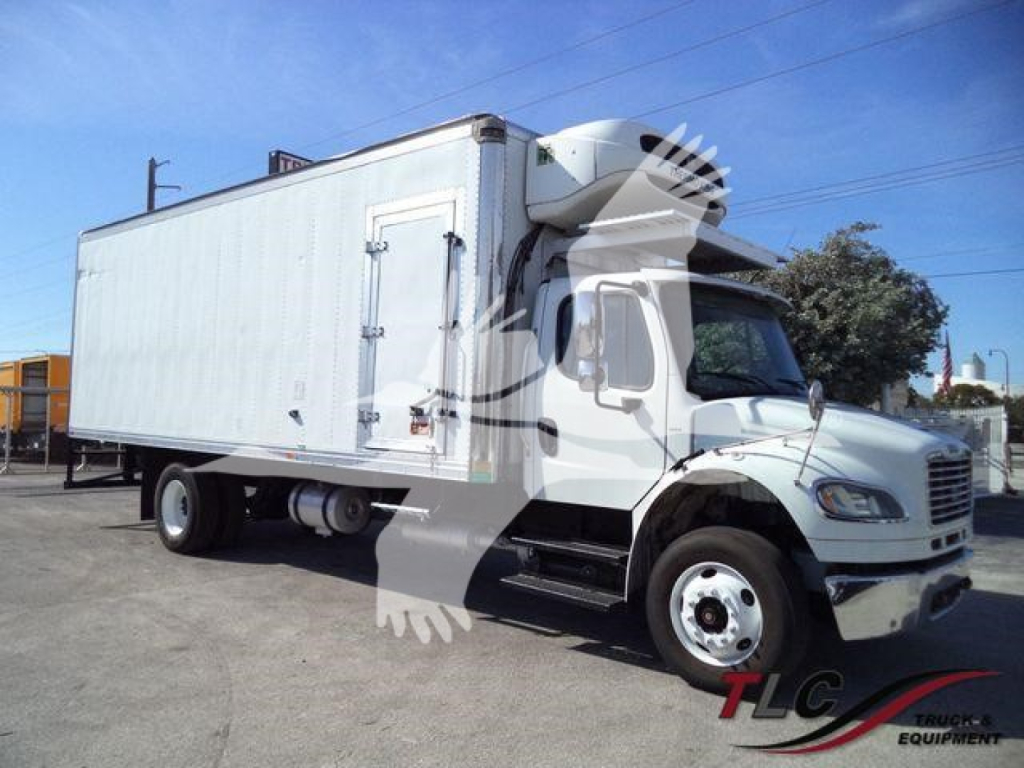
Refrigerated truck buyers should pay close attention to the reefer unit and body condition, not just the chassis. Unit model, operating hours, temperature pull-down performance, and maintenance history can matter as much as engine mileage. A clean insulated body with tight door seals, sound flooring, and intact interior lining will hold temperature more efficiently and reduce reefer run time. In Florida service, it is also smart to inspect evaporator and condenser performance under high ambient heat, check for water intrusion, and verify that the box can maintain the temperatures your freight requires during repeated stop-and-go delivery cycles. Roll-up rear doors, curb-side doors, pull-out ramps, and tuck-under liftgates are all common specs that directly affect route speed and dock compatibility.
Freightliner reefer trucks are also known for broad parts support and straightforward fleet maintenance, which matters if the truck will run daily in foodservice or last-mile distribution. Buyers comparing used units should look at reefer brand support in their service area, axle ratings, tire size, suspension type, and liftgate capacity alongside the usual engine and transmission checks. A well-matched used Freightliner refrigerated truck can lower downtime, protect temperature-sensitive cargo, and fit tight urban delivery work better than a larger trailer-based setup.
Frequently Asked Questions about Used Freightliner Refrigerated Trucks in Florida
What is the most common Freightliner refrigerated truck configuration?
The most common setup is a Freightliner M2 106 with a 22-foot to 24-foot insulated box, a Thermo King refrigeration unit, and an Allison automatic transmission. Many are spec'd with air brakes, 22.5-inch tires, roll-up rear doors, and either a curb-side door, pull-out ramp, or liftgate. This configuration is popular because it works well for palletized local delivery while still being easy to maneuver in city and suburban routes.
Is a 26,000 GVWR or 33,000 GVWR reefer truck better?
It depends on payload, licensing needs, and route design. A 26,000 GVWR refrigerated truck is often chosen for operations trying to stay below CDL thresholds, which can simplify staffing in some fleets. A 33,000 GVWR truck offers more payload capacity and more margin when carrying dense product or using a liftgate on multi-stop routes. Buyers should compare loaded cargo weight, body size, and the real impact of liftgate and reefer unit weight before deciding.
What should I inspect on a used refrigerated truck besides the engine?
The reefer unit and the insulated body deserve as much attention as the chassis. Check reefer hours, service records, startup behavior, temperature pull-down speed, and whether the unit holds setpoint under load. Inspect door seals, floor condition, wall integrity, evaporator area, and any signs of moisture intrusion or insulation damage. On delivery trucks, liftgate operation, rear frame condition, and body corrosion are also important because these items affect uptime and food-grade usability.
Are Freightliner refrigerated trucks a good fit for Florida routes?
Yes, they are widely used in Florida for produce, grocery, seafood, dairy, and foodservice delivery. The platform is well suited to hot, humid operating conditions when the reefer unit and body are in sound condition. Florida buyers should place extra emphasis on condenser performance, cab air conditioning, corrosion exposure, and the truck's ability to recover temperature quickly after repeated door openings. Local service access for both Freightliner chassis parts and reefer repairs is another major advantage.
Which features matter most for multi-stop refrigerated delivery?
For multi-stop work, the most useful features are a dependable refrigeration unit, fast temperature recovery, a practical door configuration, and cargo access that matches the freight. Roll-up doors save space at docks, curb-side doors can speed hand-unload routes, and tuck-under liftgates help when customers do not have dock access. Air suspension can also help protect sensitive cargo and reduce shock loads, especially on routes carrying dairy, produce, or pharmaceuticals.