
Used Kalmar Trucks For Sale
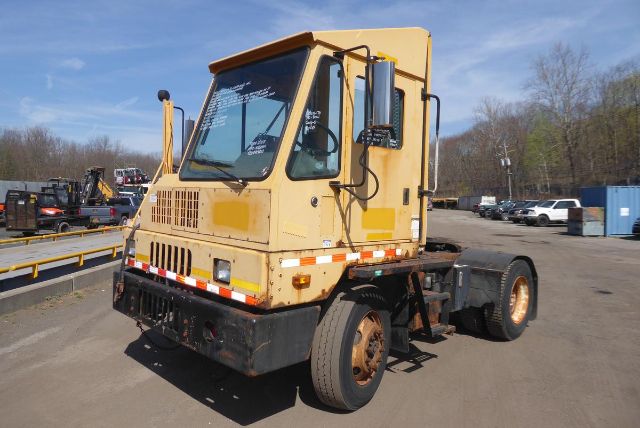
Have used kalmar truck to sell? List it here to reach thousands of buyers.
Used Kalmar Trucks
The most important buying decisions usually come down to axle configuration, fifth wheel hydraulics, drivetrain spec, and hours. Many used Kalmar trucks are 4x2 single-axle units with automatic transmissions and diesel engines from suppliers such as Cummins. Allison automatics are common because they hold up well in low-speed yard work and reduce driver fatigue. Hydraulic sliding or lifting fifth wheels are a major feature on this equipment class, since they speed up trailer spotting and help with uneven landing gear height. Buyers should also look closely at rear axle rating, gear ratio, frame condition, brake life, and whether the truck has a wet kit or PTO setup that matches the intended operation.
Cab layout and access design matter more on a terminal tractor than on a road tractor. A good Kalmar yard truck should offer easy entry, strong visibility, a stable driver platform, and controls that are straightforward for multiple operators across shifts. Common specs include low-profile 22.5 tires, compact wheelbases for maneuverability, and GVWRs suited to loaded trailer handling inside the yard. Since many used units have spent years in repetitive industrial service, maintenance history is critical. Hour meter readings often tell as much as odometer miles, and buyers should inspect the fifth wheel cylinders, hydraulic lines, transmission engagement, cooling system, steering components, and cab structure for wear typical of high-cycle yard use.
Kalmar trucks appeal to buyers who need durable trailer-moving equipment without stepping into the cost of a new terminal tractor. The category is less about sleeper options or over-the-road comfort and more about uptime, visibility, turning radius, and trailer handling speed. For operations with uneven pavement, heavy trailer counts, or multi-shift use, it pays to compare suspension type, tire condition, frame reinforcement, and parts support before choosing a unit. A well-matched used Kalmar can improve yard flow, reduce trailer move time, and give a facility a purpose-built alternative to using road tractors for spotting duty.
Frequently Asked Questions about Used Kalmar Trucks
What are used Kalmar trucks typically used for?
Used Kalmar trucks are most commonly used as terminal tractors for moving semi-trailers within confined properties such as warehouses, ports, distribution centers, plants, and truck yards. Their job is short-distance trailer spotting rather than highway hauling. They are designed for repeated coupling and uncoupling, fast directional changes, and constant low-speed operation, which makes them more efficient in yard duty than a conventional road tractor.
What should I check first on a used Kalmar yard truck?
Start with the hour meter, hydraulic fifth wheel operation, transmission performance, and overall frame condition. On a terminal tractor, hours can be as important as miles because these trucks often idle, shift, and maneuver all day in a limited area. Buyers should also inspect hydraulic cylinders for leaks, verify the PTO and pump function correctly, check brake wear, test steering response, and look for wear in the cab access steps, suspension, and rear axle components.
Are Kalmar trucks highway legal?
Some Kalmar trucks can be configured to meet local or limited road-use requirements, but most are built primarily for off-highway or yard service. Buyers should not assume a used terminal tractor is suitable for regular over-the-road operation. Registration, lighting, braking, speed capability, and axle ratings all need to be reviewed against local and state requirements before any on-road use is planned.
Why do many used Kalmar trucks have automatic transmissions?
Automatic transmissions are common in Kalmar terminal tractors because yard work involves constant starts, stops, and direction changes. An Allison automatic helps reduce operator fatigue, shortens training time, and improves consistency across multiple drivers. In high-cycle spotter service, that can translate into smoother trailer moves, less clutch-related wear, and better productivity during busy shift changes or dock congestion.
What makes a terminal tractor different from a standard road tractor?
A terminal tractor is purpose-built for yard switching, not long-haul freight movement. It typically has a shorter wheelbase, a higher-visibility cab, easier entry and exit, and a hydraulic fifth wheel that can lift or slide to connect with trailers quickly. Compared with a road tractor, it prioritizes maneuverability, trailer handling speed, and durability in repetitive low-speed service rather than fuel economy, highway ride quality, or sleeper amenities.