
Kalmar Trucks For Sale
Compare Kalmar Ottawa yard trucks, also called spotters or yard goats. Learn DOT vs off-road specs, lift ratings, powertrains, and applications.
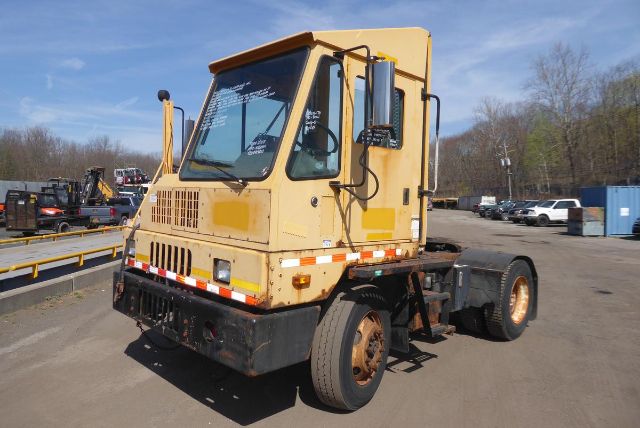
Selling a kalmar truck? List your kalmar truck for sale and reach thousands of commercial buyers.
Kalmar Trucks
Spec to your yard and trailer mix. Common wheelbases run about 116 to 130 inches with tight steering geometry for fast spotting in cramped aisles. Most units are 4x2, but 6x4 models improve traction on steep ramps, wet docks, or port aprons. Fifth wheel lift is hydraulic with in-cab controls and typical lift ratings in the 50k to 70k pound range, reducing driver cranking and slashing turn times. Choose fixed or sliding fifth wheels to match trailer kingpin set-backs, and confirm kingpin height compatibility with your fleet. If you move heavy container chassis or doubles, verify GCWR, drawbar pull, and rear axle ratio; ports often spec hub-reduction axles to handle shock loads.
Powertrains are straightforward and durable. Most late-model Kalmar Ottawa T2 trucks run the Cummins B6.7 with SCR aftertreatment, paired to an Allison 3000 or 3500 automatic that drives a hydraulic pump for the lifting fifth wheel. Earlier generations may carry ISB 6.7 or ISC 8.3 variants. Cab design focuses on safety and productivity with a full-height rear door, low step-in, wide visibility, HVAC, and heavy-duty wiring looms. Options like air-ride suspensions, LED work lighting, heated mirrors, block or coolant preheaters, and arctic insulation packages extend uptime across climates. Electric T2E models trade diesel complexity for quiet operation, instant torque, and reduced maintenance, provided charging and duty cycle align with your shifts.
When comparing used units, hours tell the real story since these trucks idle and creep more than they rack up miles. Inspect the lifting system for cylinder leaks, worn pivot bushings, and fifth wheel jaw wear; check frame rails, rear crossmembers, and catwalk welds for cracks; look for hub-reduction seepage, kingpin plate damage from hard coupling, and scuffed tires from tight turns. On diesel units, review DPF and SCR service history, forced regen frequency, and DEF system repairs. For electric, confirm battery health, charger compatibility, and throughput modeling to cover peak shifts with some buffer. Matching spec to yard layout, trailer weights, and regulatory environment is what delivers fast turns, driver-friendly ergonomics, and lower total cost per move.
Frequently Asked Questions about Kalmar Trucks
What is the difference between DOT and off-road Kalmar Ottawa terminal tractors?
DOT units are configured for limited on-highway use between facilities. They include highway lighting and mirrors, ABS, speed-rated tires, emissions packages, license mounts, and gear ratios suited for short road speeds. Off-road models are built for closed yards and ports, often with simpler lighting and, on older units, less complex emissions systems. DOT trucks cost more but are required if you plan any public-road moves.
How much can a Kalmar yard truck lift and move?
Most terminal tractors have a hydraulic fifth wheel with typical lifting capacity in the 50,000 to 70,000 pound range, allowing drivers to raise trailers without cranking landing gear fully. Yard-rated GCWR varies by spec, commonly from about 60,000 up to over 100,000 pounds. Verify your exact lifting rating, GCWR, and drawbar pull against trailer weights, container chassis work, grades, and traction needs.
Which engines and transmissions are common in Kalmar Ottawa trucks?
Late-model T2 units typically use the Cummins B6.7 diesel with SCR aftertreatment paired to an Allison 3000 or 3500 automatic. Older units may carry ISB 6.7 or ISC 8.3 engines. The Allison automatic also powers the hydraulic pump for the lifting fifth wheel, providing smooth low-speed control critical for tight docking and frequent start-stop operation.
What should I look for when buying a used terminal tractor?
Prioritize engine hours over miles and review service records. Inspect the lifting fifth wheel for cylinder leaks, worn pins and bushings, and jaw condition. Check frame rails, rear crossmembers, kingpin plate area, and catwalk welds for cracks. Look for wiring abrasion from constant door use, condition of the rear cab door rollers, tire sidewall scuffing, and brake wear. For diesel, assess DPF and SCR health and regen history; for electric, evaluate battery state-of-health and charging infrastructure fit.
Is the Kalmar T2E electric a good fit for my operation?
It can be, especially for distribution centers and ports with repeated short moves, overnight or opportunity charging, and sustainability targets. The T2E reduces noise and tailpipe emissions and cuts maintenance tied to diesel aftertreatment. You will need adequate chargers, a duty-cycle study to ensure battery capacity across peak shifts, and a plan for cold-weather range if applicable. Incentives and grants can improve total cost of ownership.