
2027 Hino Hooklift Trucks For Sale
Shop 2027 Hino hooklift trucks with 22,000-lb hoist capacity, Cummins diesel power, and versatile roll-off body handling.
Selling a 2027 hino hooklift truck? List your 2027 hino hooklift truck for sale and reach thousands of commercial buyers.
2027 Hino Hooklift Trucks
One of the key numbers in this category is hoist capacity. In this group, a 22,000 lb class hooklift is a common target because it fits many contractor, municipal, waste, and site-service applications without stepping into a larger, heavier chassis than the job requires. Buyers should compare the hoist rating to the actual loaded container weights, body length range, and center-of-gravity limits, not just the headline lift number. Frame strength, axle ratings, and derated GVWR all affect legal payload and real-world performance. A truck in the 25,950 GVWR range can be especially attractive where CDL considerations, bridge law planning, or route restrictions matter.
Powertrain choice also matters because hooklift work is stop-and-go, hydraulic-intensive, and often done on uneven job sites. Current Hino medium-duty hooklift setups commonly pair the Cummins B6.7 diesel with an Allison automatic, a combination many fleets prefer for predictable PTO integration, easy driver training, and strong low-speed control when loading or setting bodies. Pay attention to horsepower and torque, but also to rear axle ratio, suspension spec, brake type, and wheelbase. Air brakes may be preferred in some vocational fleets, while suspension tuning can make a major difference when the truck runs empty one trip and carries a loaded container the next.
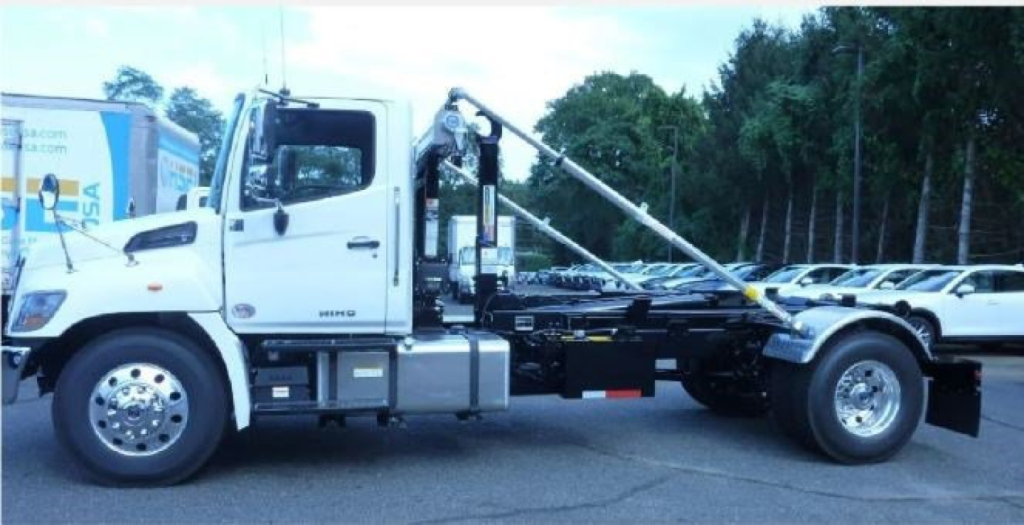
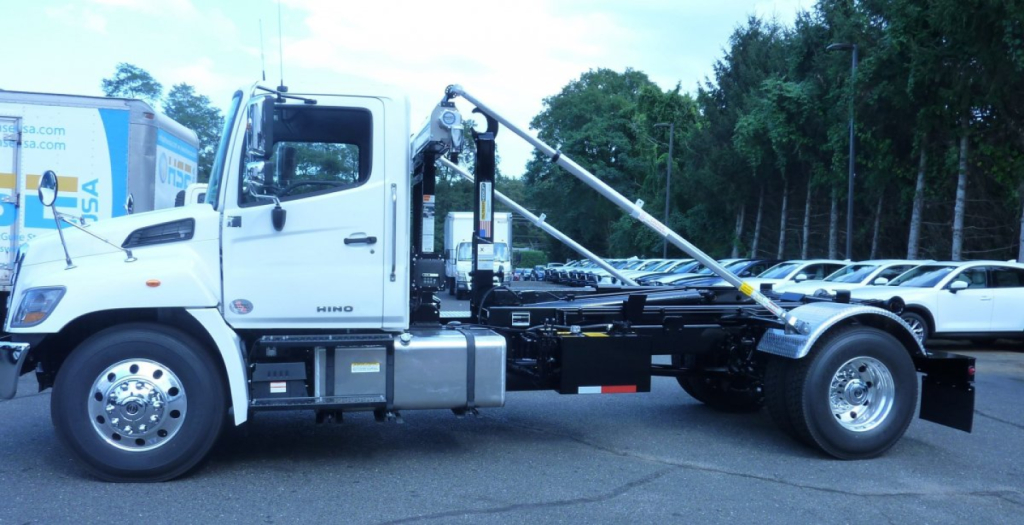
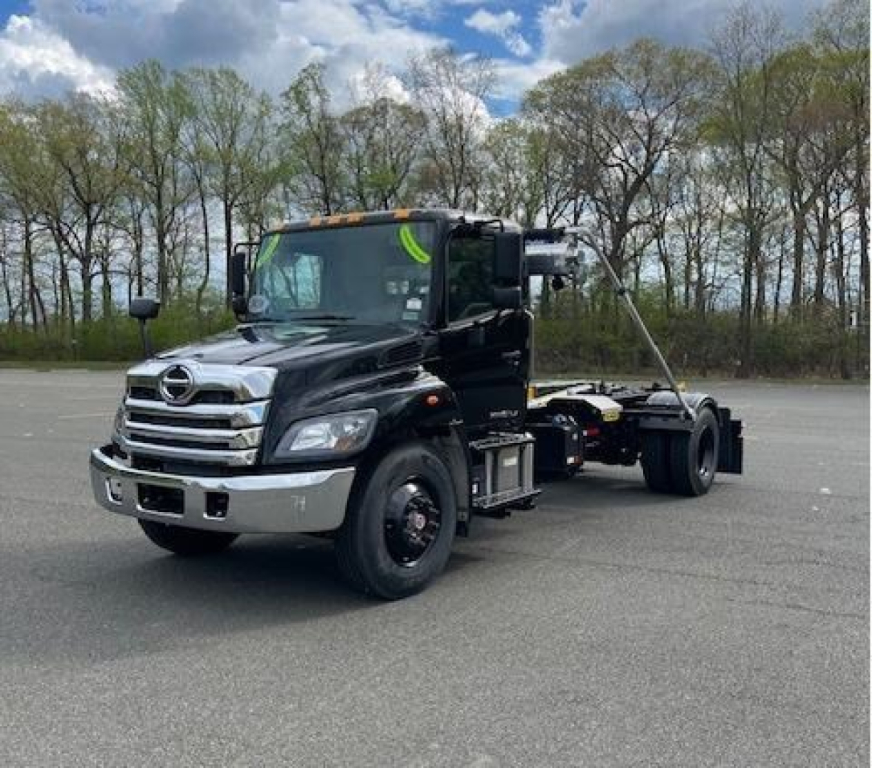
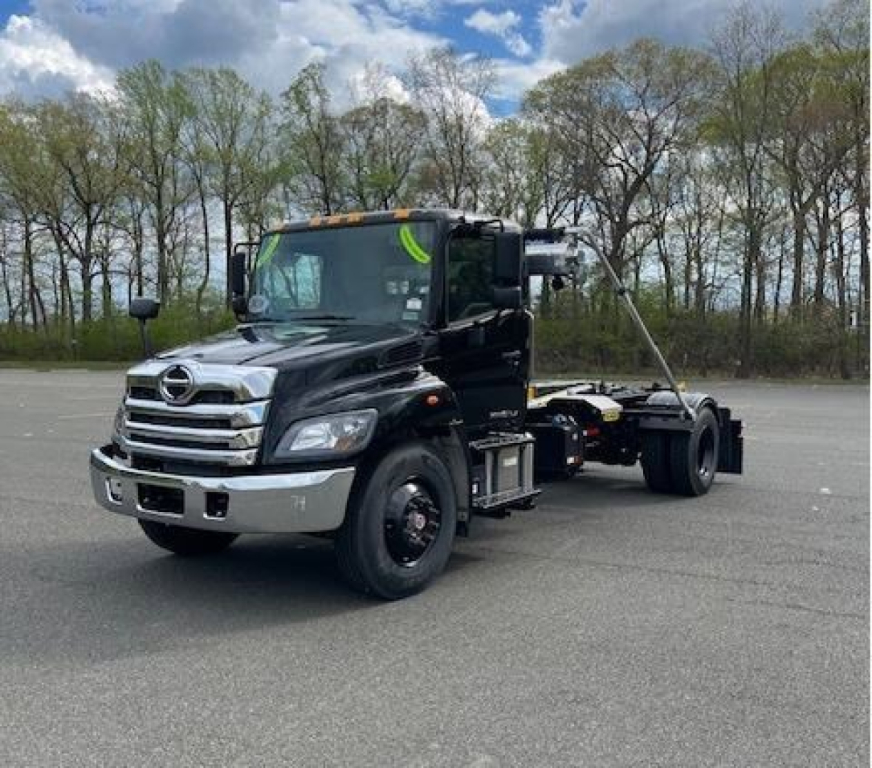
Body and hoist details deserve as much scrutiny as the cab and chassis. A quality hooklift package may include inside or outside rails, adjustable jib settings, tarp systems, container locks, in-cab controls, and lighting or camera upgrades for safer body handling. Buyers should confirm hook height compatibility, usable container lengths, and whether the hoist is configured for dumpster service, equipment hauling, debris removal, or multi-body municipal use. On a Hino hooklift truck, the right specification comes down to matching the truck’s wheelbase, axle capacity, and hoist geometry to the exact containers and duty cycle the truck will see every day.
Frequently Asked Questions about 2027 Hino Hooklift Trucks
What is a Hino hooklift truck used for?
A Hino hooklift truck is used to load, transport, and unload interchangeable bodies or containers on a single chassis. Common applications include waste containers, construction debris boxes, flatbeds for equipment, landscape bodies, salt or material spreader bodies, and municipal service containers. The main advantage is fleet flexibility, because one truck can perform several roles as long as the bodies are compatible with the hoist system.
Is a 22,000 lb hooklift enough for most medium-duty jobs?
A 22,000 lb hooklift is a strong fit for many medium-duty contractor, municipal, and site-service applications, but the right answer depends on loaded container weight, body length, and weight distribution. Buyers should compare the hoist rating with real payload expectations and the truck’s axle ratings and GVWR. A hooklift can be rated to lift a certain amount, but the legal and practical carrying capacity may be lower once chassis weight and container weight are factored in.
Why do buyers look at GVWR so closely on hooklift trucks?
GVWR determines the truck’s legal maximum operating weight, which directly affects payload, registration, CDL planning, and route flexibility. In hooklift service, the truck weight, hoist assembly, container weight, and cargo all stack up quickly. A derated GVWR around 25,950 can appeal to fleets trying to stay within specific licensing or operating thresholds, but buyers still need to verify that the available payload supports the intended job.
What should I check for compatibility between the truck and containers?
Container compatibility starts with hook height, body length range, rail width, and the hoist’s geometry. You should also verify jib settings, container stop location, rear roller setup, and the loaded center of gravity the hoist is designed to handle. If the truck will run multiple body types, confirm that each body is built for the same hooklift standard so loading angle, latch engagement, and rear overhang all work correctly.
What powertrain features matter most on a medium-duty hooklift truck?
For a medium-duty hooklift, buyers usually prioritize reliable diesel torque, smooth automatic transmission operation, and clean PTO integration for hydraulic performance. Engines like the Cummins B6.7 and transmissions like the Allison automatic are common because they support stop-and-go vocational work well. Rear axle ratio, suspension rating, brake configuration, and wheelbase are just as important, since they affect launch performance, body balance, maneuverability, and how the truck handles varying load conditions.