
Garbage Trucks For Sale in Quebec
Browse garbage trucks for sale in Quebec, including front loaders, side loaders, and rear loaders with vocational specs for municipal and refuse work.
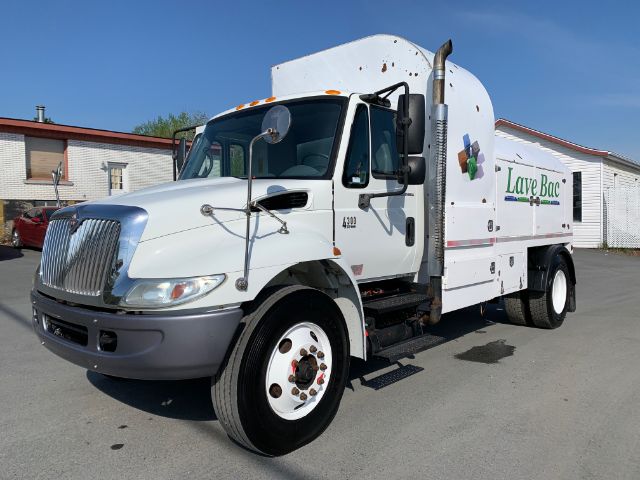
Selling a garbage truck? List your garbage truck for sale and reach thousands of commercial buyers.
Garbage Trucks in Quebec
Chassis and drivetrain specs matter as much as the body. Common refuse truck setups include tandem rear axles, GVWR ratings in the 62,000 to 66,000 lb range, Allison automatic transmissions, and heavy front axles around 18,000 to 20,000 lbs with 40,000 to 46,000 lb rears. Buyers should look closely at wheelbase, axle spacing, suspension type, rear ratio, and turning radius because those factors affect packer body fit, legal payload, and maneuverability in alleys, transfer stations, and tight city streets. Engines in this class are typically diesel or CNG, with refuse-duty horsepower usually paired to strong low-speed torque rather than highway gearing.
Body condition and hydraulic health are critical on used garbage trucks. A refuse unit can be mechanically sound and still need expensive work if the packer, arms, forks, hoist, cylinders, or wiring harness have been neglected. Inspect hopper floors, packer rails, body mounts, crossmembers, arm pins, tailgate seals, and hydraulic leaks. On automated units, pay attention to cycle times, joystick or in-cab controls, camera systems, and any interlock faults. In Quebec, corrosion is a real ownership factor, so frame condition, cab floors, brake components, electrical connectors, and body substructure deserve extra scrutiny on older municipal trucks.
A good garbage truck match comes down to route density, container type, legal weight targets, and service support for the body manufacturer. Mack LR and TE models, Autocar ACX Xpeditor units, and medium-duty chassis with refuse bodies all serve different jobs. For dense residential work, visibility, low cab entry, and automation often outrank raw body volume. For commercial front-load routes, fork strength, body capacity measured in cubic yards, and axle ratings usually drive the decision. Buyers comparing listings should evaluate the truck as a complete refuse system, not just the cab and engine, because uptime depends on the integration of chassis, transmission, hydraulics, and body controls.
Frequently Asked Questions about Garbage Trucks in Quebec
What types of garbage trucks are most common for sale?
The most common garbage truck types are front loaders, rear loaders, and automated side loaders. Front loaders are typically used for commercial dumpster service and offer high payload capacity with fork-mounted container lifting. Rear loaders are common in residential and recycling applications, especially where manual or semi-automated collection is still used. Automated side loaders are popular on residential cart routes because one operator can service a route efficiently from inside the cab.
What should I inspect first on a used garbage truck?
Start with the refuse body and hydraulic system before focusing only on the engine mileage. Check packer operation, cylinder seals, hoses, control functions, body cracks, arm wear, hopper condition, tailgate sealing surfaces, and any corrosion around mounts or crossmembers. Then review transmission operation, axle ratings, suspension wear, brake condition, and fault codes. Refuse trucks live hard lives at low speed, so hours, PTO use, and body-cycle condition often matter more than odometer readings alone.
Are CNG garbage trucks a good option?
CNG garbage trucks can be a strong fit for municipal and fleet operations that already have fueling access and trained technicians. They are common in refuse work because collection routes return to base daily and can support centralized fueling. Buyers should verify tank certification dates, fuel system service history, local parts support, and technician availability. If that support is limited, a diesel unit may be simpler to maintain in mixed or smaller fleets.
What GVWR and axle ratings are typical on heavy-duty garbage trucks?
Heavy-duty garbage trucks commonly run in the 62,000 to 66,000 lb GVWR range, often with front axles around 18,000 to 20,000 lbs and tandem rears rated from 40,000 to 46,000 lbs. Exact requirements depend on body style, intended payload, and local weight regulations. Front loader and automated side loader applications often need heavier front axle capacity because of arm systems, container pickup forces, and body weight concentration ahead of the rears.
Why does cab design matter so much on refuse trucks?
Cab design directly affects safety, productivity, and driver fatigue on collection routes. Low-entry cabs improve visibility around pedestrians, parked cars, and curbside obstacles while reducing the strain of repeated entry and exit. Wider windshields, lower beltlines, and seating options also help on tight urban routes. For dense city work, the right cab layout can be just as important as engine or body specs because it influences route speed and accident exposure every day.