
KME Fire Trucks For Sale
Browse KME fire trucks for sale, including popular rescue and pumper configurations with commercial-grade components and municipal-ready layouts.
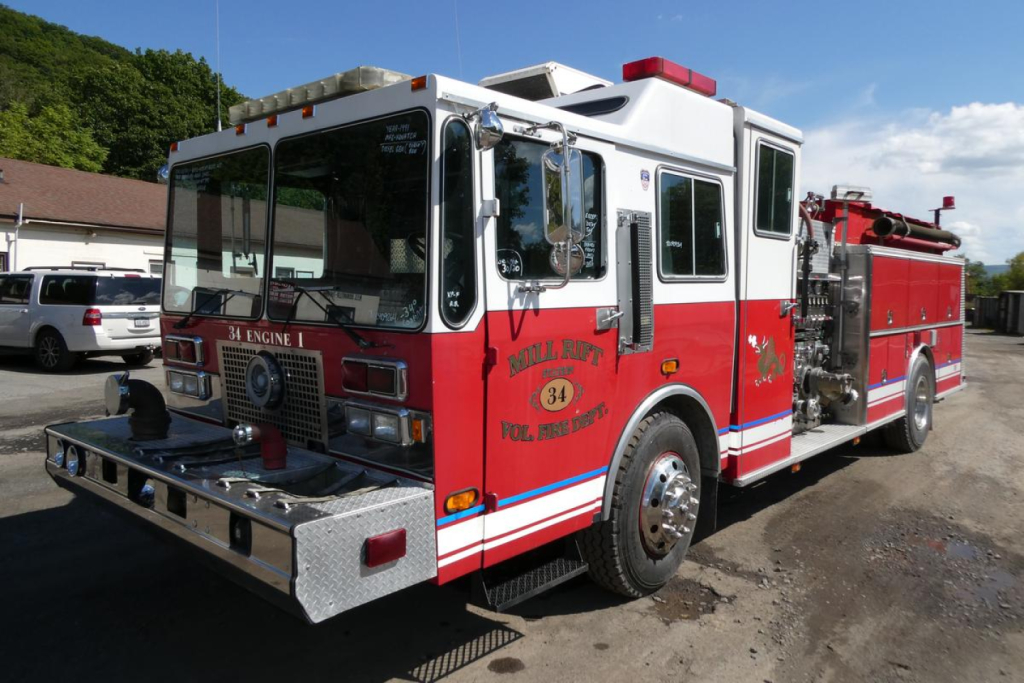
Selling a kme fire truck? List your kme fire truck for sale and reach thousands of commercial buyers.
KME Fire Trucks
A KME fire truck buyer should start with the chassis and drivetrain, then move to the apparatus package. Common considerations include diesel engine make, transmission model, axle ratings, wheelbase, turning radius, and GVWR. For pumpers, confirm rated pump output, plumbing condition, suction and discharge layout, foam system presence, and PTO or midship pump configuration. For rescue and specialty bodies, check compartment volume, slide-out trays, inverter or generator capacity, electrical distribution, and whether the truck was built for EMS support, technical rescue, hazmat, or combination duty. Cab style also matters, especially on units with crew seating, SCBA brackets, and updated occupant protection systems.
Condition matters more than age in this category. A well-maintained KME can remain a practical choice for departments, industrial sites, airports, training fleets, or export buyers, but fire apparatus inspection is critical. Pump testing records, service documentation, corrosion around body mounts, wiring condition, water tank integrity, and hours on auxiliary equipment should all be reviewed closely. On aerial-equipped trucks, ladder certifications, hydraulic service history, and structural inspection records carry major weight. Replacement parts access, local service familiarity, and compliance with current department requirements should be part of the buying decision, especially when comparing an older custom-spec truck to a newer commercial-chassis alternative.
KME, also known as Kovatch Mobile Equipment, built apparatus with a reputation for customization, which means no two used trucks are exactly alike. That can be a strength if the original spec matches your response area, staffing model, and maintenance capabilities. Buyers comparing KME fire trucks for sale should pay close attention to pump-and-roll needs, crosslay setup, compartment ergonomics, hosebed height, and the practicality of refurbishing electronics, warning systems, and cab interiors on older units. The best choice is usually the truck with the clearest maintenance history and the closest operational fit, not simply the newest model year.
Frequently Asked Questions about KME Fire Trucks
What should I check first when buying a used KME fire truck?
Start with the truck’s intended role and verify that the apparatus matches it. A pumper should be evaluated for pump rating, tank capacity, discharge layout, and plumbing condition, while a rescue unit should be reviewed for compartment design, power supply, and equipment mounting. After that, inspect the chassis, engine, transmission, axle ratings, brake system, and service records. Fire apparatus can remain useful for many years, but deferred maintenance on pumps, wiring, hydraulics, or corrosion-prone areas can quickly outweigh the purchase price.
Are KME fire trucks good for municipal and industrial use?
KME fire trucks are commonly found in both municipal and industrial service because the brand produced highly configurable apparatus across multiple duty types. Municipal buyers often focus on pumpers, tankers, rescues, and aerials with crew seating and scene access features. Industrial buyers may prioritize water capacity, foam capability, pump reliability, and durable body construction for plant or facility response. The suitability depends less on the badge and more on the original build specification, maintenance history, and how closely the truck fits the current operating environment.
How important are pump test records on a KME fire truck?
Pump test records are one of the most important documents on any used fire truck, including a KME. They help confirm that the pump can still perform at its rated capacity and that the plumbing, valves, and related components are functioning correctly. A current or recent pump certification gives a buyer more confidence than a visual inspection alone. If records are missing, many buyers treat that as a sign to schedule independent testing before making a final decision.
What engine and chassis factors matter most on older KME fire trucks?
On older KME apparatus, buyers should focus on engine model, emissions generation, transmission type, parts availability, and overall chassis condition. GVWR, axle ratings, wheelbase, and turning radius affect where the truck can realistically operate. Suspension wear, brake condition, steering components, and frame integrity are also important because fire trucks often spend long periods idle and then operate under heavy load. A strong apparatus body does not offset a neglected chassis, so both sides of the truck need equal attention.
Are older KME fire trucks practical for smaller departments or export buyers?
Older KME fire trucks can be practical for smaller departments, training academies, industrial users, and export markets if the truck is mechanically sound and the specification is still relevant. Many buyers value the heavy construction and custom body design, especially when buying a secondary unit or replacing an aging frontline truck on a limited budget. The key is to confirm that service support, replacement parts, and inspection requirements are manageable. A lower purchase price only makes sense if the truck can be kept operational without excessive refurbishment costs.