
Used 2020 Bus Trucks For Sale in New York
Have used 2020 bus truck to sell? List it here to reach thousands of buyers.
Used 2020 Bus Trucks in New York
Frequently Asked Questions about Used 2020 Bus Trucks in New York
What should I check first on a used 2020 bus truck?
Start with the service history, engine hours if available, odometer reading, and the current inspection status. On a 2020 bus, buyers should pay close attention to diesel aftertreatment performance, including the DPF, DEF system, and any fault code history. Suspension wear, brake condition, wheelchair lift operation if equipped, body corrosion, and floor integrity are also important, especially in New York where winter road salt can accelerate rust on step wells, underbody structure, and electrical connectors.
Are 2020 school buses in New York usually diesel?
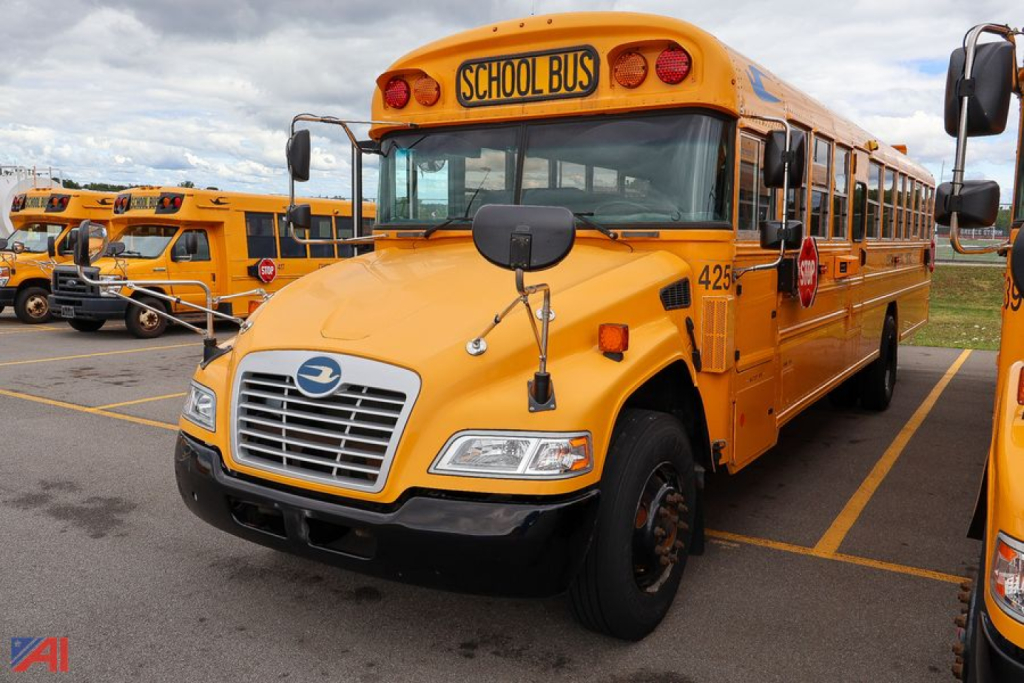
Yes, most full-size 2020 school buses in this market are diesel-powered, commonly with medium-duty engines matched to automatic transmissions. Diesel remains common because it handles stop-and-go route service, passenger loads, and long service cycles well. Buyers should still confirm engine make, horsepower rating, transmission model, and emissions system service records because maintenance quality matters more than badge alone on a used unit.
What is the difference between a full-size bus and a cutaway bus?
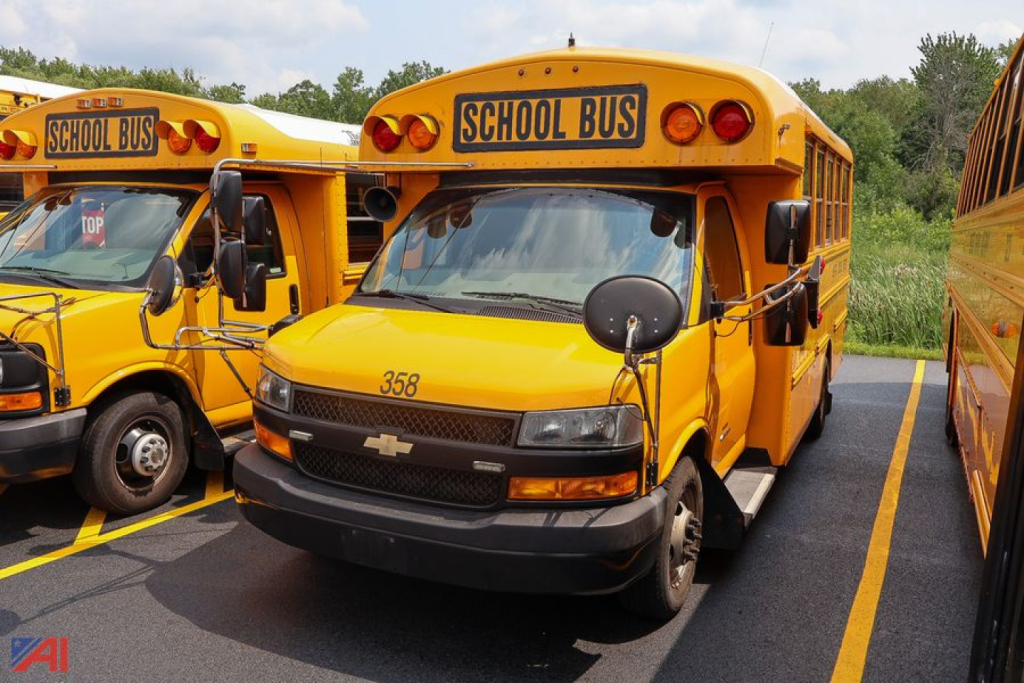
A full-size bus uses a dedicated bus or medium-duty truck chassis and is built for higher passenger capacity, heavier daily route use, and longer body lengths. A cutaway bus uses a van-derived chassis with a bus body added behind the cab. Cutaway models are easier to maneuver, often less expensive to maintain, and commonly used for paratransit, airport shuttle, hotel shuttle, and non-emergency passenger transport, but they do not usually match the seating capacity or route-duty durability of a full-size school bus.
Why is New York location important when buying a used bus?
New York buyers should look closely at rust, title history, and compliance requirements. Snow, road treatment chemicals, and dense urban or suburban stop-and-go use can affect frame rails, brake lines, door hardware, and electrical systems. Local use can also mean frequent idling and repeated short-cycle operation, which puts extra importance on cooling system condition, transmission performance, and emissions maintenance. A clean undercarriage and documented preventive maintenance can be more valuable than low mileage alone.
What features matter most for shuttle and passenger bus applications?
For shuttle use, the most important features are seating count, luggage space, entry door configuration, HVAC capacity, accessibility equipment, and overall maneuverability. Buyers often look for dual A/C systems, rear heat, wheelchair lifts, backup alarms, camera systems, and power mirrors. If the bus will be used for private charter, senior transport, or hospitality service, interior condition and passenger comfort can matter as much as drivetrain specs, while school route buyers usually focus more on durability, safety equipment, and district-style seating layout.