
Freightliner Bucket Trucks For Sale in Tennessee
Browse Freightliner bucket trucks for sale in Tennessee. Compare chassis, boom reach, GVWR, 4x4 options, and utility body configurations.
No exact matches found for your search
Showing Freightliner Bucket Trucks instead.
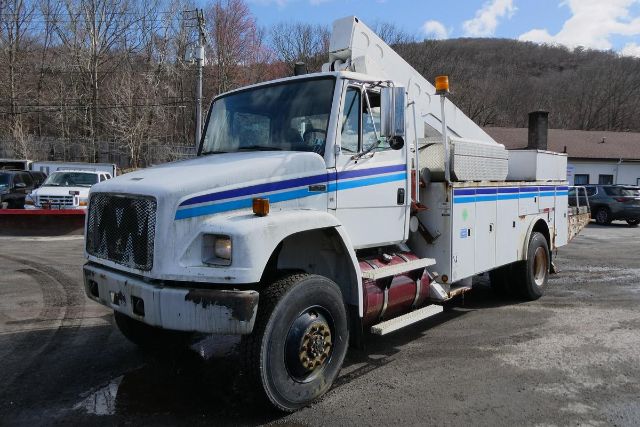
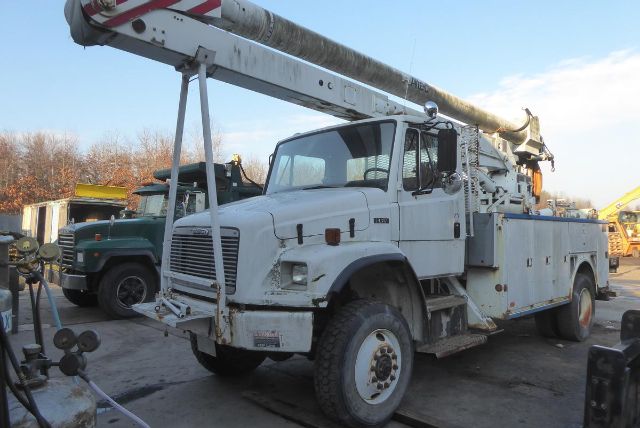
Selling a freightliner bucket truck? List your freightliner bucket truck for sale and reach thousands of commercial buyers.
Freightliner Bucket Trucks in Tennessee
The biggest buying decision is matching boom configuration and working height to the job. Bucket trucks in this class are commonly set up with non-overcenter or overcenter articulating booms, and platform heights can vary widely depending on the upfit. Arbor, linework, lighting, and signage applications all place different demands on side reach, material handling capacity, and insulation rating. A utility buyer may need a digger derrick-style support package or an insulated boom for energized line-clearance work, while a sign or lighting contractor may care more about compact dimensions and easy basket positioning. It is also worth checking turret condition, hydraulic performance, lower and upper controls, basket liner condition, PTO operation, and any available dielectric test records if the truck is represented as insulated.
On the truck side, Freightliner bucket trucks are often built on diesel-powered medium-duty chassis with automatic transmissions, air brakes, and wheelbases sized for utility bodies with outriggers and storage compartments. GVWR, axle ratings, and wheelbase directly affect body balance and legal payload once the boom, tools, and crew equipment are added. Some units are 4x2 for general fleet duty, while others are 4x4 for electric co-ops, tree crews, and municipal departments that regularly work in soft ground or off-pavement conditions. Buyers should also look closely at frame condition, outrigger structure, hydraulic leaks, compartment corrosion, and evidence of utility-body repairs. In Tennessee's humid conditions, rust can show up in body seams, step areas, and mounting points even when the cab and drivetrain still present well.
A well-matched Freightliner bucket truck can be a productive long-term asset because parts support is generally strong and the platform is familiar to many fleet technicians. The best value usually comes from balancing boom condition, inspection history, and chassis spec rather than shopping by model year alone. Service records, PTO hours if available, current boom certification status, and the reputation of the aerial device manufacturer are all worth weighing before purchase. For many buyers, the right truck is the one that meets reach and payload requirements without carrying more chassis or boom than the work actually demands.
Frequently Asked Questions about Freightliner Bucket Trucks in Tennessee
What should I check first on a used Freightliner bucket truck?
Start with the aerial device, not just the chassis. Confirm working height, side reach, basket capacity, insulation rating if applicable, and the condition of the upper and lower controls. Then inspect the outriggers, turret, hydraulic system, PTO engagement, and any maintenance or certification records. After that, evaluate the Freightliner chassis for engine condition, transmission operation, brake type, axle ratings, frame integrity, and signs of rust or body-mount fatigue.
Is a Freightliner M2 106 a good chassis for a bucket truck?
Yes, the Freightliner M2 106 is a widely used medium-duty platform for bucket truck applications because it offers good maneuverability, strong body-upfit compatibility, and broad parts and service support. It fits many utility and contractor applications well, especially when buyers need a balance of roadability, cab comfort, and sufficient GVWR for a utility body and aerial device. The exact suitability still depends on wheelbase, axle ratings, drivetrain, and the weight of the boom and body package.
Do I need 4x4 on a bucket truck in Tennessee?
That depends on where the truck will work. A 4x2 bucket truck is often sufficient for paved-road utility service, municipal work, and contractor fleets operating mainly in developed areas. A 4x4 setup makes more sense for rural electric work, tree service access, storm response, and jobs that involve muddy rights-of-way, soft shoulders, or unpaved sites. The tradeoff is usually higher acquisition cost, more drivetrain complexity, and sometimes reduced payload flexibility.
How important are boom inspection and dielectric records on a bucket truck?
They are critical, especially on insulated units used around energized lines. Boom inspection history helps verify that the aerial device has been maintained and tested to the appropriate standard. Dielectric test records, liner condition, and overall insulation integrity should be reviewed carefully when the truck is intended for electrical utility or line-clearance work. A clean-running chassis does not offset missing or questionable aerial-device documentation.
What body and storage features matter most on a Freightliner bucket truck?
The right utility body depends on the tools and materials the crew carries every day. Buyers usually look for compartment layout, shelving, reel or vice provisions, ladder or conduit racks, and accessible ground-level storage that supports the intended work. Outrigger placement, rear step access, and body balance also matter because they affect setup time and stability. A well-designed body can improve daily efficiency just as much as the aerial reach specification.