
New Ford Bucket Trucks For Sale
New Ford bucket trucks for utility, lighting, telecom, and sign work. Compare chassis, lift heights, body styles, and upfit options.
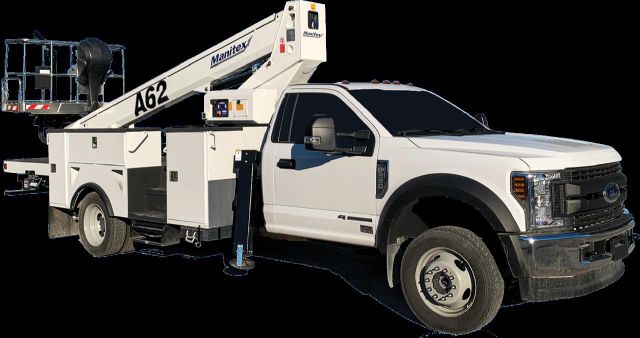
Selling a new ford bucket truck? List your new ford bucket truck for sale and reach thousands of commercial buyers.
New Ford Bucket Trucks
A typical new Ford bucket truck in this size range is built on a Class 5 chassis with a GVWR around 19,500 pounds, which can be attractive for operators trying to stay below CDL thresholds in certain configurations. Common power comes from the Ford 6.7L Power Stroke diesel with an automatic transmission, giving enough torque for urban route work, PTO-driven hydraulic systems, and jobsite starts and stops. On the lift side, many units in this class offer roughly 35 to 62 feet of working height and enough basket capacity for one or two workers plus tools. Buyers should look closely at platform rating, turret rotation, basket rotation, lower controls, emergency lowering systems, and outrigger monitoring. If the truck will spend time in tight streets or parking lots, outrigger design matters. Compact X-pattern outriggers and narrow setup footprints can make a big difference in real-world productivity.
Body style affects day-to-day usefulness as much as boom specs. A service body gives enclosed storage for hand tools, parts, cones, and small reels, while a flatbed setup can be better for hauling poles, signs, or bulky materials. Aluminum bodies help reduce curb weight and resist corrosion, especially in northern climates or municipal use. If the truck will be used around energized lines, insulation rating and dielectric testing requirements should be reviewed carefully, since not every bucket truck is built for utility line clearance. Crews doing lighting maintenance, traffic signal work, tree trimming near roadways, or building signage should also compare working radius, below-grade reach if applicable, and tail swing, because those factors directly affect where the truck can be positioned.
A new Ford bucket truck usually appeals to buyers who want current safety systems, warranty support, and a fresh upfit without the wear issues found on older aerial equipment. Pay attention to chassis wheelbase, axle ratings, payload left after the upfit, and how the body and lift combination fits your operating environment. A truck that looks similar on paper can differ substantially in storage layout, stabilization footprint, boom articulation, and usable outreach under load. For many fleets, the best unit is not simply the tallest one. It is the truck that matches the most common job height, can be set up quickly in traffic or on narrow shoulders, and has the service body, basket controls, and safety features your crew will use every day.
Frequently Asked Questions about New Ford Bucket Trucks
What is the typical use for a new Ford bucket truck?
A new Ford bucket truck is commonly used for overhead lighting maintenance, traffic signal service, telecom installation, sign work, tree and roadside trimming, and general municipal or contractor access work. The Ford chassis is popular because it supports a wide range of aerial lift upfits while remaining familiar to fleet technicians and operators. The exact application depends on whether the boom is insulated or non-insulated, the working height, and whether the truck includes a service body, flatbed, or material handling package.
Do Ford F-550 bucket trucks require a CDL?
Some Ford F-550 bucket trucks can be operated without a CDL, but that depends on the final GVWR of the completed truck and the regulations in the state where it is used. Many F-550 aerial lift builds are designed around a GVWR under 26,001 pounds, which can help avoid CDL requirements for standard operation. Buyers still need to confirm the actual door sticker GVWR, any air brake requirements, towing plans, and local rules before making that assumption.
What specs matter most when comparing bucket trucks?
The most important specs are working height, horizontal outreach, platform capacity, boom type, insulation rating, and outrigger footprint. Buyers should also compare turret rotation, basket rotation, lower and upper control layout, emergency lowering capability, and the amount of payload left after the body and lift are installed. A truck with slightly less maximum height may be more productive if it has better outreach, a tighter setup footprint, or a body layout that fits the crew’s daily work.
What body style is best on a Ford bucket truck?
A service body is usually the best choice for contractors and municipal crews that need organized storage for tools, hardware, and maintenance supplies. A flatbed can be a better fit when the truck also needs to carry bulky materials, signs, conduit, or other jobsite cargo. Aluminum bodies are often preferred for corrosion resistance and weight savings, especially when buyers want to preserve payload or operate in regions where road salt is common.
Are all bucket trucks suitable for electrical utility work?
No. Not all bucket trucks are insulated, and not all insulated units are appropriate for the same level of energized line work. Buyers should verify the boom’s insulation classification, applicable ANSI rating, dielectric testing requirements, and any company or utility-specific standards before assigning the truck to electrical utility service. For non-utility applications like sign maintenance or street lighting, a non-insulated aerial device may be sufficient and more cost-effective.