
New Ford Box Trucks For Sale in Indiana
Shop new Ford box trucks for sale in Indiana. Compare Transit and F-550 dry van options with common specs, payload ranges, and use cases.
Selling a new ford box truck? List your new ford box truck for sale and reach thousands of commercial buyers.
New Ford Box Trucks in Indiana
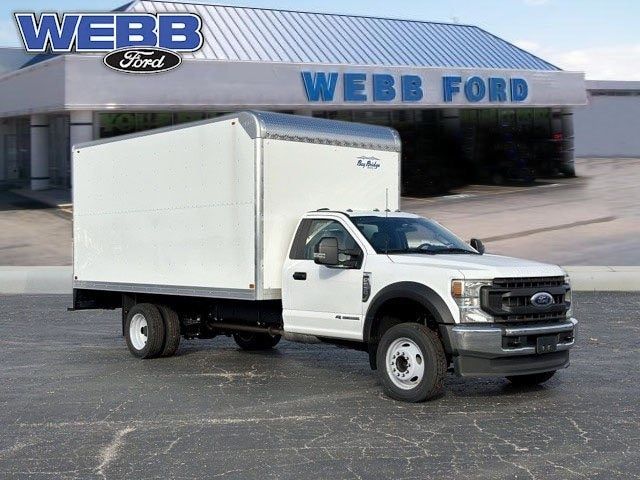
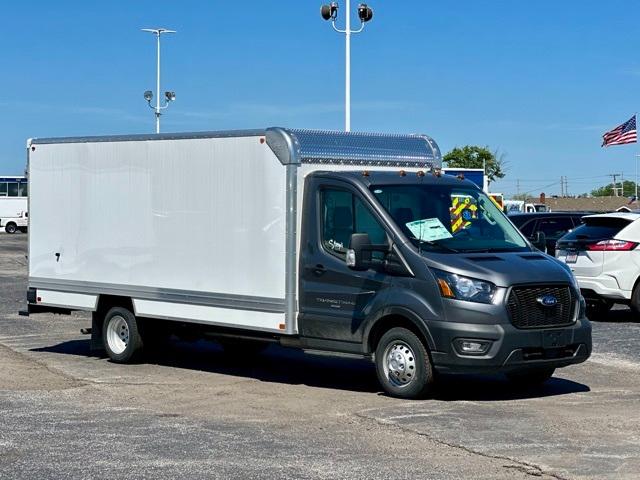
Body length, door configuration, and floor height matter as much as the badge on the hood. Common Ford box truck setups include 14-foot to 16-foot dry van bodies for parcel, furniture, appliance, contractor supply, and final-mile work. Roll-up rear doors are standard for frequent stop-and-go unloading, while swing doors can make forklift access easier in some dock environments. Buyers should also look at interior height, curbside access, scuff liners, translucent roofs, E-track, liftgate prep, and whether the body is mounted on a cutaway or straight-frame chassis. These details affect loading speed, cargo protection, and how useful the truck will be over a long duty cycle.
Powertrain and operating profile should match the route. Ford Transit box trucks are popular for lighter freight and local delivery because they offer a lower step-in height, car-like visibility, and a tighter turning radius. Ford F-550 box trucks are better suited to denser cargo, tougher vocational use, and fleets that need more durability under sustained payload. In Indiana, buyers often factor in interstate runs, winter traction, service access, and driver familiarity with Ford commercial platforms. Cab layout, wheelbase, axle ratio, and suspension setup all influence ride quality, cargo stability, and how the truck performs when fully loaded.
A new Ford box truck also gives buyers the advantage of current emissions equipment, warranty coverage, and a clean starting point for fleet standardization. When comparing listings, pay close attention to GVWR, payload rating, body manufacturer, fuel type, wheelbase, and any installed equipment such as liftgates, backup cameras, shelving, ramps, or telematics. The best choice is the one sized closely to your freight profile. Too little truck limits payload and service life. Too much truck raises acquisition cost, fuel burn, and operating expense on every route.
Frequently Asked Questions about New Ford Box Trucks in Indiana
What is the difference between a Ford Transit box truck and a Ford F-550 box truck?
A Ford Transit box truck is typically used for lighter-duty delivery work where maneuverability, lower step-in height, and easier urban driving are priorities. A Ford F-550 box truck is a heavier-duty platform with a higher GVWR, stronger chassis, and better suitability for dense freight, larger payloads, and tougher vocational service. The right choice depends on cargo weight, route density, dock access, and how much upfit capacity you need.
What box length is most common on new Ford box trucks?
A 16-foot body is one of the most common configurations on Ford box trucks, especially on Transit 350 and F-550 platforms, but 14-foot bodies are also common for tighter urban delivery applications. The ideal length depends on cube requirements, pallet count, turning space, and where the truck will load and unload. Body length should be matched with wheelbase and payload capacity rather than chosen on cargo volume alone.
What should I look for in a new Ford box truck for delivery service?
Key specs include GVWR, payload rating, engine type, wheelbase, rear door style, floor height, body interior dimensions, and any cargo-control equipment such as E-track or scuff liners. Buyers should also check for practical features like a liftgate, backup camera, shelving, ramp options, and cab ergonomics for multi-stop routes. For fleet use, serviceability, driver familiarity, and consistency across units can be just as important as headline specs.
Are Ford box trucks good for Indiana delivery routes?
Ford box trucks are a strong fit for Indiana delivery work because they are widely supported by commercial service networks and available in chassis sizes that suit both urban and regional applications. Transit models work well in tighter city and suburban routes, while F-550 units are better for heavier payloads and longer duty cycles. Buyers operating in Indiana should also consider winter traction, route mileage, highway speed demands, and loading conditions at customer sites.
Is diesel or gas better in a Ford box truck?
Diesel is often preferred on heavier Ford box truck applications such as the F-550 when the truck will carry denser loads, run longer distances, or operate at higher utilization. Gas can be a practical choice for lighter local routes where lower upfront cost and simpler operation are more important than maximum torque. The best fuel choice depends on annual miles, idle time, average payload, maintenance planning, and total cost of ownership.