
Boom Trucks For Sale in Illinois
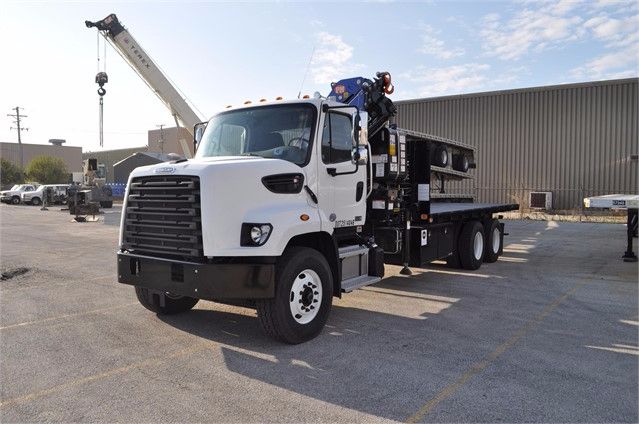
Compare boom trucks for sale in Illinois, including knuckle boom and crane truck setups, lift capacity, outriggers, chassis specs, and use cases.
Selling a boom truck? List your boom truck for sale and reach thousands of commercial buyers.
Boom Trucks in Illinois
The first buying decision is matching crane capacity and reach to the loads you handle most often. Common listings show lift ratings ranging from lighter service bodies up to 30,000 pounds, 40,000 pounds, or more, but rated capacity alone does not tell the whole story. Buyers need to look at the load chart, horizontal reach, vertical reach, and lifting capacity at different boom extensions. Outrigger design matters just as much. Hydraulic out-and-down outriggers provide better setup flexibility on uneven sites, while a load moment indicator helps prevent overload and stability issues. Radio remote controls, stow alarms, and hydraulic winches are also common features that improve safety and jobsite efficiency.
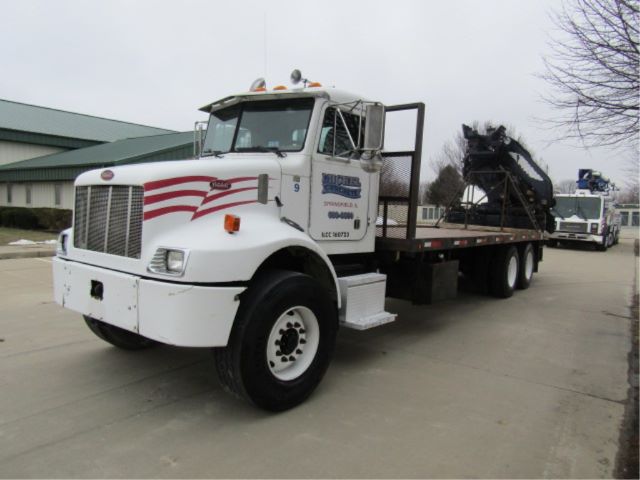
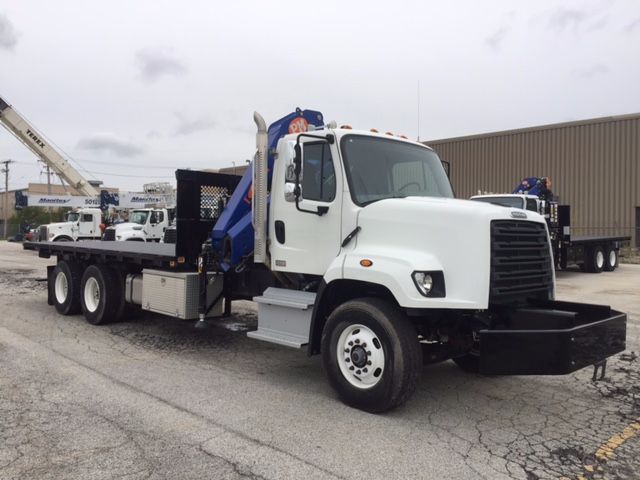
Chassis spec is a major part of boom truck value because the truck has to carry the crane, body, payload, and support equipment without compromising stability. Many boom trucks ride on vocational platforms such as Freightliner 108SD, Peterbilt 330, or similar medium-duty to severe-duty chassis. Buyers should pay close attention to axle ratings, wheelbase, frame reinforcement, suspension, and whether the truck is 4x2, 6x4, or equipped with a lift axle or cheater axle. Engine horsepower and transmission choice affect drivability, especially when the truck sees mixed highway and urban work. In Illinois, bridge law compliance, seasonal road restrictions, and maneuverability in industrial yards or city streets can all influence the right wheelbase and axle configuration.
Condition assessment should focus on both the truck and the lifting system. Check boom structure, pins, bushings, hydraulic cylinders, hoses, turntable wear, PTO operation, and outrigger function. Ask for service history on the crane, recent annual inspections, and any load testing records. On the chassis side, evaluate frame condition, tire wear, brake life, drivetrain health, and cab controls. A well-matched boom truck can replace separate loading equipment on many jobs, cut labor time, and expand the type of deliveries or field service work a fleet can take on. The best unit is usually the one with a realistic load chart, stable chassis setup, and enough body and storage configuration to support the work between lifts.
Frequently Asked Questions about Boom Trucks in Illinois
What is the difference between a boom truck and a knuckle boom truck?
A boom truck is a broad category for trucks equipped with a lifting boom, but buyers usually divide them into straight boom crane trucks and articulating knuckle boom trucks. A knuckle boom folds at one or more joints, stows compactly, and offers precise load placement in tighter spaces. A straight boom uses a more traditional telescopic crane design and is often preferred when longer reach and simpler lift geometry matter more than compact stowage.
How do I choose the right lift capacity on a boom truck?
Start with the actual loads you lift most often, then review the crane's load chart instead of relying only on the maximum advertised rating. Capacity drops as boom extension and working radius increase, so a truck rated for 32,000 or 42,000 pounds at a short radius may handle much less at full reach. Buyers should also consider the weight of rigging, body equipment, and whether the truck will be lifting on improved surfaces or variable jobsite ground conditions.
Why are outriggers and load moment indicators so important on boom trucks?
Outriggers are critical because they widen the truck's working footprint and improve stability during lifting. Hydraulic out-and-down outriggers help level the truck and adapt to tighter or uneven setup areas. A load moment indicator monitors crane load and geometry, then warns the operator or limits unsafe functions before the truck reaches an unstable or overloaded condition. These systems directly affect safe operation and should be inspected carefully on any used boom truck.
What chassis specs matter most on a used boom truck?
The most important chassis factors are axle ratings, wheelbase, frame strength, suspension, driveline condition, and overall weight distribution. A boom truck needs enough chassis capacity to support the crane, body, tools, and any material being carried without sacrificing stability. Buyers should also look at engine horsepower, transmission type, axle configuration such as 6x4, and any lift axle or cheater axle setup, especially if the truck will operate under local bridge and weight rules in Illinois.
What should I inspect on a used boom truck before buying?
Focus on both the crane system and the truck underneath it. Inspect the boom for cracks, weld repairs, pin and bushing wear, cylinder leaks, hose condition, turntable play, PTO operation, and full outrigger function. Confirm that remote controls, alarms, and safety devices work properly. On the chassis, check the frame, suspension, tires, brakes, transmission operation, and engine service history. Documentation for annual crane inspections, maintenance, and load testing adds meaningful value because it helps verify the truck's working condition and compliance history.