
Used 2012 Refrigerated Trailers For Sale
Compare used 2012 refrigerated trailers for sale by reefer condition, insulation integrity, floor strength, and California compliance before buying.
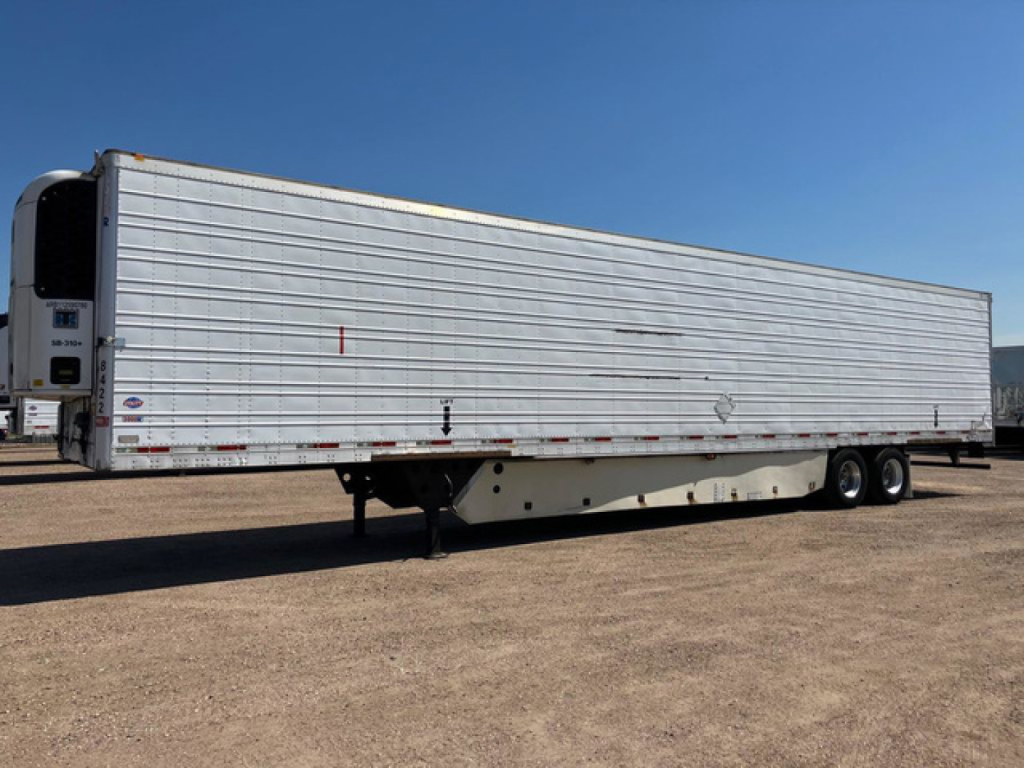

Selling a used 2012 refrigerated trailer? List your used 2012 refrigerated trailer for sale and reach thousands of commercial buyers.
Used 2012 Refrigerated Trailers
A running Thermo King or Carrier unit needs more than a quick start-up check. Have a refrigeration technician test pull-down and temperature holding under representative ambient conditions, inspect alarms and controller history, and check for refrigerant leaks, compressor wear, weak batteries, and fuel-system problems. Check the fuel tank, mounts, supply lines, and front-wall attachment points for corrosion or damage. Confirm whether electric standby is installed and compatible with your facility's power supply. Obtain engine-hour readings and service records, but remember that an empty trailer reaching setpoint does not demonstrate adequate performance with a warm load.
Moisture intrusion is a major concern on a 2012 insulated body because wet insulation increases heat gain and adds weight. Inspect roof seams, front-wall penetrations, door seals, interior liner repairs, and floor-to-wall joints for leaks or separation. Soft spots, bulges, persistent condensation, and unexplained weight differences deserve further investigation. Examine the aluminum floor, crossmembers, and rear sill for forklift damage and corrosion. Damaged air channels, missing return-air bulkheads, or torn ceiling chutes can undermine temperature uniformity even when the refrigeration unit works properly.
A common 53-foot, tandem-axle, air-ride reefer suits dock-based food distribution, but length, axle placement, and floor capacity must match the freight. Check kingpin wear, upper coupler structure, slider operation, suspension bushings, air springs, brakes, wheel ends, tires, and ABS faults. Verify the floor's concentrated-load rating before forklift loading, and scale the empty trailer before calculating legal payload.
Operating region can change whether a sound trailer is a practical purchase. Road salt in northern states and Canadian provinces warrants close inspection of crossmembers, suspension hangers, wiring, and brake components. Hot-weather routes demand enough refrigeration capacity and sound insulation for higher heat loads, while winter operation may require heating capability. For California work, verify the installed reefer engine's CARB compliance independently of the trailer year. Confirm axle-weight, dimension, and equipment requirements for each state or province on the planned route.
Frequently Asked Questions about Used 2012 Refrigerated Trailers
How many reefer hours are too many on a 2012 refrigerated trailer?
Diesel engine hours and documented maintenance matter more than a universal hour cutoff on a 2012 refrigerated trailer. Read diesel run hours separately from total controller hours or electric-standby hours, because those measurements describe different operating exposure. Ask whether the controller or engine has been replaced, and reconcile the readings with repair invoices. A high-hour unit with documented major repairs may be a better risk than a low-hour unit with unresolved alarms.
Can I use a 2012 refrigerated trailer for dry freight?
Yes, a structurally sound 2012 refrigerated trailer can haul compatible dry freight, but the insulated body usually sacrifices payload and interior space compared with a dry van. Confirm pallet fit, door clearance, floor loading, and cargo securement provisions. A failed refrigeration unit does not disqualify dry-freight use, but sanitation, odors, water leaks, and damaged floors can still make the trailer unsuitable.
Is a 2012 refrigerated trailer legal to operate in California?
A 2012 trailer title does not establish California refrigeration-unit compliance; the installed reefer engine's model year and CARB status control that determination. Request the engine identification information, applicable compliance documentation, and ARBER registration records, then verify the unit's status with CARB. A replacement unit may have different requirements from the original engine. Check applicable trailer aerodynamic and tire requirements separately, because refrigeration compliance does not establish compliance for the entire combination.
Is replacing the reefer unit worthwhile on a 2012 trailer?
Replacing the refrigeration unit makes sense only when the 2012 trailer's insulated body and structure remain serviceable. Assess insulation performance, floor strength, corrosion, door sealing, and front-wall mounting integrity before committing to replacement. Include removal, installation, wiring, fuel-system work, and any standby-power changes in the project scope. Confirm the replacement unit's capacity, mounting compatibility, weight, and emissions eligibility for the intended routes; a new unit cannot correct a deteriorated insulated body.
Can a 2012 reefer haul frozen and chilled products at the same time?
A properly configured multi-temperature 2012 refrigerated trailer can carry frozen and chilled freight simultaneously; a partition alone does not provide independent temperature control. Verify that the refrigeration system supports separate zones and that the required evaporators, controls, bulkheads, and airflow provisions are installed. Test every compartment at its intended setpoint. Zone dimensions and evaporator placement can reduce usable loading space, so confirm pallet layout before choosing a multi-temperature configuration.