
New Eager Beaver Flatbed Trailers For Sale
New Eager Beaver flatbed trailers built for equipment hauling, with low deck heights, heavy-duty ramps, durable wood floors, and 20-25 ton ratings.
Learn more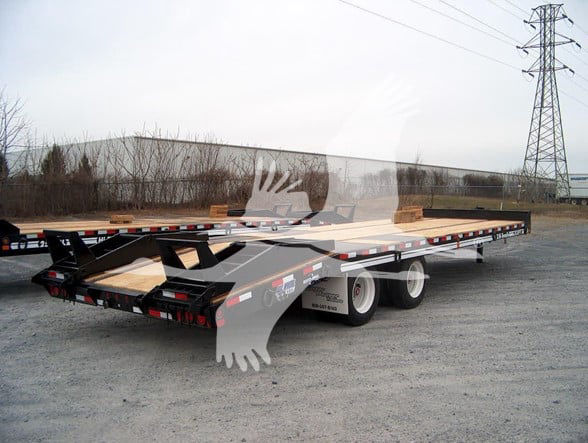
Showing 13 to 16 of 16 results
Have new eager beaver flatbed trailer to sell? List it here to reach thousands of buyers.
About New Eager Beaver Flatbed Trailers
The first decision is usually capacity and axle layout. Eager Beaver models in this class commonly fall into 20-ton and 25-ton ratings, with tandem-axle and tri-axle layouts depending on payload and bridge considerations. A 20-ton trailer is a practical fit for many compact and mid-size equipment applications, while a 25-ton model adds margin for heavier iron and may include a lift axle to help with weight distribution and tire wear. Buyers should compare empty weight, suspension type, brake configuration, and deck length against the machines they move most often. Spring ride suspension is common in this segment, along with 215/75R17.5 tires, steel wheels, ABS, and spring brakes on all axles.
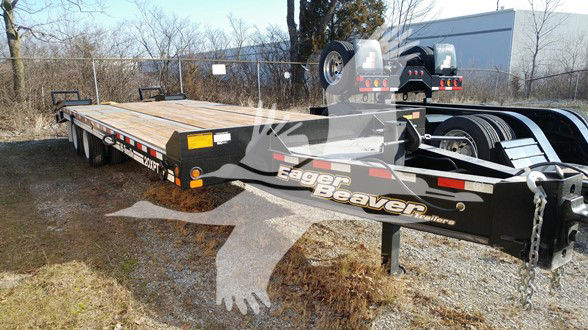
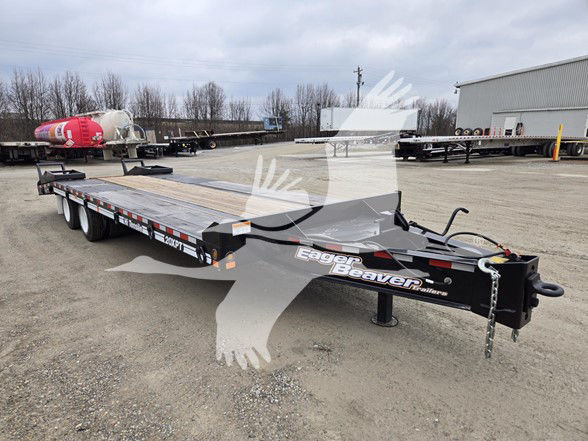
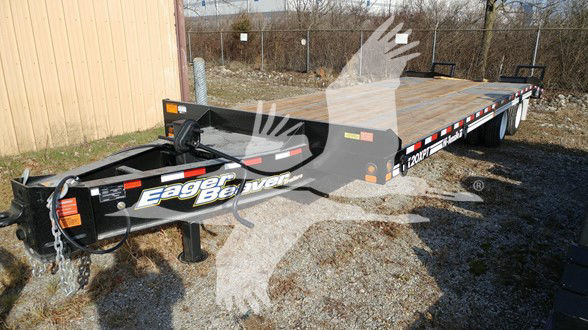
Deck construction and loading features are where day-to-day usability shows up. Eager Beaver flatbeds often use apitong flooring, sometimes with a mixed wood layout, which is valued for wear resistance under steel tracks and repeated loading cycles. Steel side rails, multiple pairs of D-rings, lockable toolbox space in the drawbar area, and a full-width steel bulkhead are all practical features for securement and jobsite durability. Ramp choice is another key separator. Some trailers use fixed angle iron ramps, while others are equipped with electric-hydraulic, wood-filled ramps that can speed up loading and improve traction. Main deck height around 34 inches keeps the center of gravity manageable and helps reduce the loading angle compared with taller equipment trailers.
For buyers comparing new Eager Beaver flatbed trailers, the real question is how closely the trailer matches the truck and the freight. Confirm pintle height adjustment range, landing gear style, number of tie-down points, and whether the deck length leaves enough room for attachment overhang and proper load balance. It also pays to check the beavertail design, axle spacing, and brake setup if the trailer will run across multiple states or spend time at maximum legal weight. Eager Beaver has long been associated with heavy-duty construction and equipment-hauling trailers, and this category appeals to buyers who need a straightforward, work-ready platform with proven specs rather than a light commercial flatbed.
Frequently Asked Questions
What is the difference between an equipment-style flatbed trailer and a standard flatbed trailer?
An equipment-style flatbed trailer is built specifically for hauling machines and other dense loads that need to be driven or winched onto the deck. It typically includes a low deck height, full-width bulkhead, beavertail, and rear ramps, often with a pintle hitch setup. A standard flatbed trailer is more general-purpose and may not have the loading angle, ramp system, or structure needed for frequent equipment loading.
What capacity should I choose in a new Eager Beaver flatbed trailer?
Capacity should be based on the heaviest machine you will haul, plus attachments, fuel, chains, and any other cargo carried on the deck. Many buyers in this category look at 20-ton models for common construction equipment and 25-ton models when they need more payload margin or plan to haul heavier excavators, loaders, or support equipment. It is important to compare the trailer's rated capacity, empty weight, axle configuration, and the towing truck's ratings as a complete combination.
Why does deck height matter on a flatbed equipment trailer?
Deck height affects loading angle, center of gravity, and overall hauling stability. A lower deck makes it easier to load machines with limited ground clearance and reduces the breakover risk at the transition from ramps to deck. It also helps keep the load lower in transport, which can improve stability and may help with height-sensitive applications depending on the machine being hauled.
Are hydraulic ramps worth it on an Eager Beaver flatbed trailer?
Hydraulic ramps can be a strong upgrade for fleets that load equipment frequently or handle different machine types during the week. They reduce manual effort, speed up loading, and often provide a wider, more consistent loading surface than basic angle iron ramps. For lower-frequency users, fixed ramps may be simpler and lighter, but for daily use and operator convenience, hydraulic ramps are often easier to live with.
What should I check when matching a flatbed trailer to my truck?
Start with hitch type, pintle height range, and the truck's towing and braking capability. Then look at trailer GVWR, axle count, brake setup, ABS configuration, and loaded tongue weight to make sure the truck can handle the trailer safely and legally. Buyers should also confirm deck length, securement points, and load placement so the combination balances correctly and works with the machines they transport most often.