
New Behnke Trailers For Sale in Illinois
Shop new Behnke trailers for hauling equipment, machinery, and materials. Compare flatbed, beavertail, and tilt trailer specs and capacities.
Selling a new behnke trailer? List your new behnke trailer for sale and reach thousands of commercial buyers.
New Behnke Trailers in Illinois
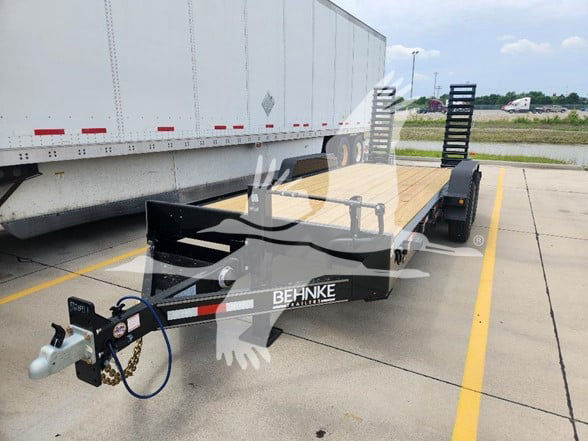
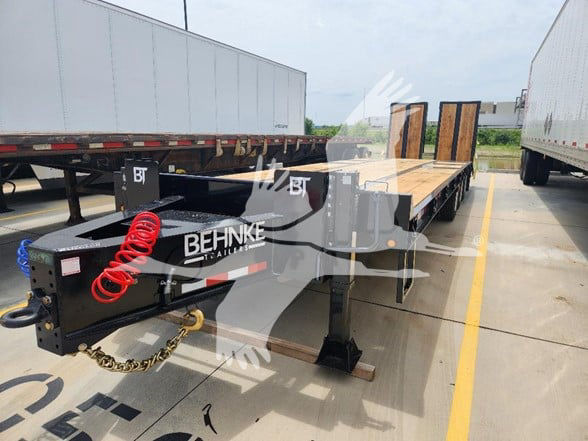
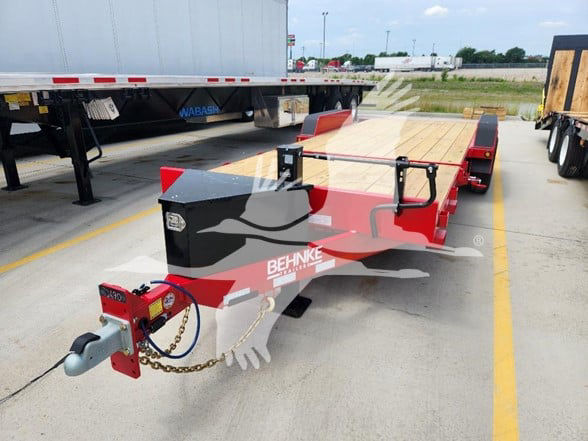
Deck design matters as much as gross rating. Beavertail models with flip-up ramps are a practical fit for wheeled machines, small iron, and mixed-use contractor hauling because loading angles are predictable and the rear structure stays familiar to most operators. Tilt deck Behnke trailers are often the better answer for low-clearance equipment, scissor lifts, sweepers, or anything with poor breakover that hangs up on ramps. Buyers should compare deck length, stationary deck length on tilt models, width between fenders, ramp width, and whether the trailer uses spring-assist, self-cleaning, hydraulic, or gravity-tilt loading systems. Features like pallet fork holders, stake pockets, formed fenders, and regularly spaced D-rings add real day-to-day value when the trailer is used for more than one machine type.
On the running gear side, Behnke trailers are often spec'd with Dexter axles, with configurations that may include straight axles, Torflex axles, oil bath hubs, E-Z Lube hubs, and electric brakes. For a buyer, that means the right choice comes down to service environment and load consistency. Spring ride axles tend to make sense on higher-capacity commercial tags where durability and straightforward service matter most. Torsion axles can offer a smoother unloaded ride and lower deck feel on certain equipment trailers. Tire size also deserves attention because 17.5-inch and 22.5-inch wheel and tire packages affect load margin, replacement cost, and highway behavior. A serious spec review should also include jack capacity, breakaway kit type, safety chain rating, landing gear design, and coupler style, especially if the trailer will rotate between trucks.
New Behnke trailers appeal to buyers who want commercial-grade construction without unnecessary complexity. The brand is well known in equipment-hauling circles for stout frames, practical loading features, and high-capacity tag trailer layouts that suit construction, agriculture, rental fleets, municipal work, and heavy contractor use. For Illinois buyers, it is smart to match the trailer not just to the machine you haul today, but to the heaviest attachment package, the roughest loading surface, and the towing vehicle you expect to use over the next few years. The best trailer in this category is the one with enough deck, axle, brake, and securement capacity to work every day without operating at the edge of its rating.
Frequently Asked Questions about New Behnke Trailers in Illinois
What are new Behnke trailers commonly used for?
New Behnke trailers are commonly used for hauling construction equipment, tractors, skid steers, compact track loaders, attachments, building materials, and other heavy jobsite cargo. Flatbed and beavertail models are popular for general equipment transport, while tilt deck versions are often preferred for machines with low ground clearance or for operators who want faster loading without handling ramps.
What should I look at first when comparing Behnke trailer specs?
Start with GVWR, axle configuration, deck length, and hitch type. Those four items determine what the trailer can legally and practically haul, how it will tow, and what truck is needed to pull it safely. After that, compare loading style, including beavertail versus tilt deck, ramp design, deck width, securement points, and the running gear components such as axle brand, brake setup, hub type, and tire size.
Is a Behnke tilt trailer better than a beavertail trailer?
A tilt trailer is not automatically better, but it can be the better tool for certain loads. Tilt decks are excellent for equipment with low clearance, rubber tires, or sensitive undercarriages because they reduce the breakover issues that can happen on ramps. A beavertail trailer is often better for mixed fleets, repeated loading cycles, and buyers who want a simpler design with familiar ramp operation and more flexibility for different cargo types.
Are Behnke trailers available in heavier commercial capacities?
Yes. Behnke is known for building equipment trailers that range from medium-duty models up into high-capacity commercial tag trailers. Depending on the configuration, buyers may find tandem-axle and triple-axle setups, pintle hitch arrangements, heavy landing gear, oil bath axles, and larger tire packages designed for more demanding payloads and jobsite conditions. The right capacity should always be chosen based on actual machine weight, attachments, and securement needs, not just the base operating weight of the equipment.
What trailer features make the biggest difference in daily use?
The features that usually matter most are the ones that affect loading time, securement, and durability. Wide spring-assist or hydraulic ramps, a properly sized beavertail or tilt section, stake pockets, D-rings, pallet fork holders, strong jacks or landing gear, and quality axle and brake components all contribute to easier operation and less downtime. Buyers who haul in mud, gravel, or uneven jobsite conditions should pay especially close attention to loading angle, fender protection, deck construction, and how easy the trailer is to service.