
2025 Behnke Trailers For Sale in Illinois
Shop 2025 Behnke trailers for hauling equipment, machinery, and materials, with heavy-duty flatbed and tilt deck configurations.
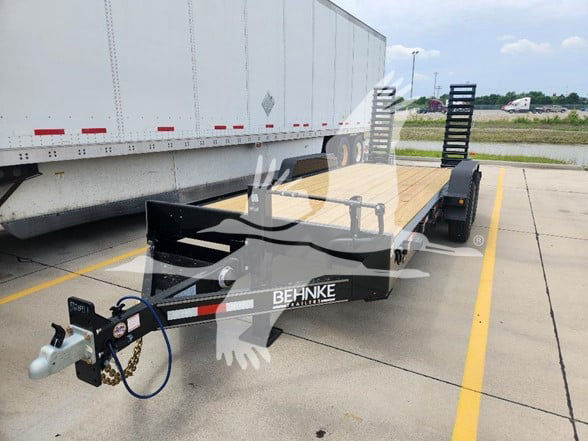
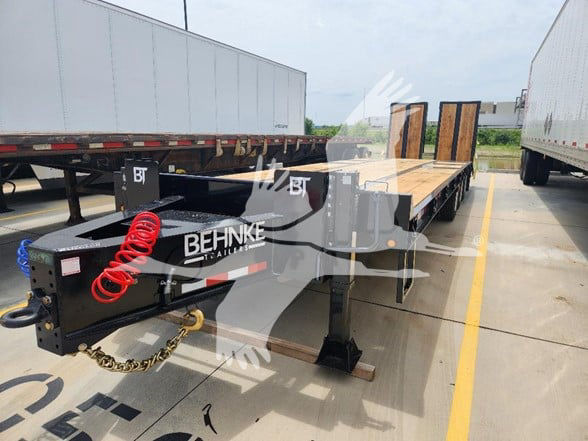
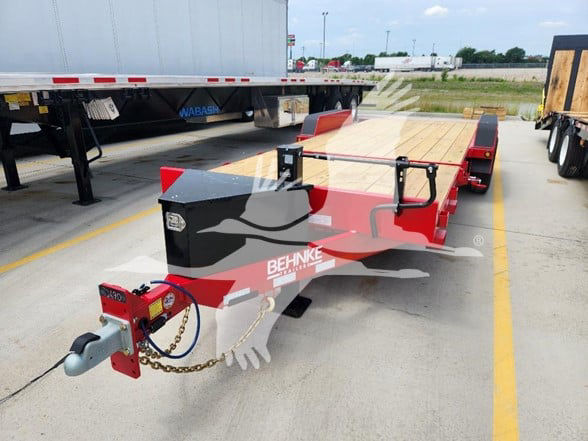
Selling a 2025 behnke trailer? List your 2025 behnke trailer for sale and reach thousands of commercial buyers.
2025 Behnke Trailers in Illinois
Tilt bed Behnke trailers are a strong fit for operators loading low-clearance equipment, forklifts, or machines with limited ground clearance. A full or partial tilt setup reduces the breakover point and can speed up loading without handling separate ramps. Look closely at tilt length, stationary deck length, cushion cylinders, latch design, and hydraulic flow control, since those details affect loading feel and deck return speed. On fixed deck and beavertail models, ramp design is just as important. Spring-assist flip-up ramps, self-cleaning angle iron ramps, and hydraulic ramp systems each suit different loading cycles and machine types. Wider ramps, beavertail length, and deck height all affect how easily tracked or rubber-tire equipment transitions onto the trailer.
Axle and running gear specs are where buyers should spend time. Behnke trailers in this class may use Torflex axles for a smoother unloaded ride or heavy spring ride suspensions for higher-capacity commercial hauling. Dexter axles, E-Z Lube hubs, or oil bath hubs are common spec points worth comparing, along with electric brake configuration and tire size such as 17.5-inch or 22.5-inch rubber on larger models. Match the trailer to the tow vehicle by checking pintle versus ball hitch setup, jack capacity, safety chain rating, breakaway kit, and overall loaded tongue weight. For buyers working in Illinois or across the Midwest, payload planning also needs to account for local road conditions, seasonal use, and how often the trailer will see gravel yards, demolition sites, or paved municipal work.
Tie-down and daily-use details can make a bigger difference than buyers expect. Stake pockets, D-rings, pallet fork holders, fender guards, toolboxes, and visible latch hardware all contribute to faster loading and more secure transport. On heavier Behnke equipment trailers, dual-speed landing gear and adjustable pintle hardware are especially relevant for fleets that rotate trailers among multiple trucks. If the trailer will spend most of its life hauling one machine, focus on deck length, axle placement, and loading geometry. If it will serve mixed fleet duty, prioritize versatile tie-down points, durable fenders, easy service access, and a configuration that leaves room for attachments, buckets, or palletized cargo.
Frequently Asked Questions about 2025 Behnke Trailers in Illinois
What are 2025 Behnke trailers commonly used for?
2025 Behnke trailers are commonly used for hauling construction equipment, compact machinery, agricultural units, forklifts, pallets, and general heavy materials. Their flatbed, beavertail, and tilt deck configurations make them especially useful for contractors, equipment rental companies, municipalities, and owner-operators who need a durable trailer for repeated loading and unloading.
Is a tilt deck or ramp-style Behnke trailer better for equipment hauling?
A tilt deck Behnke trailer is usually better for low-clearance equipment and fast loading cycles because it reduces the loading angle and eliminates the need to deploy separate ramps. A ramp-style or beavertail model is often preferred for simplicity, lower maintenance, and applications where the same machines are loaded regularly and ramp setup is not a problem. The better choice depends on machine ground clearance, attachment length, and how often the trailer is loaded each day.
What specs matter most when comparing Behnke equipment trailers?
The most important specs are GVWR, deck length, usable deck layout, axle rating, suspension type, brake setup, hitch style, and ramp or tilt design. Buyers should also check tie-down points, jack capacity, tire size, hub type, and whether the trailer has practical features like toolboxes, pallet fork holders, or fender protection. These details affect payload fit, towing behavior, serviceability, and day-to-day productivity.
Are higher-capacity Behnke trailers suitable for commercial fleet use?
Higher-capacity Behnke trailers can be a strong fit for commercial fleet use when the axle group, hitch, landing gear, brakes, and tire package are matched to the intended payload and tow vehicle. Models in the 20,000 to 50,000 pound GVWR range are typically selected for heavier machinery, frequent jobsite use, and mixed-duty commercial hauling where structural durability and secure loading matter more than lightweight design.
What should buyers in Illinois consider when shopping for a Behnke trailer?
Illinois buyers should pay close attention to trailer weight ratings, brake requirements, hitch compatibility, and how the trailer will perform in year-round Midwest conditions. Snow, road salt, freeze-thaw cycles, and rough jobsite access can accelerate wear on wiring, brakes, fenders, and running gear. It is smart to evaluate corrosion resistance, service access, and how easily common wear parts like hubs, brakes, and tires can be maintained over time.