
Used 2004 Forklifts For Sale in New York
Used 2004 forklifts for sale in New York: compare tire types, rated capacity, mast clearance, and salt exposure before choosing a lift truck.
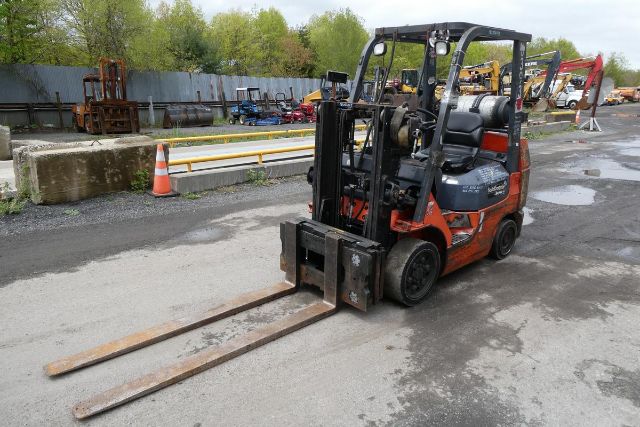
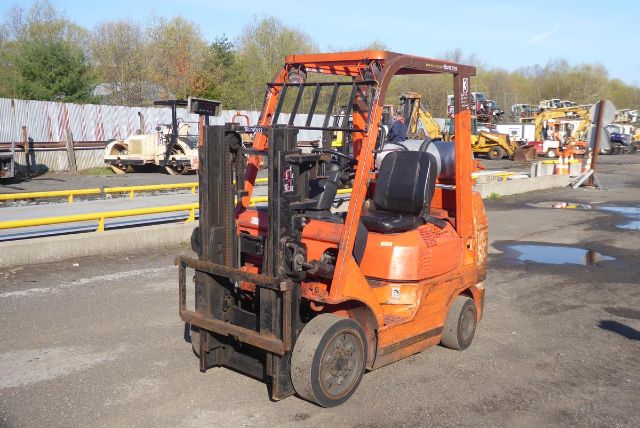
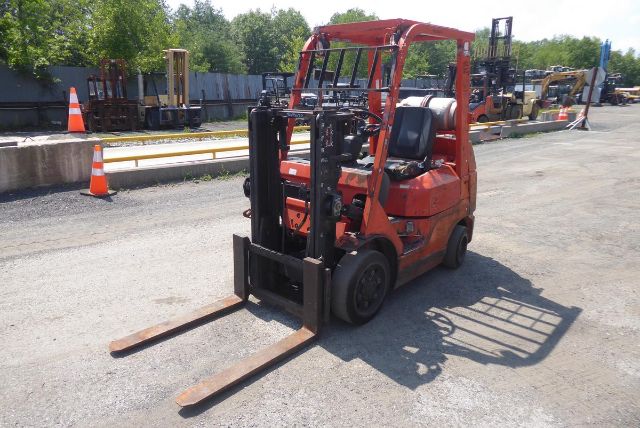
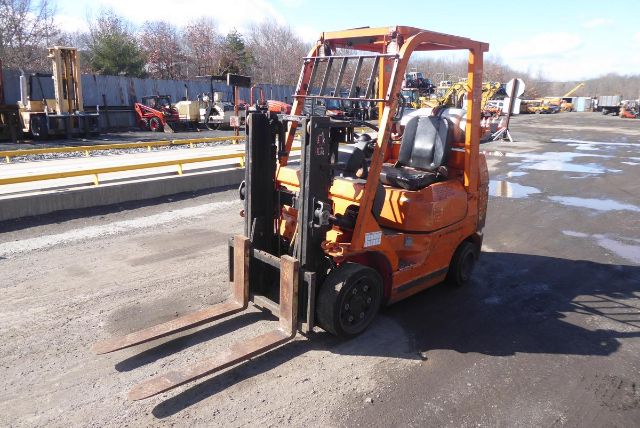
Selling a used 2004 forklift? List your used 2004 forklift for sale and reach thousands of commercial buyers.
Used 2004 Forklifts in New York
Read rated capacity at the actual load center and lift height on the data plate, including any side shifter or other attachment. Measure rack height, doorway clearance, collapsed mast height, aisle width, and trailer entry dimensions before choosing a mast or wheelbase. Check dockboard capacity against the forklift's operating weight plus its load, not the pallet weight alone.
A 2004 fork truck is now more than two decades old, making repair documentation and parts identification more useful than an attractive paint job. Toyota's 7FGCU20 and 7FGCU25 are examples of that era's propane cushion-tire trucks, but compare every make by its actual configuration rather than the model badge alone. Obtain the chassis serial number, engine identification, and mast tag to confirm parts support. Reconcile indicated hours with service invoices, pedal wear, seat condition, and any replacement meter or engine records. Retrieve controller or engine diagnostic history where the machine supports it.
Inspect New York machines for salt damage around the steer axle, frame seams, overhead guard mounts, and hydraulic lines, especially after outdoor or dock service. Start combustion engines cold, then test forward and reverse engagement, brakes, steering, and hydraulics again after warm-up. Lift a known load within the data-plate rating and check mast rollers, chain condition, carriage play, cylinder leakage, and load drift. Verify tire condition, parking brake holding power, and steering axle pivot wear. On electric trucks, obtain battery age and a documented load test; a charger that powers on does not establish battery health.
Frequently Asked Questions about Used 2004 Forklifts in New York
Do I need forklift certification to operate a used 2004 forklift in New York?
OSHA requires employers to ensure forklift operators are trained and evaluated, with performance evaluations at least once every three years. Buying a used 2004 forklift does not transfer an operator's qualification to a new workplace. Training must address the truck type and workplace hazards. Refresher training is required after certain events, including unsafe operation or an accident, and when changed conditions affect safe operation.
How much fork wear is too much on a 2004 forklift?
A 10% reduction from original fork blade or shank thickness is a removal-from-service threshold under established forklift inspection standards. Have a qualified inspector measure wear against manufacturer dimensions or an appropriate unworn reference. On a used 2004 forklift, cracks, damaged mounting hooks, and excessive heel-angle distortion also require attention. Fresh paint cannot establish fork condition, and damaged forks should not receive improvised field repairs.
How do I check the battery before buying a used 2004 electric forklift?
A documented capacity test is more useful than resting voltage for assessing a used electric forklift battery. Have a battery specialist check performance under load, individual cell condition, connector damage, and evidence of overheating or electrolyte leakage. Confirm that battery voltage, weight, and dimensions match the forklift's requirements. The charger must also match the battery and the New York facility's electrical supply, including voltage and phase.
Why does free lift matter when choosing a forklift for loading trailers?
Free lift lets a forklift raise its forks a specified distance before the mast increases in overall height, making it valuable inside trailers and under low ceilings. A used 2004 forklift with adequate maximum lift height can still be unsuitable for trailer loading if its mast extends too early. Verify free-lift height, collapsed mast height, overhead guard clearance, and load backrest clearance together.