
2008 Toyota Forklifts For Sale
Compare 2008 Toyota forklifts for sale by tire type, mast clearance, rated capacity, and service history to choose the right warehouse or yard truck.
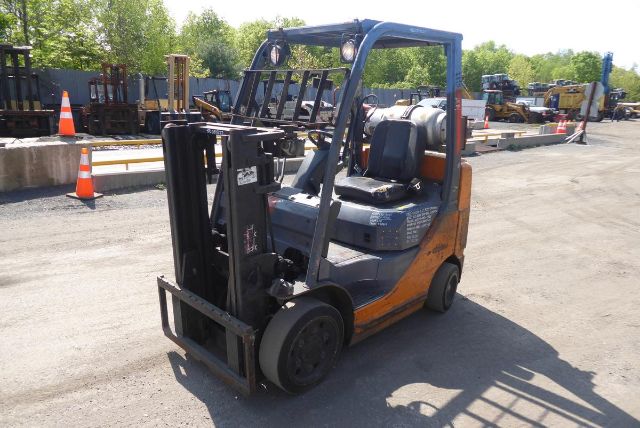
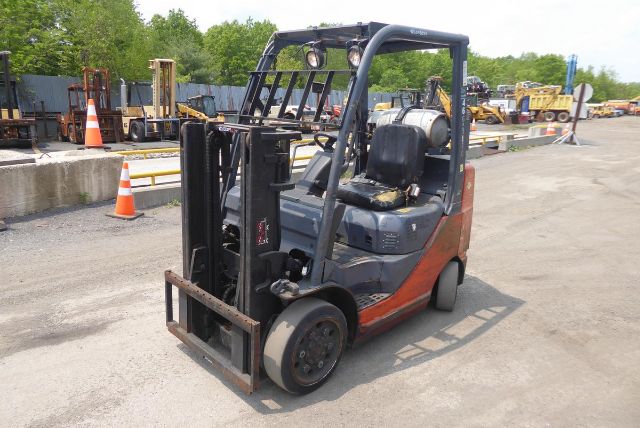
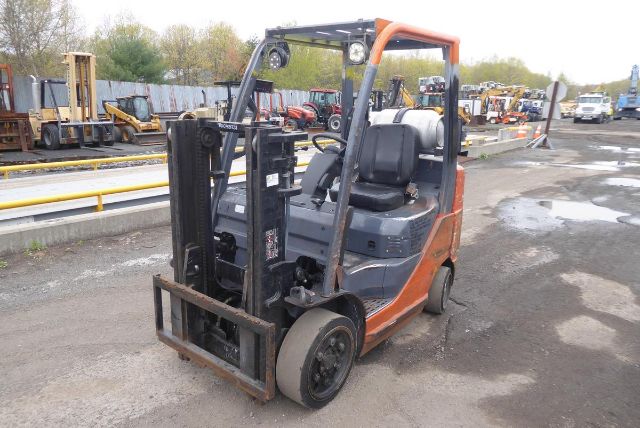
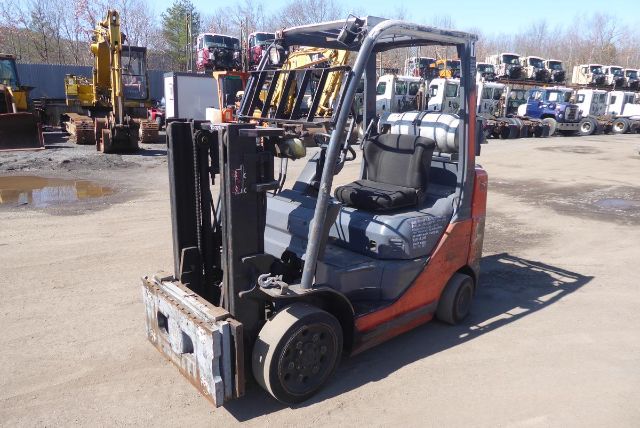
Selling a 2008 toyota forklift? List your 2008 toyota forklift for sale and reach thousands of commercial buyers.
2008 Toyota Forklifts
The capacity plate determines what a fork truck can safely handle with its installed mast and attachments. Compare rated capacity at the stated load center and lift height, not just the model designation. A sideshifter, fork positioner, or longer load can reduce usable capacity. Measure collapsed mast height against door openings and check maximum fork height against the highest rack position. Fork length, carriage class, aisle width, and turning clearance should match the actual pallets and building layout.
For used 2008 trucks, inspect the engine cold and again after a loaded operating test. Check LPG fuel-system condition, cooling performance, transmission engagement, inching control, service brakes, parking brake, and steering play. Mast chains, rollers, carriage bearings, cylinder rods, and hydraulic hoses deserve close attention on equipment of this age. Compare hour-meter readings with service invoices, controller records where available, and wear at the pedals and seat. Obtain diagnostic information for warning lights rather than accepting an explanation without testing. Verify operation of Toyota's System of Active Stability on equipped trucks; stability controls do not increase rated lifting capacity.
A 2008 forklift is nonroad equipment, so highway diesel DPF and DEF timelines are not a reliable guide to its emissions requirements. Identify the installed engine and its emissions label when assessing compliance or a US-Canada purchase. Across northern states and Canadian provinces, outdoor service can leave corrosion around the frame, mast channels, electrical connectors, and LPG cylinder mounting. Indoor applications require attention to ventilation and exhaust exposure, regardless of outside climate.
A 2008 unit represented as new should be evaluated as aged unused equipment, not as a current-production factory order. Verify storage history, commissioning requirements, and written warranty coverage; unused hours do not prevent deterioration of seals, hoses, tires, or batteries. Specify the required mast, forks, attachment plumbing, and tires before purchase, since changes can require revised capacity documentation. Budget ownership around documented repairs, battery or fuel-system condition, and parts support for the exact model and serial number.
Frequently Asked Questions about 2008 Toyota Forklifts
Can a 2008 Toyota 8FGCU25 lift 5,000 pounds with a sideshifter?
A 2008 Toyota 8FGCU25 can lift 5,000 pounds only if its capacity plate permits that weight with the installed sideshifter, mast, load center, and lift height. The model's nominal capacity class is not authorization for every configuration. Attachment weight and the load's forward position reduce remaining capacity. Require a legible plate that matches the attachment, and compare it with the heaviest actual load rather than the average pallet.
What mast should I choose for a 2008 Toyota forklift working inside trailers?
A free-lift mast with a collapsed height below the trailer opening is the practical choice for a 2008 Toyota forklift loading enclosed trailers. Free lift raises the forks before the mast extends upward, allowing pallet handling beneath a low roof. Check the load backrest and overhead guard clearances as well as mast height. Confirm that the dockboard and trailer floor can support the forklift's concentrated wheel loads with a load aboard.
How much fork wear is too much on a used 2008 Toyota forklift?
A 10% reduction in fork blade or shank thickness from the original dimension is a removal-from-service threshold under ISO 5057 inspection criteria. On a used 2008 Toyota forklift, measure wear with suitable fork inspection gauges rather than judging it visually. Cracks, excessive tip-height differences, damaged hooks, and defective positioning locks also require attention. Replacement forks must match the carriage, required capacity, and application; longer forks do not increase the truck's lifting capacity.
Do I need a forklift license to operate a 2008 Toyota forklift in the US or Canada?
US employers must provide operator training and evaluation under OSHA's powered industrial truck standard; a highway driver's license does not satisfy that requirement. OSHA requires an operator performance evaluation at least once every three years, with refresher training when specified triggers occur. Canadian requirements follow the applicable provincial, territorial, or federal workplace jurisdiction. Training must address the Toyota forklift's controls and the actual workplace hazards, not merely completion of a generic classroom course.
Is a propane-powered 2008 Toyota forklift safe to use indoors?
A propane-powered 2008 Toyota forklift requires adequate ventilation and control of exhaust exposure for indoor operation; LPG fuel alone does not make indoor use safe. Carbon monoxide can accumulate when engines are poorly tuned or air exchange is inadequate. Assess ventilation, operating duration, and exposure monitoring with the facility's safety personnel. Battery-electric forklifts eliminate engine exhaust at the point of use, but their charging arrangements still need appropriate electrical and battery-handling safeguards.