
Used Mitsubishi Forklifts For Sale in New York
Compare used Mitsubishi forklifts for sale in New York by tire type, mast clearance, load capacity, and salt-related wear before choosing a lift truck.
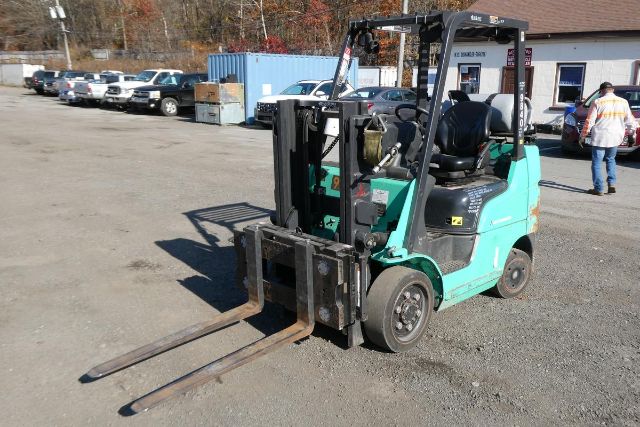
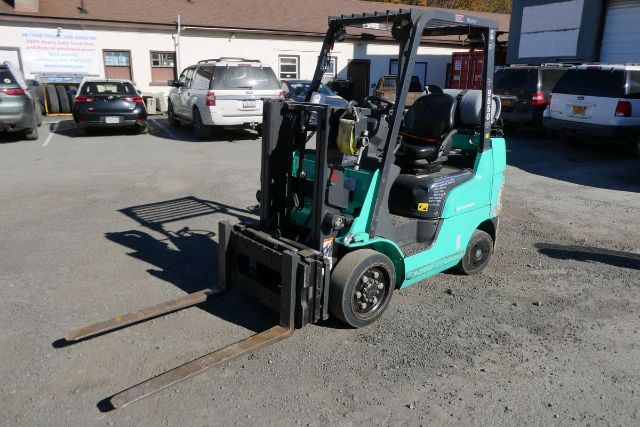
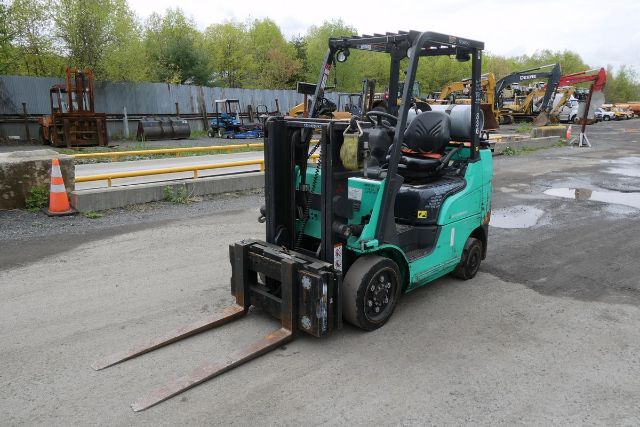
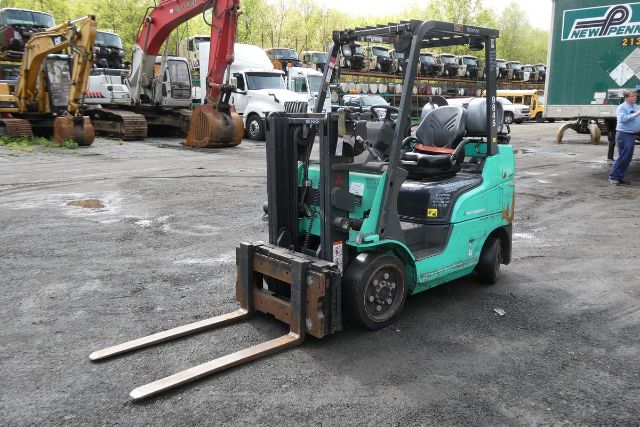
Selling a used mitsubishi forklift? List your used mitsubishi forklift for sale and reach thousands of commercial buyers.
Used Mitsubishi Forklifts in New York
Mitsubishi's FGC25N commonly pairs a 2.1-liter LPG engine with a powershift transmission, while the broader range includes diesel and electric forklifts. Match the truck to the shift: propane supports quick cylinder changes, while an electric model needs a suitable charging area and enough battery capacity for the duty cycle. Check the capacity plate at the actual load center, lift height, and attachment configuration. A nominal 5,000-pound rating does not establish capacity with long loads or a sideshifter. Measure collapsed mast height, free lift, overhead clearance, and aisle requirements before choosing a two-stage or three-stage mast.
Inspect a used Mitsubishi fork truck under load, not just at idle. Test cold starting, forward and reverse engagement, braking, steering play, mast operation, and hydraulic drift with a representative load handled safely. Compare meter hours with service records, pedal wear, and available diagnostic history. Examine fork heels, carriage rollers, mast channels, chains, steer-axle pivots, and tire condition. Older LPG units warrant close checks of ignition and fuel-system condition; electric trucks need a battery condition report, charger compatibility check, and inspection of cables and connectors.
Road salt tracked into New York loading areas can corrode frames, overhead guards, steps, and electrical connections even on warehouse trucks. Inspect underneath the chassis and around the battery compartment rather than judging condition from fresh paint. For unheated docks and outdoor work, check cold-start performance, cooling-system freeze protection, and tire traction. Confirm local service support and parts identification by model and serial number, because engine, mast, and electrical components vary across Mitsubishi generations.
Frequently Asked Questions about Used Mitsubishi Forklifts in New York
Can I run a used Mitsubishi propane forklift inside a New York warehouse?
Yes, an LPG Mitsubishi forklift can operate indoors where ventilation controls exhaust exposure and the truck is approved for the location. Propane exhaust still contains carbon monoxide, especially when an engine is poorly tuned. Evaluate airflow with doors closed during New York winters, maintain the fuel and ignition systems, and verify exhaust exposure under operating conditions. Hazardous locations require a truck classification appropriate to the hazard, not simply a change of fuel.
Does a New York operator need a forklift license to drive a used Mitsubishi?
Workplace operators need employer-certified forklift training and evaluation under OSHA rules, not merely a driver's license. Training must include formal instruction, practical training, and an evaluation of the operator's performance in the workplace. Operator performance must be evaluated at least once every three years, with refresher training required after specified events such as unsafe operation or an accident. A previous training card does not automatically establish qualification for every Mitsubishi forklift and workplace.
How much fork wear is too much on a used Mitsubishi forklift?
A 10% reduction from original fork blade or shank thickness is a removal-from-service threshold under ANSI/ITSDF B56.1 criteria. Have a qualified inspector measure a used Mitsubishi forklift's forks with appropriate gauges and check for cracks, bending, mismatched pairs, and damaged positioning locks. Do not judge fork condition by appearance alone or accept welded repairs without approval from the fork manufacturer.
Can I replace an electric Mitsubishi forklift battery with a lighter battery?
A replacement battery must meet the Mitsubishi forklift's specified voltage, dimensions, and minimum battery weight, not just fit the compartment. Battery weight forms part of the counterbalance on many electric forklifts, so a lighter replacement can reduce stability. A lithium conversion also requires compatible charging equipment, electrical controls, and an approved installation. Verify the truck's battery requirements before accepting a replacement or conversion.
What weight should I use when arranging transport for a Mitsubishi forklift?
Use the Mitsubishi forklift's actual configured service weight, not its rated lifting capacity, to select transport equipment. Include the installed battery or LPG cylinder, forks, and attachments, and confirm what the manufacturer's published weight includes. Verify trailer payload, axle loading, deck height, and loading-ramp capacity. The forklift also needs suitable securement points and transport preparation according to the manufacturer's instructions.