
2014 Forklifts For Sale
Compare 2014 forklifts for sale by rated capacity, mast height, fuel type, and service history. Check aging batteries, hydraulics, and emissions labels.
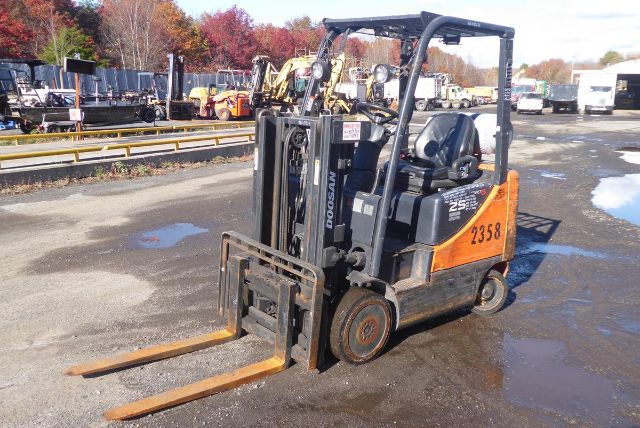
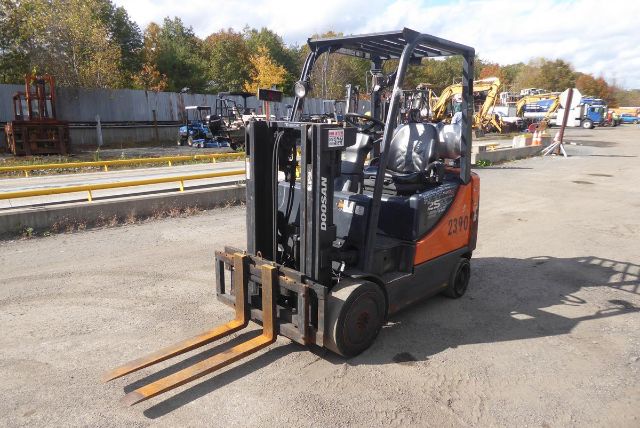
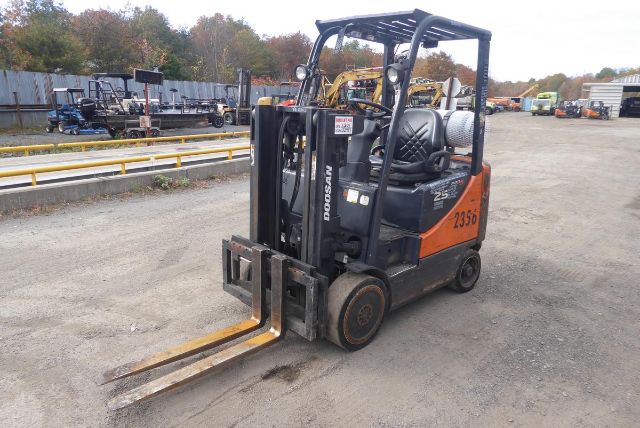
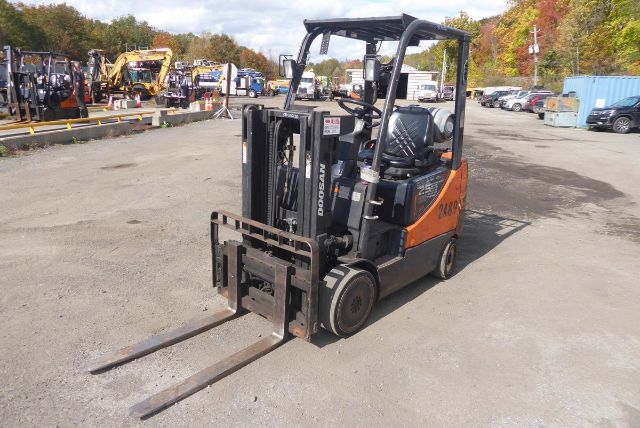
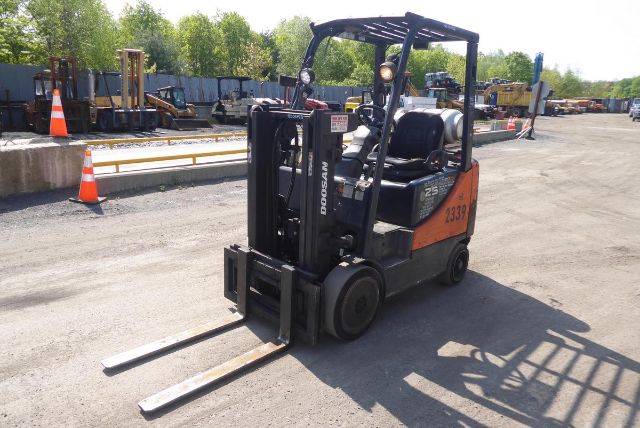
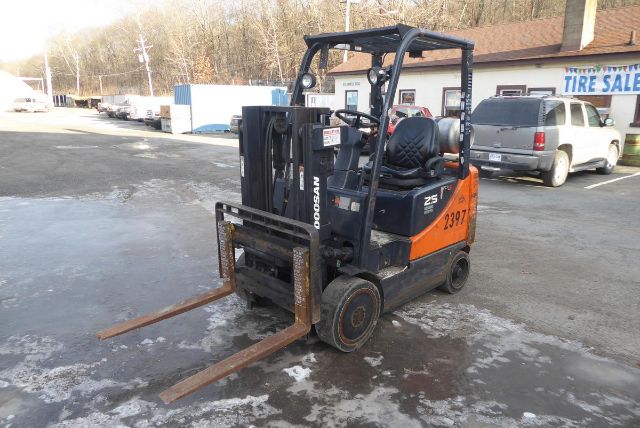
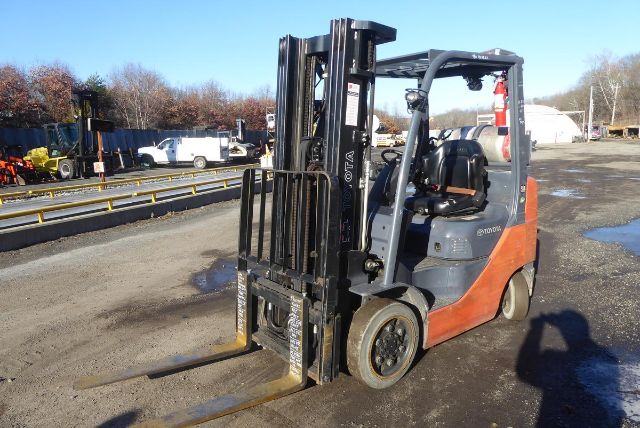
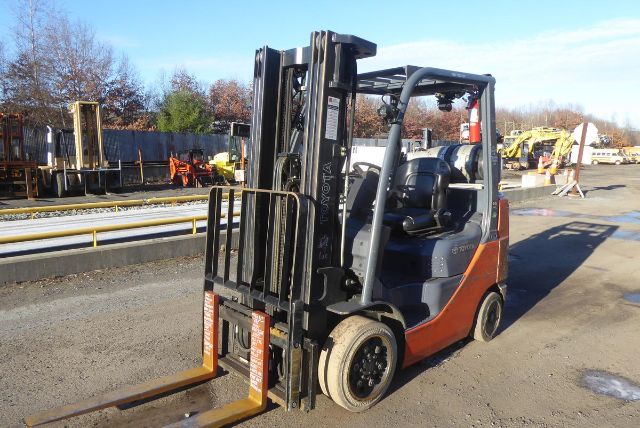
Selling a 2014 forklift? List your 2014 forklift for sale and reach thousands of commercial buyers.
2014 Forklifts
Cushion-tire fork trucks suit smooth warehouse floors and loading docks; pneumatic-tire configurations are better suited to suitable outdoor yard surfaces. Rough-terrain forklifts require a different chassis and traction package than warehouse machines. Measure aisle width, overhead clearance, and trailer door height before choosing a mast. A three-stage mast with adequate free lift can raise forks inside a trailer without immediately extending the mast above the overhead guard, while a two-stage mast may suit lower stacking work.
The 2014 model year includes established propane-powered designs such as Toyota's 8FGCU25 with a 2.2-liter 4Y engine and Doosan's GC25P-5 with GM-based 2.4-liter power. Electric counterbalance trucks and reach trucks provide other options for indoor material handling. These machines are now more than a decade old, making maintenance history more useful than age alone. Diesel forklifts from this period belong to the nonroad emissions era, not highway truck emissions schedules. Verify the engine's certification label and installed exhaust equipment rather than assuming every 2014 diesel has a DPF or requires DEF.
On a used forklift, compare the hour meter with service records, controller or ECM hours where available, and physical wear. Replaced meters can make a heavily worked machine appear lightly used. Test forward and reverse engagement cold and hot, steering travel in both directions, braking, and loaded hydraulic operation within rated limits. Inspect mast rollers, lift chains, cylinder rods, carriage play, axle seals, and tire damage. Diagnose warning lights before purchase. For electric machines, obtain a battery capacity test and inspect connectors, cables, and the charger; battery age can matter more than chassis hours.
A never-used 2014 forklift still needs storage-history verification, commissioning checks, and inspection of aged seals, hoses, tires, and batteries. Confirm written warranty eligibility, start date, coverage, and exclusions rather than assuming current factory protection. Specify the required mast, attachments, and charger before delivery, with any capacity changes properly documented. Across the United States and Canada, salt exposure can corrode frames and electrical connections, while freezing temperatures affect batteries and cold starts. Match the forklift's environmental rating to outdoor work, freezer service, or hazardous locations, and verify workplace requirements under the applicable federal, state, or provincial rules.
Frequently Asked Questions about 2014 Forklifts
Can I use a 2014 propane forklift indoors?
A 2014 propane forklift can operate indoors only where ventilation and operating practices keep exhaust exposure within applicable workplace limits. Propane combustion still produces carbon monoxide, especially when an engine or fuel system is poorly maintained. Evaluate air quality under actual operating loads, not just at idle. Electric forklifts are often the better choice for enclosed spaces with limited ventilation.
Do operators need a license to drive a 2014 forklift?
In the United States, forklift operators need employer-provided training and evaluation under OSHA's powered industrial truck rule, with performance evaluated at least once every three years. A road driver's license does not replace that qualification. Canadian requirements follow the applicable occupational health and safety jurisdiction. Training must address the forklift type and workplace hazards, including attachments, ramps, pedestrians, and loading docks.
How much fork wear is too much on a used 2014 forklift?
A 10% loss of original fork thickness at the heel is a removal-from-service threshold, even when the forks still look straight. Measure against the original specified thickness with suitable gauges rather than judging visually. Also inspect for cracks, unequal tip heights, damaged retaining locks, and bent blades. Replacement forks must match the forklift's carriage class and required capacity.
What weight should I use when arranging transport for a 2014 forklift?
Use the forklift's actual shipping weight, not its lifting capacity, when selecting a trailer and loading equipment. Include the battery, installed attachments, and any separately shipped components in the load calculation. Confirm overall height, axle loading, ramp capacity, and securement points. A forklift rated to lift 5,000 pounds can weigh substantially more than 5,000 pounds itself.
Can a 2014 electric forklift be converted from lead-acid to lithium batteries?
A 2014 electric forklift can accept a lithium conversion only when the battery system meets the manufacturer's weight, electrical, and installation requirements. Battery mass contributes to stability on many electric forklifts, so a lighter pack is not automatically acceptable. Verify voltage, charger compatibility, battery management protections, and compartment fit through the forklift manufacturer or a qualified conversion provider.