
Cargo Van Trailers For Sale in Texas
Browse cargo van trailers for sale in Texas. Compare 53-foot dry van specs, door types, floors, axle setups, and road-ready features.
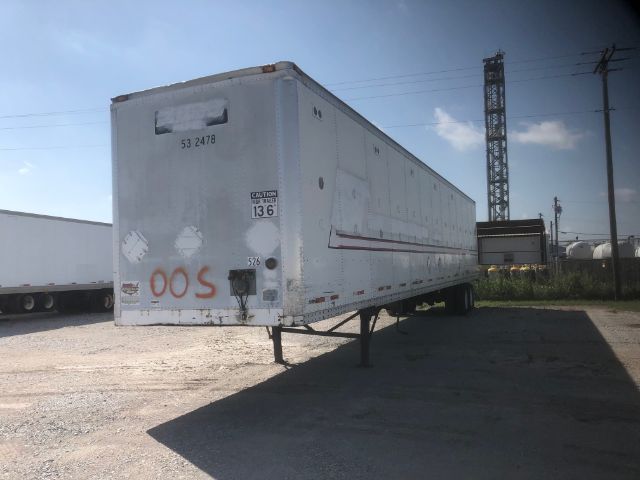
Selling a cargo van trailer? List your cargo van trailer for sale and reach thousands of commercial buyers.
Cargo Van Trailers in Texas
A buyer should start with structure, floor, and door condition before looking at cosmetic details. Trailer age matters, but maintenance history and prior use matter more. Check the roof bows, sidewall posts, crossmembers, landing gear, upper coupler area, rear frame, and ICC bumper for repairs or cracking. Wood floors are still common and work well for forklift traffic if they have not been heavily gouged or soft-spotted. Aluminum floor options reduce weight, but condition is critical if the trailer has seen concentrated axle loads. Rear swing doors remain common because they seal well and are durable, while roll-up doors can help at certain docks but add weight and reduce rear opening height.
Spec decisions usually come down to payload, tare weight, and operating environment. Tandem sliding axles are standard on many dry vans because they help with bridge law compliance and loading flexibility. Suspension type, wheel-end spec, tire condition, and brake system should all be reviewed closely, especially on used trailers running Texas interstate miles in high heat. Buyers also look for logistics-friendly features such as logistics posts, scuff liners, duct floors, E-track, translucent roofs, tire inflation systems, and aerodynamic packages. If the trailer will stay in a dedicated fleet, standardizing on door hardware, wheel type, and kingpin setting can simplify maintenance and interchangeability.
For Texas operations, it also helps to think about lane profile and freight density. A trailer serving dense urban distribution around Houston, Dallas-Fort Worth, Austin, or San Antonio may need frequent dock cycles and durable interior protection. A trailer running longer dry freight lanes across West Texas may put more emphasis on tires, brakes, hub seals, and overall running gear reliability. A solid cargo van trailer is not complicated equipment, but the right one should match dock height, freight type, cube needs, and maintenance expectations with as few surprises as possible.
Frequently Asked Questions about Cargo Van Trailers in Texas
What is a cargo van trailer used for?
A cargo van trailer, also known as a dry van trailer, is used to haul enclosed general freight that needs protection from weather, road debris, and theft. Common loads include palletized consumer goods, packaged foods, paper products, retail freight, auto parts, and other non-temperature-controlled commodities. It is the most common trailer type in over-the-road and regional truckload service because it fits standard loading docks and handles a wide range of freight.
What size cargo van trailer is most common?
The most common dry van trailer on the road is a 53-foot long by 102-inch wide tandem axle trailer. That size offers strong cubic capacity and broad shipper compatibility. Some buyers still consider 48-foot trailers for specific fleets or customer requirements, but 53-foot vans dominate modern freight networks, especially in drop-and-hook and dock-high distribution work.
What should I inspect first on a used cargo van trailer?
The first priorities are the structural components and the running gear. Inspect the frame rails, crossmembers, upper coupler, kingpin area, landing gear mounts, rear frame, suspension, axles, brakes, tires, and hubs. Then inspect the roof, sidewalls, floor condition, and rear doors for leaks, impact damage, or signs of hard forklift use. Cosmetic appearance is far less important than sound structure, a dry interior, and a trailer that tracks and stops properly.
Are swing doors or roll-up doors better on a dry van trailer?
Swing doors are usually preferred for general over-the-road freight because they provide a full rear opening, strong sealing, and simpler hardware. Roll-up doors can be useful in certain city or multi-stop applications where dock access is tight or frequent door cycles are required, but they add weight and reduce usable rear opening height. The better choice depends on the freight, the docks being served, and how often the trailer is loaded and unloaded.
What features add value on a cargo van trailer?
Useful value-added features depend on the operation, but buyers often look for sound floors, good rear door seals, logistics posts, scuff liners, E-track, air ride suspension, sliding tandems, and tire inflation systems. Aerodynamic side skirts and low-rolling-resistance tires can matter for fleets focused on fuel economy. For high-cycle dock work, durable interior lining and consistent hardware across the fleet can be just as valuable as lightweight specs.