
Beverage Trucks For Sale in New York
Used beverage trucks for sale in New York. Compare bay bodies, side-load delivery setups, GVWR, engine, transmission, and route specs.
Selling a beverage truck? List your beverage truck for sale and reach thousands of commercial buyers.
Beverage Trucks in New York
A common setup in this category is a Class 7 truck with a GVWR around 33,000 pounds, single axle 4x2 configuration, air brakes, and an automatic Allison transmission. Engines in this class are often diesel platforms such as the International DT466, typically in the 230 to 260 horsepower range, paired with deep rear ratios for strong start-stop performance under load. Spring suspension is common because beverage service is hard on chassis components and payloads can be dense. Buyers should pay close attention to front and rear axle ratings, empty weight, and body construction, because a beverage body with multiple bays, roll-up or swing doors, and a drop-center frame changes how much legal payload the truck can actually carry.
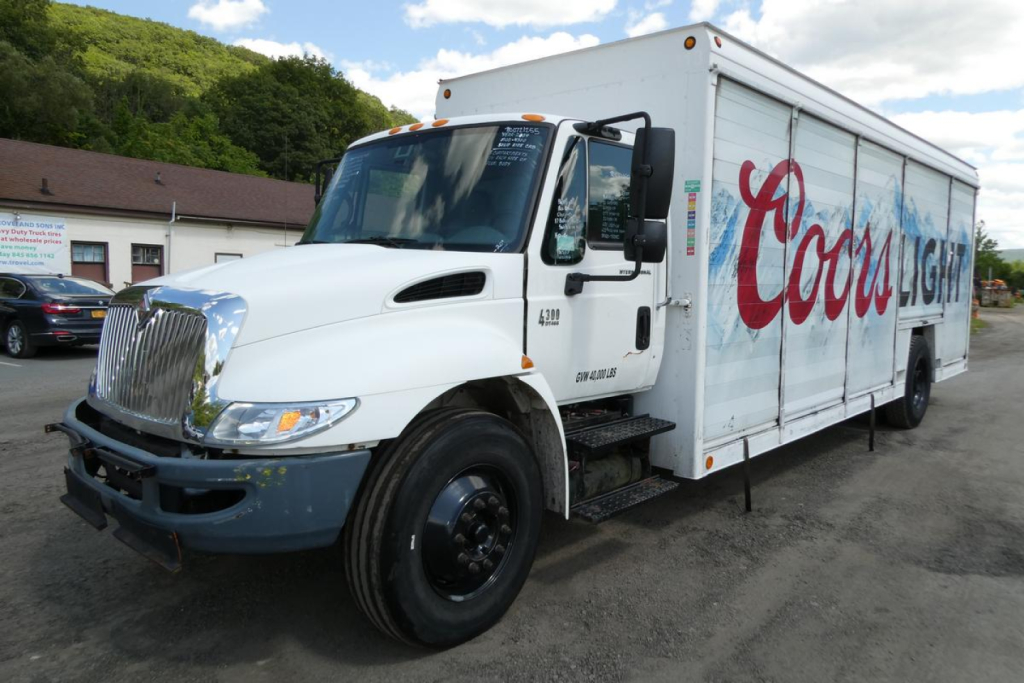
The body is what separates a beverage truck from a standard van body or dry freight box truck. Many beverage bodies have 8-foot widths, 20- to 26-foot body lengths, and several side compartments per side to separate SKUs and speed hand unloading. Bay dimensions, shelf arrangement, floor height, and side access are critical if the truck will handle mixed product, keg routes, or high-volume retail drops. Non-insulated bodies are common for packaged beverages, but some operations need insulated compartments depending on product sensitivity and route design. Check the condition of bay doors, seals, hinges, flooring, scuff areas, and the body-to-frame mounting points. On used units, route work usually shows up in the body before it shows up in the drivetrain.
A good beverage truck buyer also looks beyond mileage. Idle hours, transmission shift quality, brake wear, steering play, and evidence of repeated curb impact all matter on route equipment. In New York service, corrosion, stop-and-go wear, and body damage from tight delivery environments are common inspection points. If labor efficiency is a priority, compare bay count, compartment sizes, step height, and how easily drivers can work both sides of the body. Beverage trucks are also known as side-load delivery trucks or beverage body trucks, and the best choice usually comes down to route density, product mix, and how quickly the truck can be loaded, unloaded, and turned for the next stop.
Frequently Asked Questions about Beverage Trucks in New York
What is a beverage truck used for?
A beverage truck is used for local and regional route delivery of packaged drinks, kegs, and related products that need organized side access for frequent stops. Its compartmentalized body lets drivers separate products by account or SKU and unload quickly at stores, bars, restaurants, and distribution points.
What should I look for when buying a used beverage truck?
Focus on body condition first, then chassis condition. Inspect bay doors, hinges, latches, flooring, compartment dimensions, body mounts, and signs of hard route use. After that, review axle ratings, GVWR, empty weight, engine hours, transmission operation, brake condition, steering wear, and any frame or suspension damage caused by repeated curb loading and stop-and-go service.
Are beverage trucks usually automatic?
Yes, many beverage trucks are equipped with automatic transmissions, especially Allison automatics, because route delivery involves constant stopping, backing, and low-speed maneuvering. An automatic reduces driver fatigue, improves consistency in urban service, and is generally preferred for multi-stop delivery operations.
How much weight can a beverage truck carry?
Payload depends on the truck's GVWR, axle ratings, body weight, and how the load is distributed in the bays. Many medium-duty beverage trucks operate around a 33,000-pound GVWR, but the usable payload can vary significantly once the aluminum beverage body, driver, fuel, and delivery equipment are factored in. Buyers should compare empty weight against legal gross weight instead of relying on GVWR alone.
Why does bay layout matter on a beverage body?
Bay layout affects loading speed, product organization, and delivery efficiency on every stop. The number of bays, compartment widths, door openings, and floor height determine how easily drivers can access cases or kegs and how well mixed loads can be staged. A body that matches the route's product mix can save labor time and reduce handling damage.