
Kalmar Yard Trucks For Sale
Browse Kalmar yard trucks for terminal, warehouse, and port work. Compare 4x2 spotter specs, hydraulic fifth wheel setups, and drivetrain options.
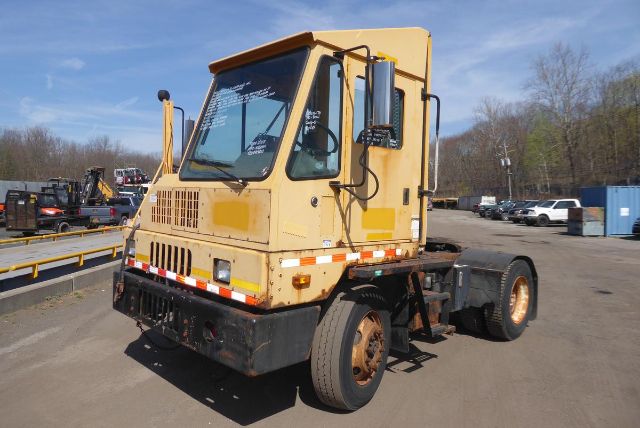
Selling a kalmar yard truck? List your kalmar yard truck for sale and reach thousands of commercial buyers.
Kalmar Yard Trucks
A typical Kalmar yard truck in the used market will be a single-axle 4x2 configuration with a short wheelbase, high-visibility cab, automatic transmission, and a diesel engine in the medium-duty range. Common specs include Cummins power, Allison automatics, 22.5 low-profile tires, and rear axles geared for low-speed pulling rather than highway fuel economy. Many are equipped with a hydraulic sliding fifth wheel, often with power up and power down cylinders, which is one of the most important features to inspect closely. Buyers should look at hydraulic response, fifth wheel lock operation, kingpin alignment, and any seepage at cylinders, hoses, or control valves. On older units, hour meter readings can tell you more than mileage because yard service builds hours quickly with low road speed.
Cab layout matters more on a yard truck than many buyers expect. Wide door openings, low step height, grab handles, and a clear rearward sightline all affect driver efficiency and safety during high-frequency trailer spotting. Visibility to the chassis rails and trailer apron is especially important in tight yards. Suspension setup is usually simple and durable, often solid ride rather than air ride, because stability, low maintenance, and predictable docking behavior matter more than ride comfort. Check frame condition, crossmember integrity, brake wear, steering play, and the condition of the wetline or PTO system if the truck uses a constant-run hydraulic pump for the fifth wheel.
For buyers comparing Kalmar yard trucks for sale, the smartest approach is to match the truck to the yard environment. A food warehouse, container yard, and steel facility all impose different demands on traction, corrosion resistance, turning radius, and operator comfort. Confirm rear axle rating, GVWR, wheelbase, transmission model, and ratio before buying, and pay close attention to service access and parts support for older units. A well-matched Kalmar spotter can deliver high trailer-move productivity, reduce dwell time at dock doors, and handle repeated loaded trailer transfers with less strain on the drivetrain than a converted road tractor.
Frequently Asked Questions about Kalmar Yard Trucks
What is a Kalmar yard truck used for?
A Kalmar yard truck is used for moving semi-trailers within a controlled area such as a warehouse yard, distribution center, port, or industrial plant. Its primary job is spotting trailers at dock doors, staging loaded or empty trailers, and making short transfer moves that require frequent coupling and uncoupling. Unlike a highway tractor, a yard truck is optimized for low-speed maneuvering, fast cab entry and exit, and constant trailer handling.
What should I inspect first on a used Kalmar terminal tractor?
Start with the hydraulic fifth wheel system, drivetrain, and structural condition. The hydraulic lift and slide mechanism should raise, lower, and lock smoothly without hesitation or major leaks. Then check transmission engagement, rear axle noise, steering play, brake condition, and frame integrity. On a yard truck, engine hours, PTO operation, and evidence of repeated impact or stress around the fifth wheel area are often more important than odometer mileage alone.
Are Kalmar yard trucks highway legal?
Some Kalmar yard trucks can be configured for limited on-road use, but most are designed primarily for off-road or private-property operation in terminal environments. Highway legality depends on local and state requirements, including lighting, braking, registration, emissions compliance, and speed capability. Buyers who need to cross public roads should verify the exact chassis specifications and legal requirements before purchase.
Why do many Kalmar yard trucks use an automatic transmission?
Automatic transmissions are common in yard trucks because they improve productivity in stop-and-go trailer spotting. Drivers make constant direction changes, short pulls, and precise docking maneuvers, so an Allison automatic reduces driver fatigue and simplifies operation. It also helps protect the drivetrain in high-cycle yard work where repeated shifting with a manual transmission can slow moves and increase wear.
How do I choose the right Kalmar yard truck for my operation?
Match the truck to trailer weight, surface conditions, move frequency, and site layout. A high-volume distribution yard may prioritize hydraulic fifth wheel speed, visibility, and easy cab access, while a heavier industrial application may need stronger axle ratings, aggressive gearing, and more durable frame setup. Also consider maintenance history, parts support, tire size, turning radius, and whether the truck will handle loaded trailers, empty trailers, or both throughout the day.