
2017 Yard Trucks For Sale
Compare 2017 yard trucks for sale by road certification, fifth-wheel lift capacity, engine hours, and emissions equipment for U.S. and Canadian yard work.
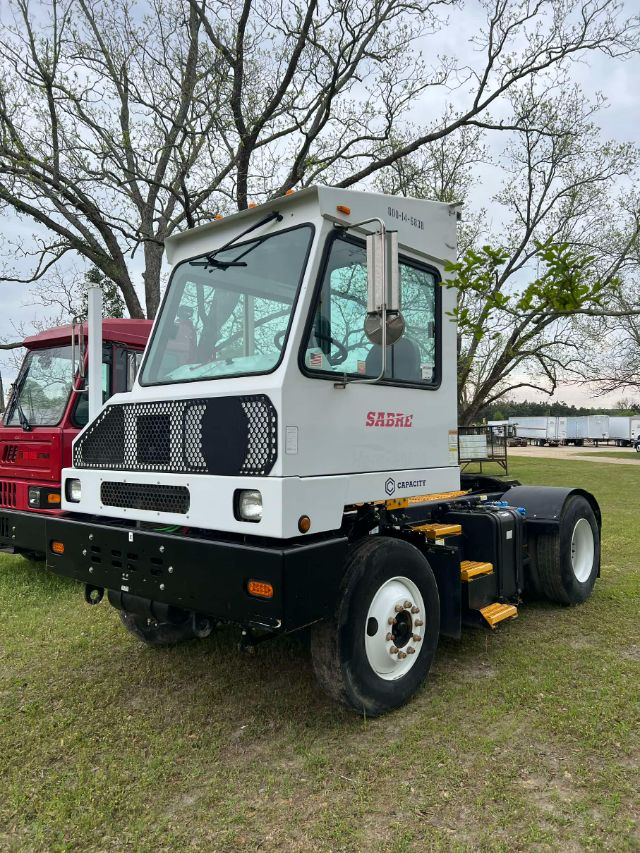

Selling a 2017 yard truck? List your 2017 yard truck for sale and reach thousands of commercial buyers.
2017 Yard Trucks
Distribution centers, intermodal terminals, and manufacturing plants use yard tractors to shuttle semitrailers without cranking the landing gear for every move within the yard. Ottawa T2 and Capacity TJ-series tractors are relevant 2017 comparisons, with Cummins 6.7-liter diesels and Allison automatics common in this class. Compare rated combination weight, rear axle capacity, fifth-wheel lift rating, lift travel, and wheelbase against loaded trailers and dock geometry. A short single-axle spotter turns tightly, but traction, grades, pavement condition, and braking demand still govern suitability.
Engine hours and duty cycle tell more than odometer mileage on a used 2017 yard goat. Compare ECM hours with the dash meter and service records, then inspect the fifth-wheel plate, locking jaws, lift pivots, cylinder rods, hydraulic hoses, and frame mounting points. Test lifting and holding under an appropriate load, checking for hydraulic drift and abnormal movement. Run the transmission through forward and reverse after warm-up, and examine air-system recovery, brake operation, steering play, cooling performance, and recorded regeneration faults.
Northern U.S. and Canadian service warrants close inspection for salt corrosion around air tanks, brake plumbing, cab steps, and electrical connections. Hot-climate operations put greater demands on cooling packages during low-speed work. For an unused 2017 truck, verify storage maintenance, the original build specification, and written warranty terms rather than assuming unused means fully covered. Qualifying first retail sales of highway tractors can incur 12% federal excise tax in the United States; confirm tax treatment rather than assuming private-yard use automatically creates an exemption.
Frequently Asked Questions about 2017 Yard Trucks
Do I need a CDL to drive a 2017 yard truck?
A Class A CDL is generally required on U.S. public roads when a yard tractor and trailer have a combination weight rating of at least 26,001 pounds and the trailer rating exceeds 10,000 pounds. Actual operating weights can also trigger CDL requirements. Work confined to private property generally falls outside federal CDL rules, but employer training requirements still apply. Canadian commercial licensing requirements are set provincially.
How many hours is too many on a 2017 yard truck?
Maintenance history and component condition matter more than a single hour cutoff on a 2017 yard truck. Request engine oil and transmission fluid analysis, inspect crankcase blow-by under load, and compare recorded maintenance intervals with accumulated hours. Distinguish total engine hours from idle hours when diagnostic records allow. An engine replacement does not reset wear in the transmission, lift mechanism, steering system, or rear axle.
Can a 2017 yard tractor move loaded shipping containers?
A 2017 yard tractor can move loaded shipping containers on a compatible container chassis when the complete combination stays within the tractor, chassis, axle, tire, and fifth-wheel ratings. The tractor couples to the chassis kingpin, not directly to the container. Check concentrated pin loads, particularly with heavy 20-foot containers, and verify clearance between the chassis, landing gear, tractor fenders, and cab throughout turns and lift travel.
Can I import a 2017 yard truck from the United States into Canada?
Canadian import admissibility and engine emissions compliance must be verified before purchasing a U.S. 2017 yard truck for Canadian operation. Check the specific chassis with Transport Canada and, where applicable, the Registrar of Imported Vehicles, then verify Environment and Climate Change Canada requirements. A private-yard machine can follow a different compliance path from a road-certified tractor. A U.S. title or bill of sale alone does not establish Canadian road-registration eligibility.