
Used Refrigerated Trucks For Sale in Colorado
Compare used refrigerated trucks for sale in Colorado by payload, reefer performance, mountain-route gearing, and chassis maintenance history.
Selling a used refrigerated truck? List your used refrigerated truck for sale and reach thousands of commercial buyers.
Used Refrigerated Trucks in Colorado
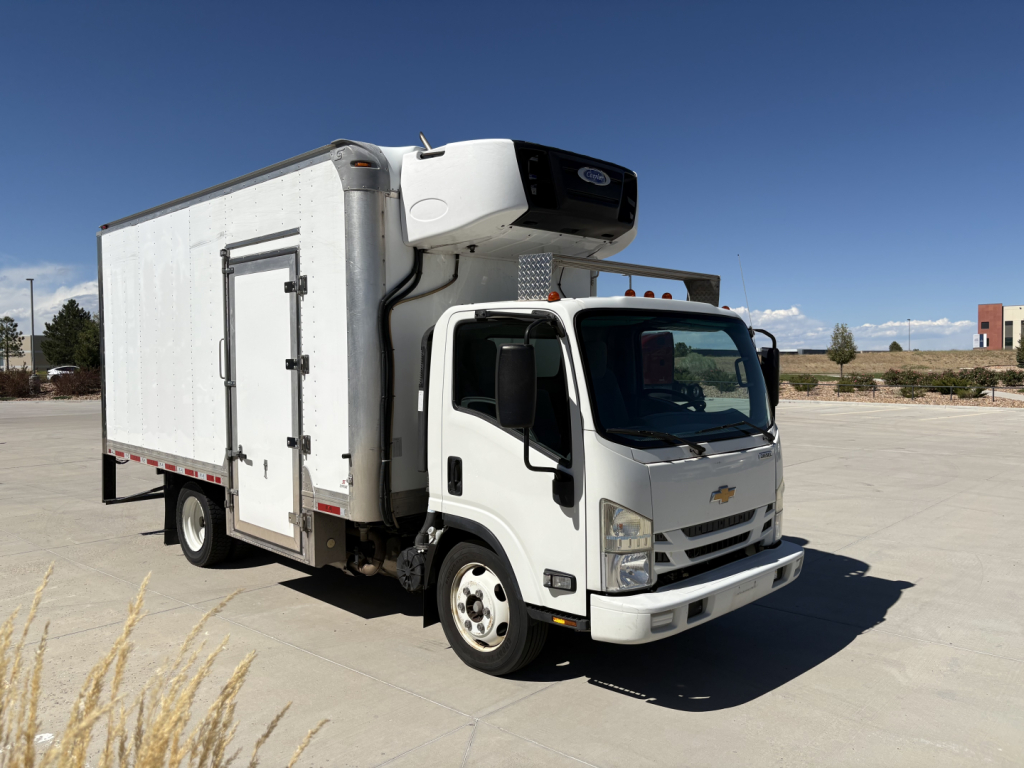
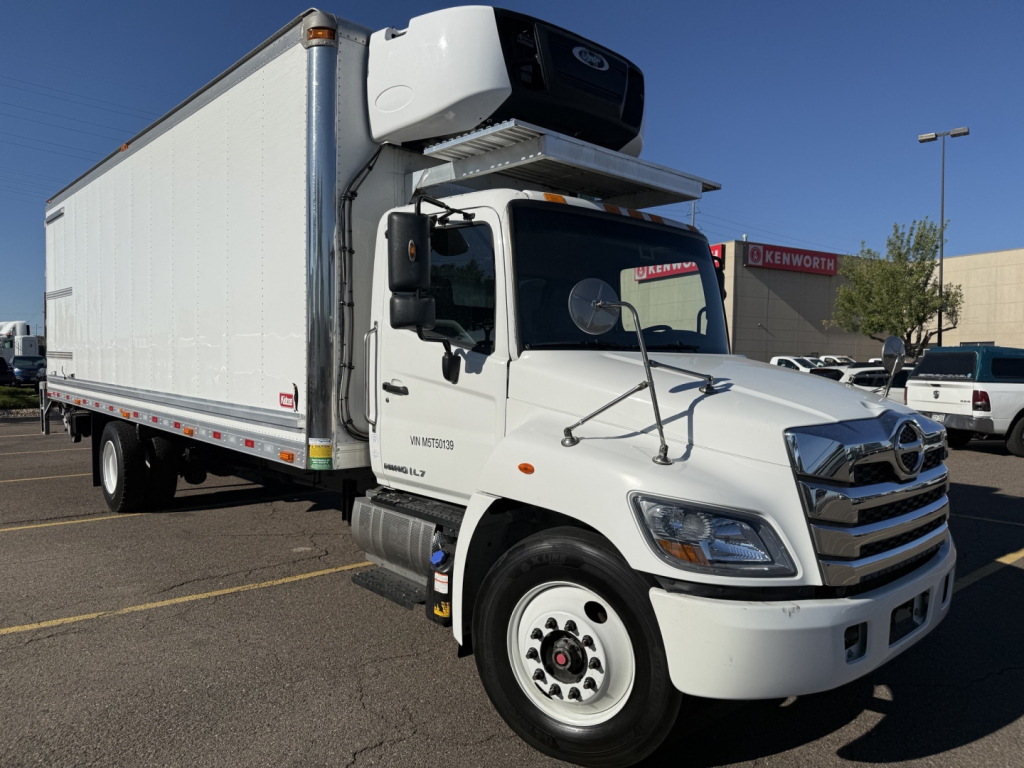
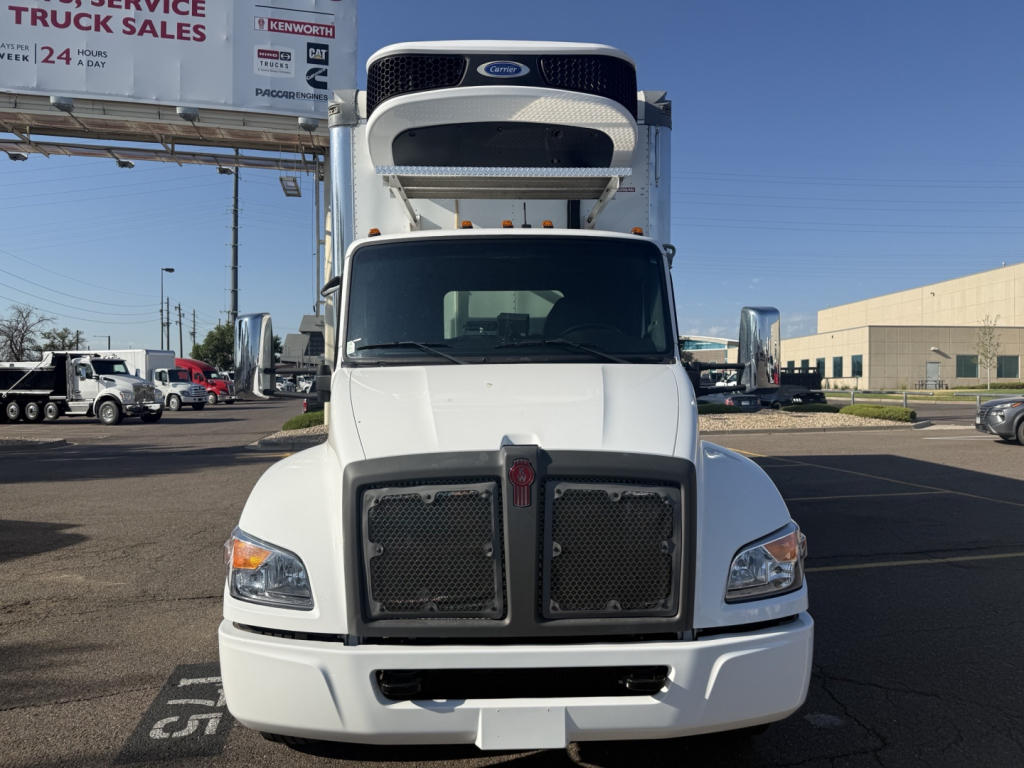
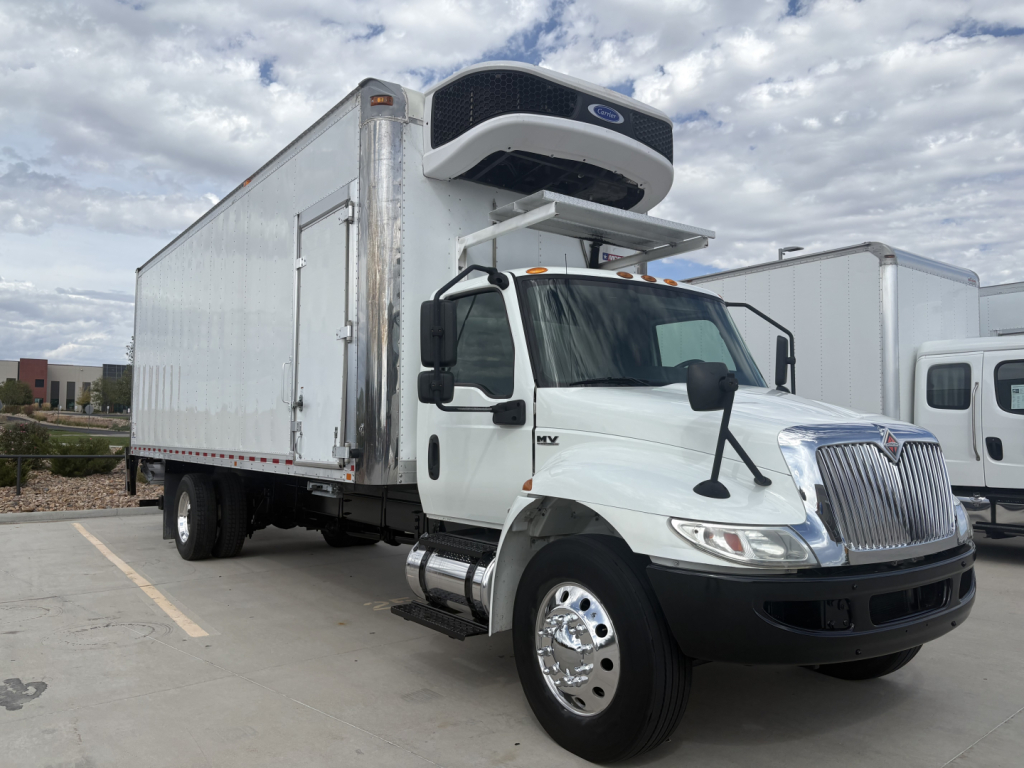
Payload starts with the truck's certified GVWR and axle ratings, not box length. Insulation, the refrigeration unit, liftgate, fuel, and driver all reduce usable carrying capacity; weigh the truck and check axle loading with the intended freight. A short Isuzu N-Series cabover suits tight urban stops, while conventional Kenworth T-series, International MV, and Hino refrigerated chassis offer different wheelbases and weight ratings. PACCAR PX-7 and Cummins B6.7 diesels with Allison automatics are familiar medium-duty combinations, but verify the actual engine, transmission, and ratings on each truck.
Refrigeration capacity must match the product temperature, insulated body volume, door-opening frequency, and summer ambient conditions. Direct-drive systems rely on the truck engine for cooling unless equipped for standby, while self-powered units use a separate engine. Run a pull-down test and verify sustained temperature control rather than accepting a cold reading at startup. Check door seals, evaporator airflow, drain operation, alarm history, and floor condition. Frozen-food routes need more than a produce cooler, and Colorado winter deliveries may require heating capability to keep freeze-sensitive freight within its specified range.
Inspect used refrigerated bodies at roof seams, wall joints, rear thresholds, and liftgate mounts for leaks, corrosion, and structural repairs; wet insulation can compromise temperature control without obvious exterior damage. Colorado deicing chemicals warrant a close look at brake plumbing, frame rails, electrical connectors, and liftgate hydraulics. Compare chassis maintenance records and ECM mileage with refrigeration service records and operating hours.
Model year changes the inspection plan. Many 2007-and-newer on-road diesels use a DPF, and most 2010-and-newer heavy-duty diesels also use SCR and DEF; confirm the engine's emissions label rather than relying only on the chassis year. Frequent short delivery cycles can create regeneration problems, so review fault history, idle hours, and aftertreatment service. Older trucks also need cooling hoses, mounts, wiring, and insulated-body deterioration checked. Confirm emissions-testing obligations for the Colorado registration address, since diesel requirements vary by program area and vehicle classification.
Frequently Asked Questions about Used Refrigerated Trucks in Colorado
Do I need a CDL to drive a refrigerated box truck in Colorado?
A refrigerated straight truck with a GVWR or actual gross vehicle weight of 26,001 pounds or more generally requires a Class B CDL in Colorado. A lighter truck does not automatically require a CDL merely because it has air brakes. Towing can change the license class, and air-brake testing and restrictions matter when the vehicle requires a CDL. Verify the truck's certification label rather than a seller's non-CDL description.
When do refrigerated trucks have to carry chains in Colorado?
Commercial refrigerated trucks covered by Colorado's chain law must carry chains on designated highways from September 1 through May 31. The requirement is not limited to occasions when snow is falling. Check CDOT's current corridor map and active restrictions before dispatch, and verify the required traction equipment for the truck's axle configuration. Carrying chains does not authorize travel during a closure.
Can one refrigerated truck carry frozen food and fresh produce together?
A refrigerated truck needs independently controlled temperature zones to carry frozen food and fresh produce at their separate required temperatures. An insulated partition alone does not create independent temperature control. Verify the refrigeration system's multi-temperature capability, evaporator arrangement, partition seals, and airflow paths. Confirm that each compartment maintains its required temperature during door openings and that the divided body still accommodates the intended pallets.
Is electric standby useful on a refrigerated delivery truck?
Electric standby can keep a compatible refrigerated truck cooling while parked without running its diesel refrigeration engine. Standby is useful for overnight staging and loading periods where suitable electrical service is available. Match the unit's required voltage, phase, amperage, connector, and circuit protection to the facility. Confirm whether standby supports both cooling and heating, and test operation before buying rather than assuming an external power connection proves functionality.
Should I judge a used reefer truck by mileage or refrigeration hours?
A refrigerated truck's refrigeration engine hours can reveal wear that chassis mileage misses. Separate diesel-engine hours from electric-standby hours when the controller records both, and review starts, service intervals, oil changes, and major component repairs. A replacement refrigeration unit may have a different age from the truck body. Use the unit model's maintenance schedule and documented condition rather than a universal hours cutoff.