
Used 2023 Refrigerated Trucks For Sale
Used 2023 refrigerated trucks for sale: compare reefer capacity, legal payload, emissions service records, and cold-box condition before choosing a truck.
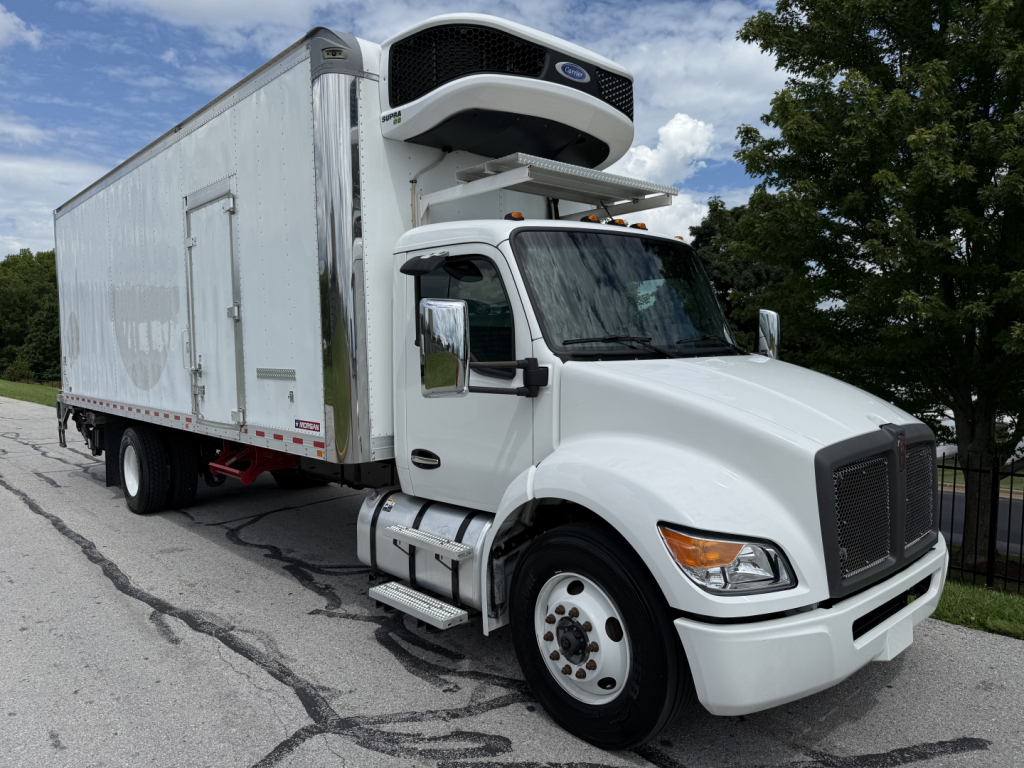
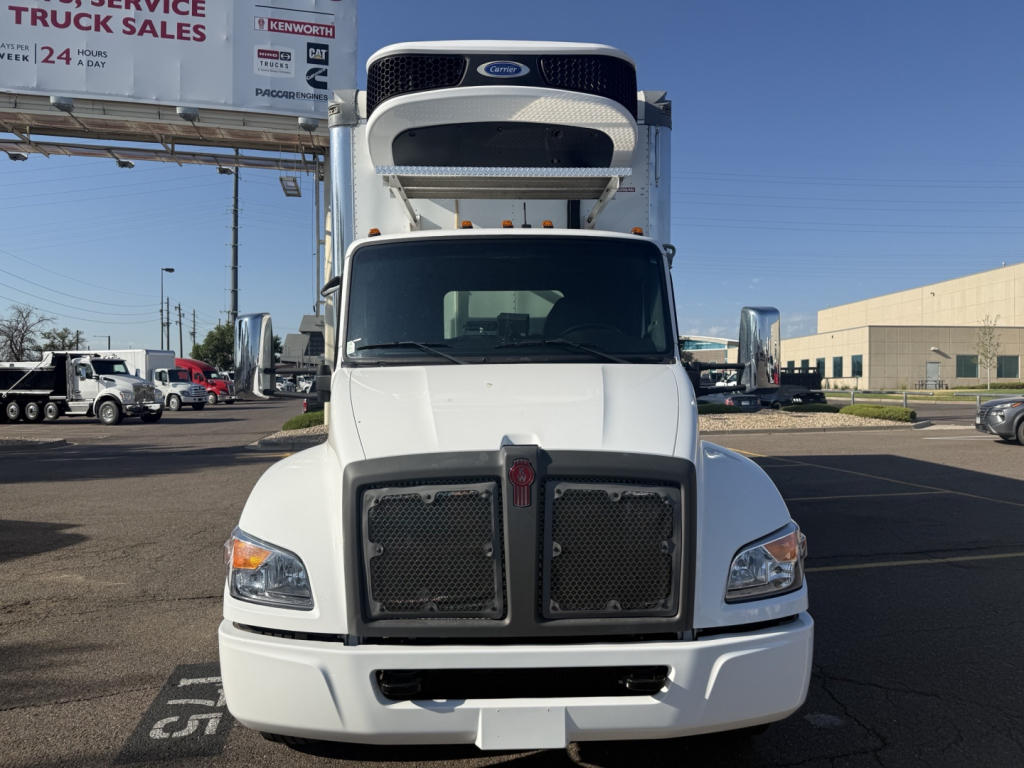
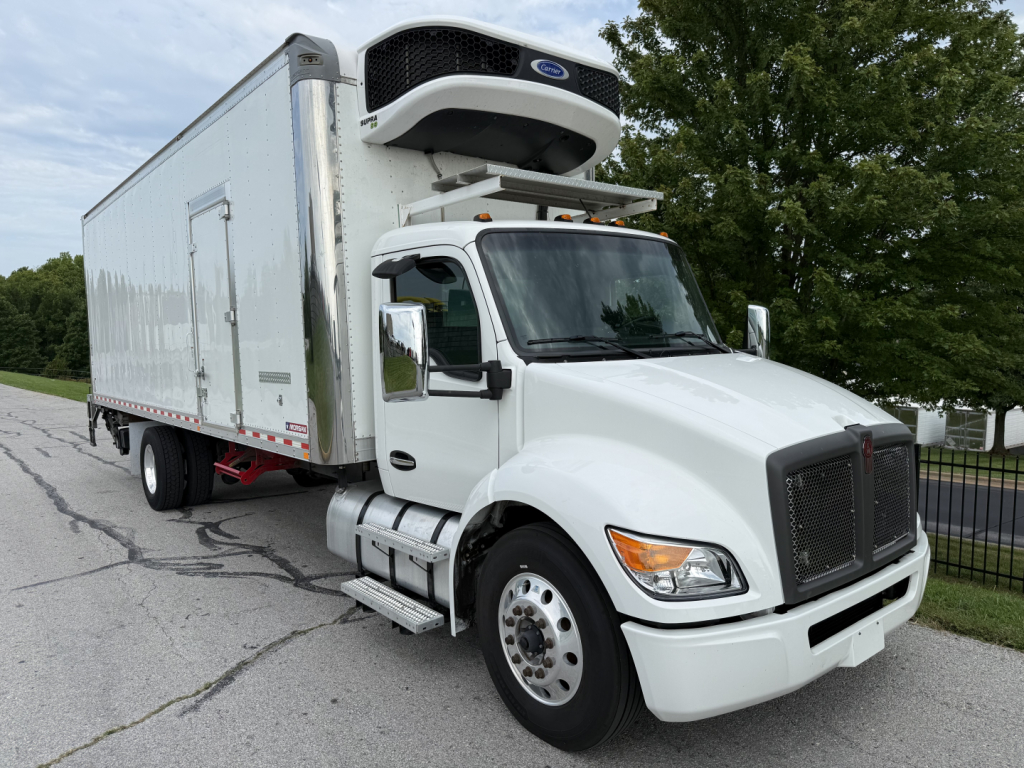
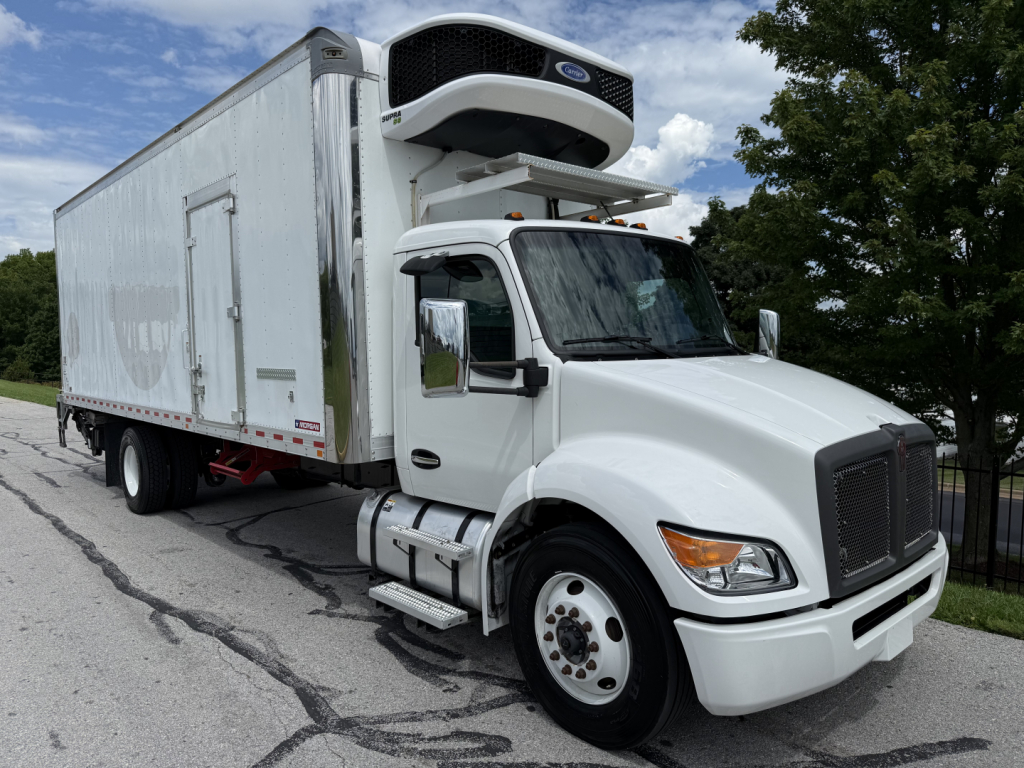
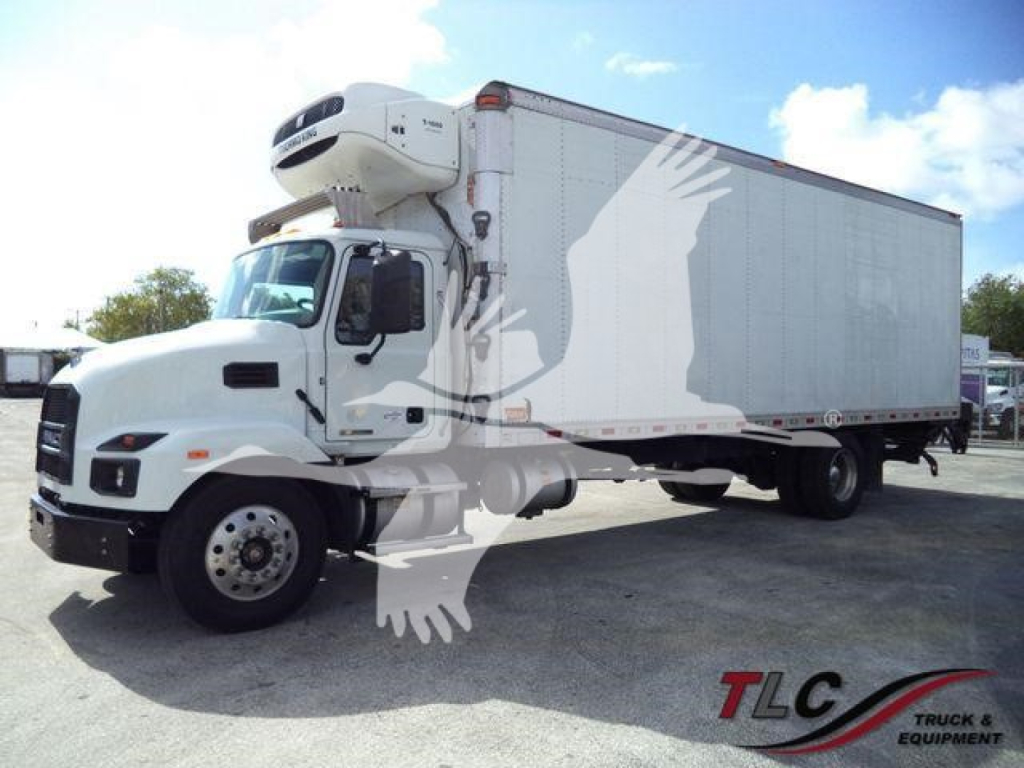
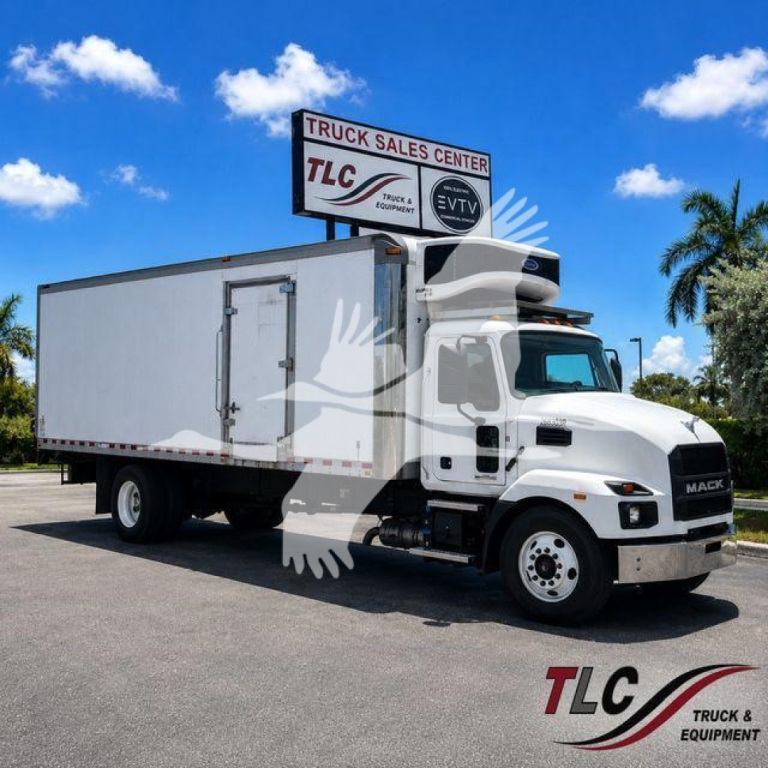
Selling a used 2023 refrigerated truck? List your used 2023 refrigerated truck for sale and reach thousands of commercial buyers.
Used 2023 Refrigerated Trucks
Representative chassis include the 2023 Kenworth T380 from Kenworth's redesigned medium-duty family and the Class 6 Mack MD6. PACCAR PX-7 and Cummins B6.7 diesels, respectively, commonly pair with Allison automatics in these applications. Across makes, most 2023 diesel chassis use DPF and SCR aftertreatment with DEF. Obtain an ECM report covering engine hours, idle time, fault history, and regeneration activity, then reconcile it with maintenance records. Inspect cooling systems, brakes, tires, suspension, and liftgate operation; repeated delivery stops can accumulate substantial wear despite modest mileage.
Have a refrigeration technician document ambient temperature, pull-down time, temperature holding, and defrost operation. Check compressor condition, refrigerant leaks, door seals, floor damage, and wet insulation. Across the United States and Canada, road salt makes frame and body-mount corrosion a priority. Hot-weather routes demand adequate cooling capacity, while cold-weather produce routes may require heating capability to prevent freezing. California operation requires separate checks of applicable chassis and transport refrigeration emissions requirements.
Frequently Asked Questions about Used 2023 Refrigerated Trucks
Do I need a CDL to drive a used 2023 refrigerated truck?
A single refrigerated truck with a GVWR or actual gross weight of 26,001 pounds or more generally requires a Class B CDL in the United States. A truck rated at 26,000 pounds does not trigger that federal requirement solely because it has air brakes. Towing, hazardous materials, and state requirements can change licensing obligations. Canadian buyers must check provincial licence classes and air-brake qualifications.
Is electric standby worth having on a 2023 reefer truck?
Electric standby is useful when a refrigerated truck must maintain cargo temperature while parked at a facility with compatible electrical service. Standby can reduce refrigeration diesel runtime, noise, and engine servicing associated with those hours. Verify the unit's required voltage, phase, amperage, connector, and standby cooling capacity. Test the electric operating mode separately because successful diesel operation does not prove the standby system works.
Should a 2023 refrigerated truck run continuously or in start-stop mode?
Continuous refrigeration operation is often preferred for temperature-sensitive produce, while start-stop operation can suit compatible frozen loads when the cargo specification permits it. Continuous airflow helps limit temperature differences throughout the body, but increases operating hours and fuel consumption. Follow the shipper's written temperature and airflow requirements rather than selecting a mode solely to save fuel. Refrigeration normally maintains pre-cooled cargo rather than rapidly cooling warm product.
Does a used 2023 refrigerated truck still have a factory warranty?
A 2023 model year alone does not establish remaining factory warranty coverage. Verify the original in-service date, mileage or hour limits, transfer requirements, and exclusions separately for the chassis, engine, transmission, refrigeration unit, body, and liftgate. Request written coverage confirmation from the responsible manufacturer or warranty administrator. A later-installed body or refrigeration unit may have a different warranty start date from the chassis.