
Isuzu Refrigerated Trucks For Sale in New York
Browse Isuzu refrigerated trucks for sale in New York. Compare reefer body sizes, diesel power, cooling units, GVWR, and delivery-ready specs.

Have isuzu refrigerated truck to sell? List it here to reach thousands of buyers.
Isuzu Refrigerated Trucks in New York
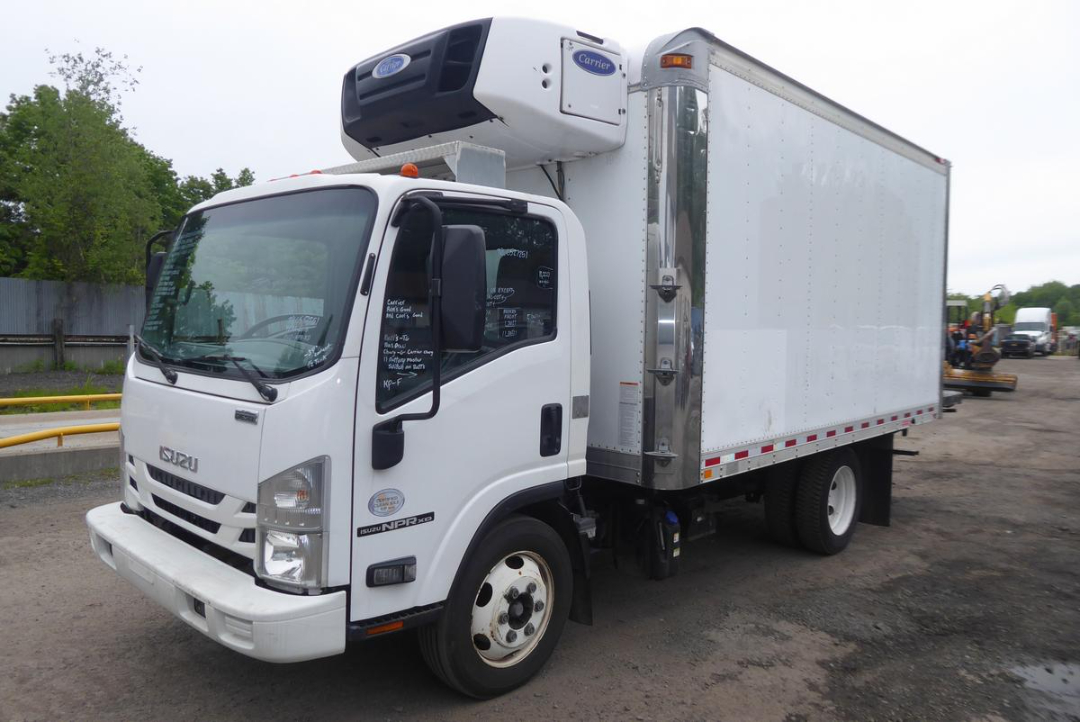
A buyer should look closely at the relationship between GVWR, body length, and refrigeration unit output. Common configurations include 12-foot to 16-foot insulated van bodies with roll-up rear doors, aluminum or hardwood floors, and stainless door surrounds or scuff protection. Many units use diesel-powered refrigeration systems from Carrier or Thermo King, though some are equipped with electric standby depending on the application. If the truck is handling produce, dairy, floral, meat, or frozen product, the reefer unit’s pull-down performance, operating hours, and maintenance history matter just as much as chassis miles. Insulation thickness, door seal condition, floor drain setup, and bulkhead layout also affect how well the box holds temperature on multi-stop routes.
On the chassis side, Isuzu diesel models commonly use the 4HK1 engine paired with an automatic transmission, a combination known for predictable delivery-route performance and straightforward serviceability. Buyers comparing used Isuzu refrigerated trucks should verify axle ratings, brake type, wheelbase, and cab-to-axle measurement so the truck matches the body and payload requirement. A 16,000 lb GVWR truck may be ideal for local foodservice or pharmacy work, but the actual usable payload depends on the reefer body weight, fuel, driver, and refrigeration equipment installed. Spring suspension, 19.5-inch tires, and hydraulic brakes are common in this segment, and those specs are well suited to medium-duty pickup and delivery cycles.
For New York operations, reefer truck buyers should also think beyond the base truck. Idle restrictions, cold-weather starting, service access for the refrigeration unit, and clearance at older urban docks all affect day-to-day usability. A refrigerated truck that cools well but has mismatched body size, weak door hardware, or limited service support can become expensive fast. The best Isuzu reefer setup is one sized for the route, product temperature range, and delivery frequency, with a chassis spec that leaves enough legal payload after the insulated body and refrigeration package are accounted for.
Frequently Asked Questions about Isuzu Refrigerated Trucks in New York
What makes an Isuzu refrigerated truck a good choice for city delivery work?
Isuzu refrigerated trucks are popular for city delivery because the cabover layout gives you more cargo body length in a shorter overall truck. That helps with turning radius, visibility, and dock access in congested areas. For routes with frequent stops, tight parking, and narrow streets, an Isuzu NPR or NPR XD reefer truck can be easier to position than a conventional nose truck with a similar body size.
What should I check first on a used Isuzu reefer truck?
Start with the refrigeration unit and insulated body, not just the engine and odometer. Confirm the reefer unit reaches and holds the target temperature, review engine or compressor hours, and inspect the box for damaged insulation, worn door seals, floor corrosion, and interior liner issues. On the chassis side, verify GVWR, axle ratings, brake condition, and service records so you know the truck can legally and reliably carry the intended refrigerated payload.
How do I choose the right body length for an Isuzu refrigerated truck?
Body length should be matched to the product, stop count, and payload, not just cubic capacity. A shorter body may be better for dense urban delivery with frequent docking and tighter access, while a 14-foot to 16-foot body can make sense for route density and pallet count. The tradeoff is that longer insulated bodies and larger reefer units add weight, which reduces available payload on a medium-duty chassis.
Are most Isuzu refrigerated trucks diesel-powered?
Many Isuzu refrigerated trucks are diesel-powered, especially older and medium-duty units built on NPR-series chassis with the Isuzu 4HK1 engine. The refrigeration unit itself is often diesel-powered as well, particularly on trucks designed for independent operation during delivery routes. Some applications use electric standby refrigeration, which can be useful when the truck is parked at a facility with shore power and consistent overnight cooling needs.
Why does GVWR matter so much on a refrigerated truck?
GVWR is critical because refrigerated bodies and cooling units are heavier than standard dry van bodies. The insulated box, evaporator, condenser, fuel system for the reefer, and reinforced flooring all reduce net payload. A truck that appears to have enough box space can still be the wrong choice if the legal payload is too low for the product being hauled, especially with dense loads like dairy, beverage, or protein.