
Mixer Trucks For Sale in New York
Browse mixer trucks for sale in New York. Compare drum capacity, axle setup, discharge type, chassis specs, and jobsite-ready concrete hauling features.
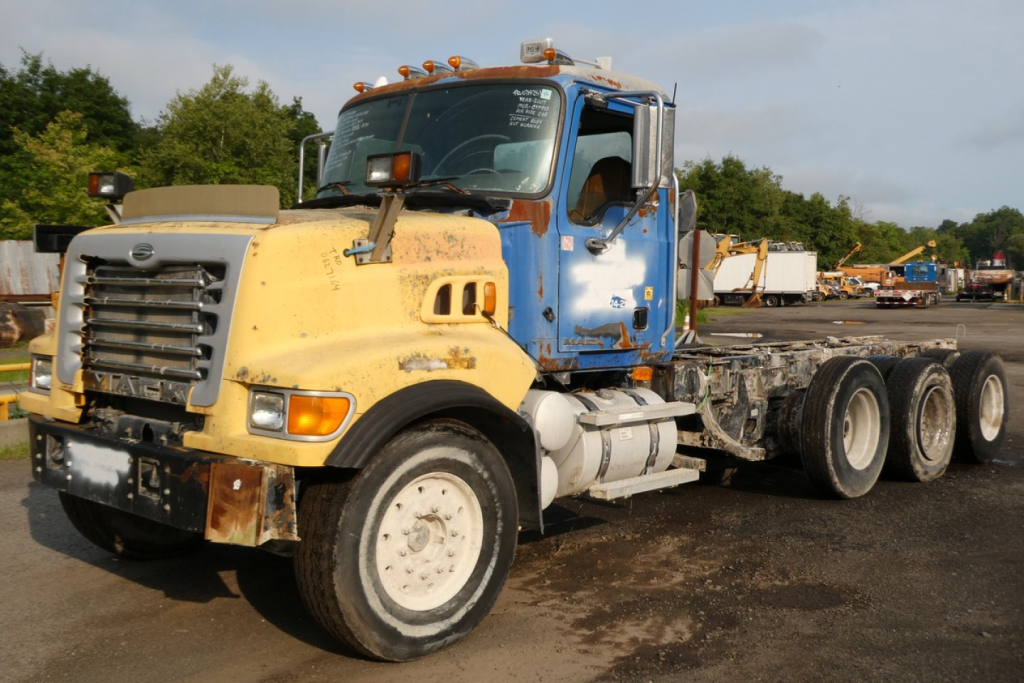
Selling a mixer truck? List your mixer truck for sale and reach thousands of commercial buyers.
Mixer Trucks in New York
A typical mixer truck is spec'd around front axle ratings in the 18,000 to 20,000 pound range with rears in the 40,000 to 46,000 pound class, often paired with a lift axle to improve payload distribution. Drum sizes commonly run from about 8 to 11 cubic yards, with 10.5-yard mixers being a familiar configuration in heavy ready-mix service. Rear discharge mixers remain the standard for many fleets because they are straightforward, widely supported, and familiar to drivers and contractors, while front discharge units can improve visibility and placement control on certain pours. Buyers should look closely at drum condition, chute structure, water system operation, PTO or hydraulic drive components, and wear points such as fins, rollers, and subframe mounts. A mixer body can outlast one chassis and still be expensive to rebuild if neglected.
The chassis spec matters just as much as the mixer package. Automatic transmissions, especially Allison units, are popular in this class because they handle stop-and-go routes, plant queues, and repeated jobsite starts without constant clutch wear. Engine horsepower in the low-to-mid 300 range is common on older regional units, but torque, rear ratio, and suspension design usually tell you more about real-world performance under load. Walking beam and heavy vocational suspensions hold up well in rough access conditions, while double-frame construction is a plus for durability. Check engine brake function, cooling system health, brake condition, steering play, and signs of frame stress around the mixer mounts. On higher-mileage trucks, hour meter readings, PTO engagement quality, and maintenance history often reveal more than odometer mileage alone.
A good mixer truck fit comes down to route length, slump retention needs, legal weight strategy, and how the truck will be unloaded once it gets on site. Short-haul city work, foundation crews, municipal contracts, and high-volume plant service all push the spec in different directions. Buyers comparing used mixer trucks for sale in New York should weigh not only engine and transmission condition, but also drum usability, water tank integrity, chute completeness, lift axle function, and parts support for both the chassis and the mixer body. The best unit is the one that can meet local weight rules, cycle efficiently between plant and pour, and stay productive without excessive downtime in the middle of the season.
Frequently Asked Questions about Mixer Trucks in New York
What size mixer truck is most common for ready-mix work?
Many mixer trucks in commercial service fall in the 8 to 11 cubic yard range, with 10 to 10.5 cubic yards being especially common. The right size depends on legal weight limits, material density, axle configuration, and the kind of work being done. A larger drum does not always mean a higher legal payload on the road, so buyers need to match rated capacity to local bridge laws and route conditions.
What is the difference between a rear discharge mixer and a front discharge mixer?
A rear discharge mixer unloads from the back of the truck and typically requires the driver to back into position or rely on spotters and chute extensions. A front discharge mixer lets the driver control placement from the cab and can improve visibility at the pour site. Rear discharge units are generally more common and easier to support in many fleets, while front discharge trucks can offer efficiency advantages on certain residential and commercial jobs.
Why are lift axles important on mixer trucks?
Lift axles help distribute weight so the truck can carry more legal payload while staying within axle limits. They are especially important in states and regions where bridge formulas and local enforcement affect how a loaded mixer can be operated. Buyers should confirm the lift axle type, weight rating, steer or non-steer design, and whether the system raises, lowers, and holds pressure correctly.
What should I inspect first on a used mixer truck?
Start with the drum and drive system, then move to the chassis. Check drum rotation, roller condition, hydraulic operation, PTO engagement, chute completeness, water system function, and structural condition around the mixer mounts. After that, inspect the engine, transmission, brakes, suspension, frame, and axle components. A truck may run well but still need expensive mixer body repairs, so the body and chassis should be evaluated as one working package.
Are automatic transmissions a good choice in a mixer truck?
Yes, automatic transmissions are common in mixer service because they perform well in stop-and-go duty, reduce driver fatigue, and avoid clutch wear from repeated starts under load. Allison automatics are widely used in vocational trucks for this reason. Buyers should still verify shift quality, fluid condition, PTO compatibility, and service history, since transmission replacement in this class can be costly.