
Used Peterbilt Grapple Trucks For Sale
Browse used Peterbilt grapple trucks built for debris, waste, and storm cleanup, with knuckleboom loaders, tri-axle specs, and dump bodies.
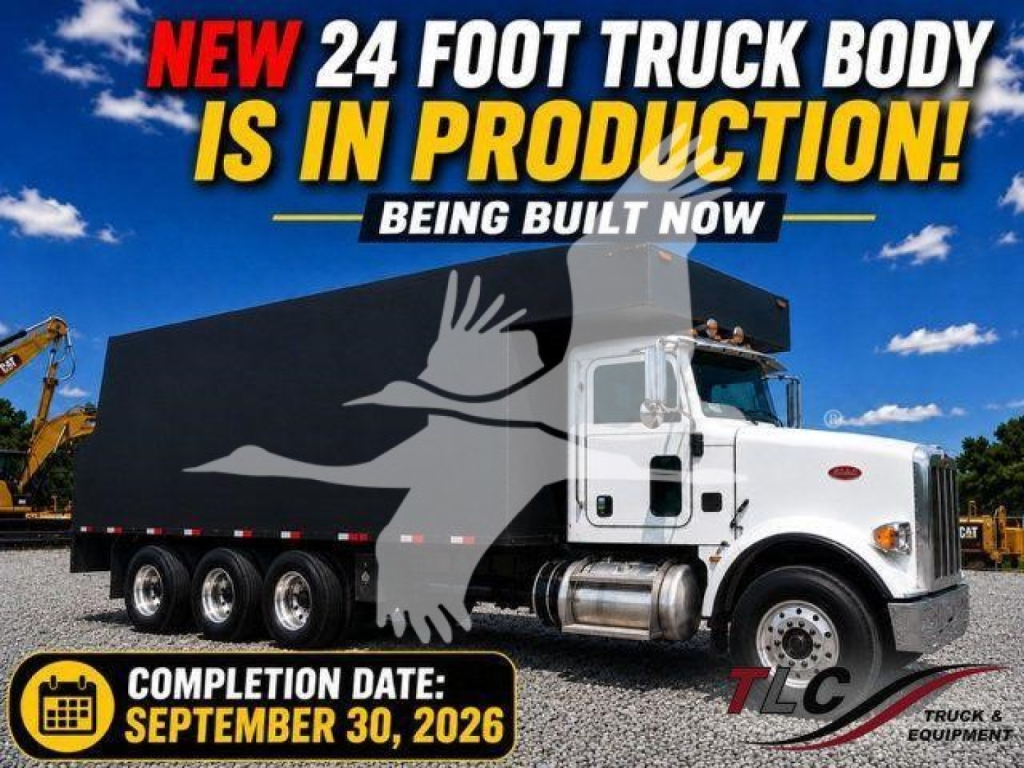
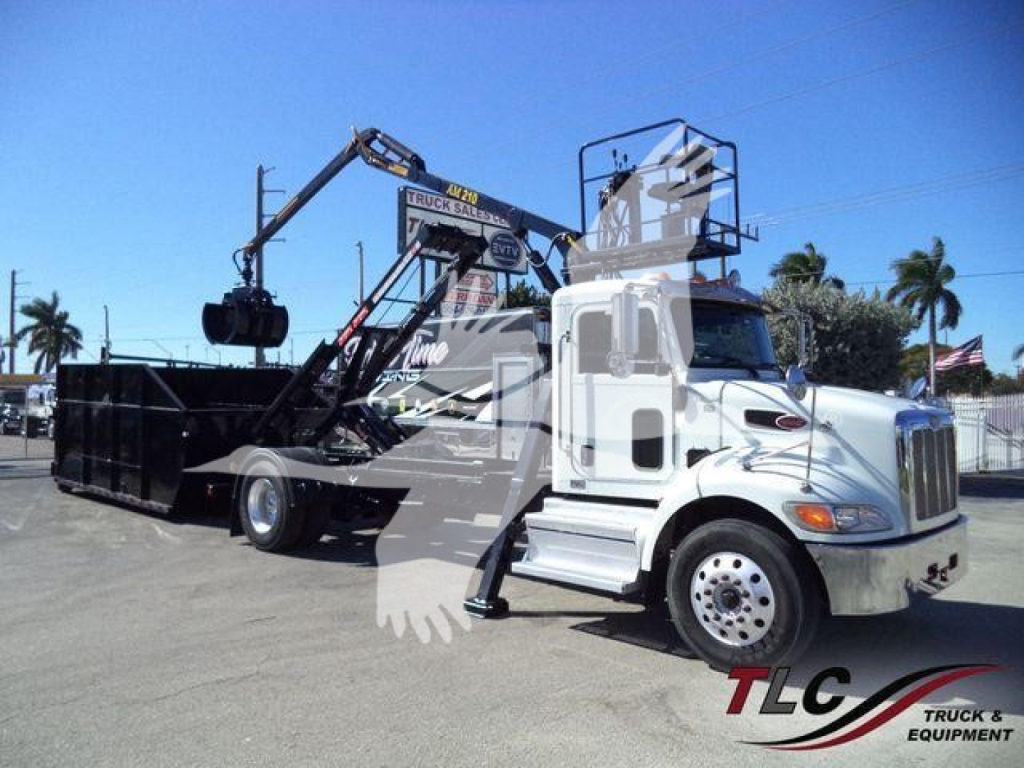
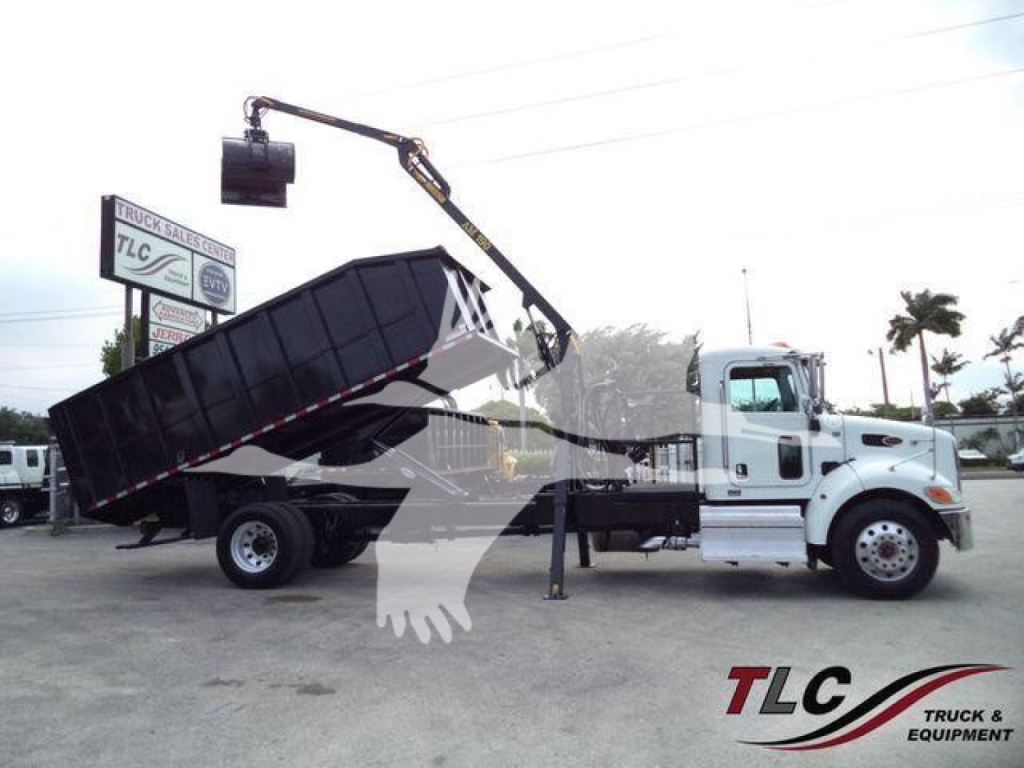
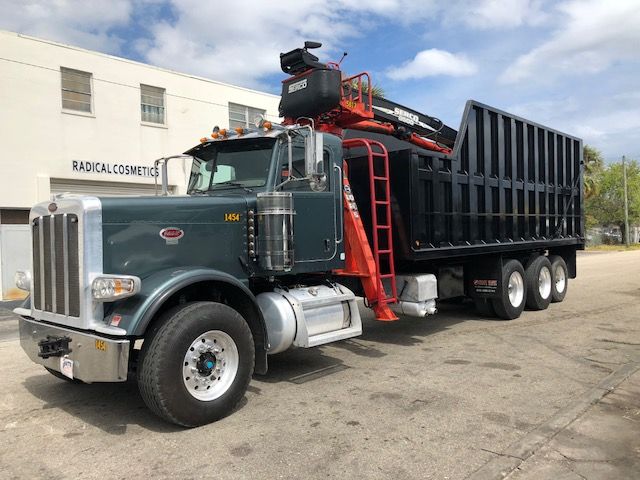
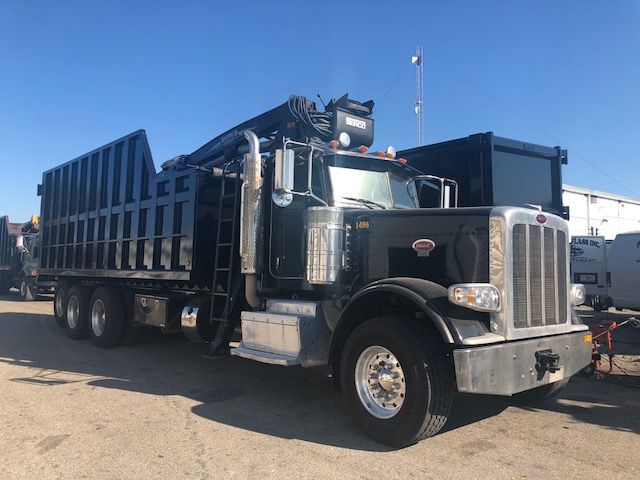
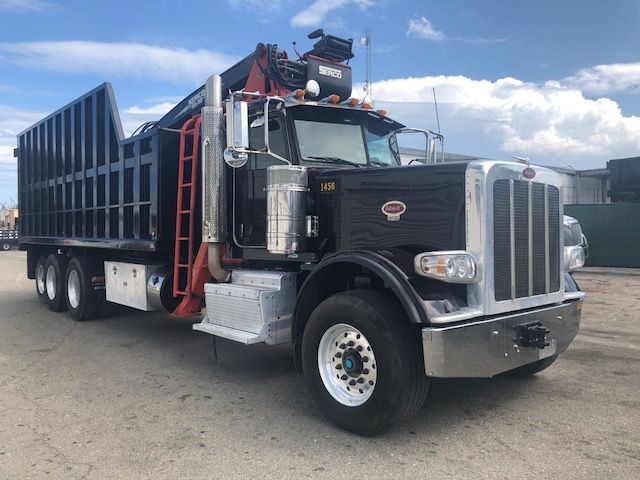
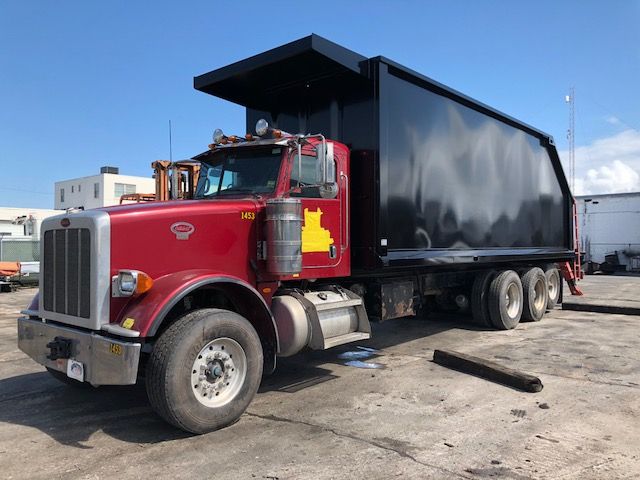
Selling a used peterbilt grapple truck? List your used peterbilt grapple truck for sale and reach thousands of commercial buyers.
Used Peterbilt Grapple Trucks
The loader package is a major buying point on a grapple truck. Common names in this segment include Serco, Rotobec, Pac-Mac, and similar hydraulic grapples with extended boom reach for loading brush, logs, demolition debris, and bulky waste. Pay attention to boom length, grapple type, rotation performance, and how the loader is mounted behind the cab or on the tail. A truck with a 26-foot class boom or an extended-reach loader can improve loading radius, but it also affects weight, balance, and service access. Body construction matters too. Hardox and other abrasion-resistant steel bodies tend to hold up better in debris and mixed-waste applications than lighter general-purpose bodies.
On the chassis side, used Peterbilt grapple trucks often carry big-bore diesel engines like the Cummins ISX or similar vocational ratings in the 280 hp to 550 hp range, depending on the truck class and application. Transmission choice depends on the route and operator preference. Manual and 8LL setups remain popular in heavier off-road or mixed-surface work, while Allison automatics are common in municipal and stop-and-go fleets. Buyers should look closely at axle ratings, suspension type, lift axle configuration, PTO operation, hydraulic tank and pump condition, and front axle capacity, since grapple work puts real demand on steering components and frame integrity. A tri-axle Peterbilt with the right wheelbase and axle spread can be a strong fit where payload and bridge compliance matter.
Used-condition evaluation should go beyond miles. Engine hours, PTO hours, loader pin and bushing wear, turntable play, hydraulic hose condition, cylinder seepage, subframe cracks, and body floor wear tell you more about remaining life than odometer numbers alone. Check for stress around the loader mounts, tailgate operation, hoist condition, and any signs of frame reinforcement or repairs. Peterbilt grapple trucks are valued for durable vocational chassis design, good parts support, and strong driver acceptance, but the real difference between trucks in this category is the quality of the upfit and how hard the truck has worked. Matching the body size, crane reach, axle spec, and transmission to your material stream is what separates a productive grapple truck from an expensive compromise.
Frequently Asked Questions about Used Peterbilt Grapple Trucks
What is the most important spec to compare on a used Peterbilt grapple truck?
The most important spec is the combination of chassis capacity and loader setup, not just engine horsepower. A grapple truck needs the right front axle rating, rear suspension, wheelbase, lift axle configuration, PTO-driven hydraulics, and body size to work as a system. Buyers should compare boom reach, loader brand, grapple capacity, debris body volume, and legal payload together because a truck with a large body or long boom can lose practical payload if the axle and bridge setup are not matched correctly.
Are Peterbilt 365 and 388 models good platforms for grapple truck applications?
Yes. Peterbilt 365 and 388 models are widely used in vocational applications because they offer stout frame options, heavy axle ratings, and compatibility with large hydraulic upfits. They are commonly seen in tree service, storm cleanup, waste, and demolition support work. The exact fit depends on the truck's axle spec, frame layout, and loader installation, but both models are established platforms for tri-axle grapple truck builds.
What should I inspect on the grapple loader before buying used?
Inspect the boom pins, bushings, cylinders, hydraulic hoses, rotator, grapple tines, and any visible weld repairs. Check for excessive play in the loader structure and listen for abnormal hydraulic noise during operation. A functional test should include full boom extension, rotation, grapple open-close action, and smooth cycle times under load if possible. Wear in the loader often tells more about future repair costs than the truck cab or paint condition.
Is a manual or automatic transmission better in a grapple truck?
Both can be the right choice depending on the application. Manual transmissions such as an 8LL are still favored in heavier vocational service where drivers want more control in off-road conditions, jobsite maneuvering, or steep grades. Allison automatics are popular in municipal and urban routes because they reduce driver fatigue and perform well in constant stop-and-go work. The better choice depends on terrain, driver pool, maintenance preference, and how much road time versus loading time the truck sees.
How do miles and hours affect value on a used grapple truck?
Miles matter, but engine hours and PTO or loader hours are often more important on this type of equipment. Grapple trucks can spend long periods idling and operating the hydraulic loader with limited road mileage, which means wear may be concentrated in the engine's idle time, PTO system, and crane components rather than the drivetrain alone. A lower-mile truck with very high loader use can require more hydraulic and structural work than a higher-mile truck that spent more time traveling between jobs.